MARGOT ROBBIE’S 761-HOUR CHANEL GOWN AT THE MET GALA
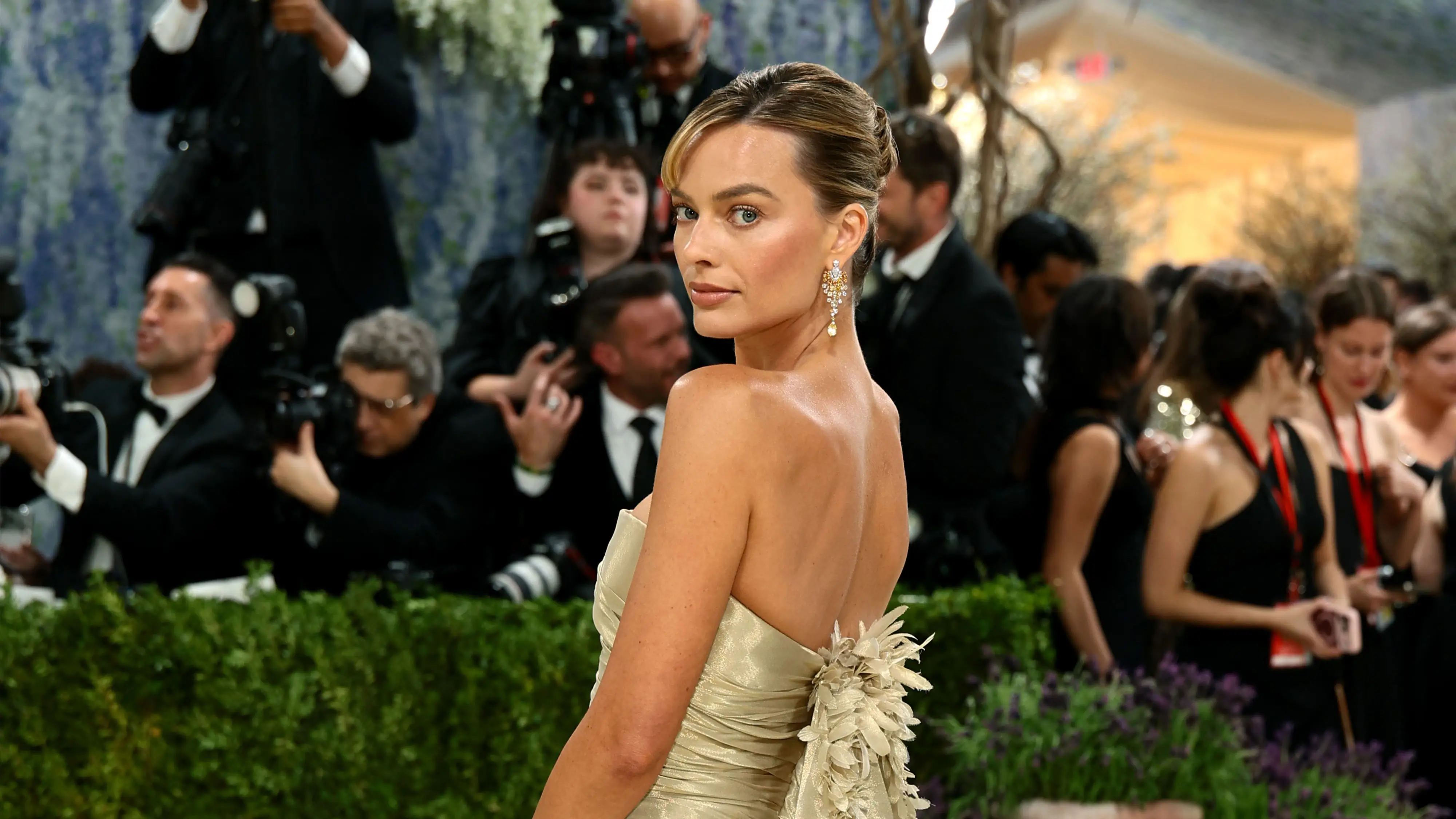
Margot Robbie’s 2026 Met Gala gown looked deceptively simple: a strapless gold silhouette, a sweeping train, and a restrained overall shape. Behind that clean appearance, however, there were 761 hours of Chanel atelier work.
THE CHANEL CRAFTSMANSHIP BEHIND MARGOT ROBBIE’S GOWN
For the May 4, 2026, Met Gala, Robbie wore a custom Chanel gold lamé gown. According to Vogue, the Chanel atelier spent 761 hours creating the dress, which included more than 1,100 pieces of embroidery.
The contrast is what makes the look particularly interesting. On the red carpet, the gown reads as streamlined and sculptural. Up close, its embroidery, floral detailing and construction reveal the amount of work behind that simple silhouette.
MARGOT ROBBIE’S GOLD CHANEL GOWN TOOK 761 HOURS TO MAKE
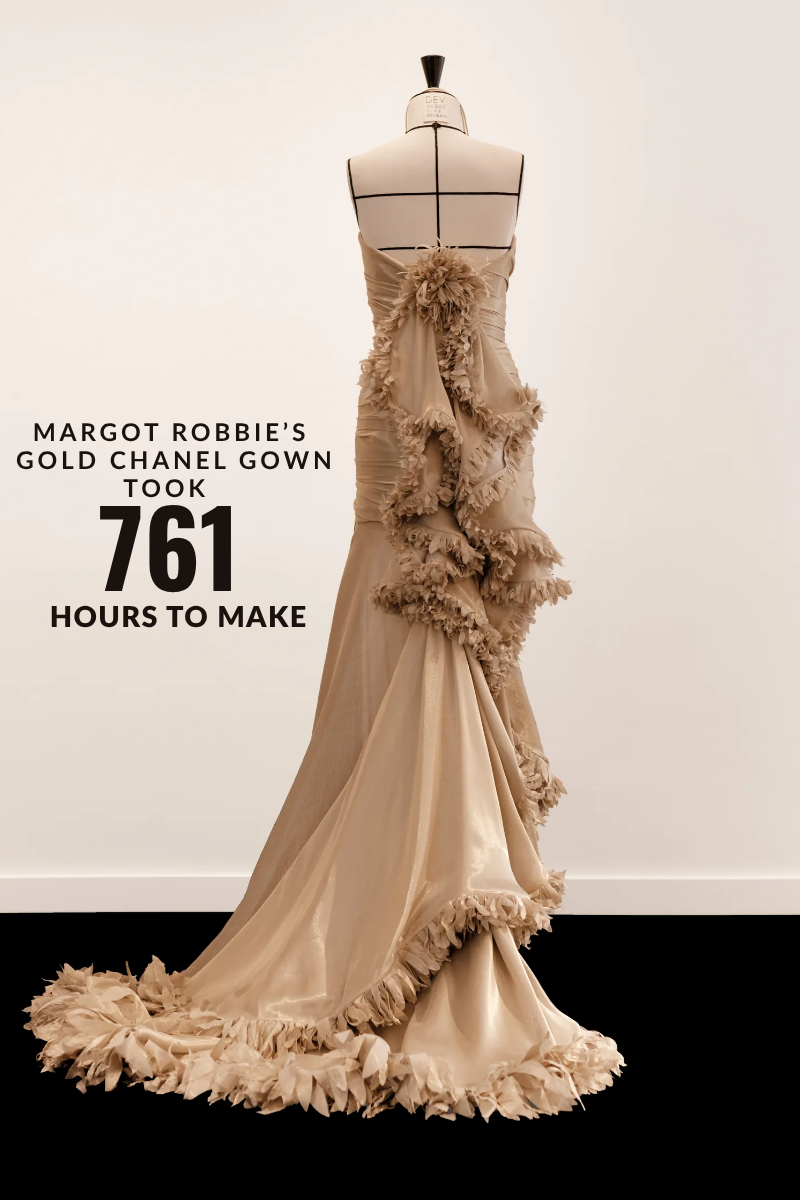
The 2026 Met Gala marked Robbie’s return to the event after a three-year absence. She arrived in a strapless gold lamé gown with a cascading train lined with flower petals.
The silhouette keeps the focus on the fabric and train rather than relying on multiple layers or an overly complicated shape. Much of the gown’s visual impact comes from its metallic surface, embroidery, and movement.
That makes the 761-hour construction time particularly revealing. The amount of work is not immediately apparent when looking at the finished gown. Instead, it demonstrates how much work can exist behind a comparatively controlled couture silhouette.
The result is a useful example of the difference between visual simplicity and technical complexity.
THE CHANEL GOWN LOOKED SIMPLE — BUT THE DETAILS WERE ANYTHING BUT
The gown’s most noticeable feature is its long cascading train. Vogue describes the train as being lined with flower petals, creating a dimensional effect that becomes more apparent as Robbie moves.
The gold lamé gives the dress a reflective surface, while the embroidery and floral details add texture and dimension. The combination keeps the strapless silhouette from appearing flat or overly minimal.
This is where the distinction between visual simplicity and constructional simplicity becomes important. A dress can have a straightforward outline while requiring extensive work to achieve its surface, movement, and finish.
For more context, see Fashionwalt’s Biggest Fashion Moments of 2026.
761 HOURS OF CHANEL CRAFTSMANSHIP
The headline figure attached to Robbie's gown is 761 hours of Chanel atelier work. Vogue reports that the dress featured more than 1,100 pieces of embroidery.
Those details helped transform the gold lamé gown into a more dimensional design, particularly around the cascading train.
The craftsmanship also demonstrates why atelier-level construction cannot necessarily be judged by how complicated a garment looks from a distance. Robbie’s dress has a controlled silhouette, but its embroidery, floral detailing and training contribute to a substantial amount of atelier work.
For Chanel, craftsmanship is central to the house’s fashion identity. In this look, that workmanship remains restrained on the red carpet, allowing the surface and movement of the gown to communicate the details rather than relying on an overtly elaborate silhouette.
MATTHIEU BLAZY’S CHANEL DEBUT MEETS THE MET GALA
Robbie’s appearance also carried significance for Chanel beyond the individual gown.
The 2026 Met Gala marked Matthieu Blazy’s Chanel Met Gala debut, with Robbie wearing a custom Chanel look as he began his tenure as Chanel’s creative director. Vogue described Robbie as helping Blazy make his Chanel debut at the 2026 Met Gala.
The gown combines Chanel craftsmanship with a contemporary strapless silhouette and metallic finish. Rather than attempting to summarize the house’s history in a single look, it places familiar couture craftsmanship within a modern red-carpet shape.
That makes the Met Gala particularly significant for a designer beginning a new chapter at a major fashion house: the red carpet becomes a highly visible setting in which craftsmanship, design language and celebrity dressing intersect.
HOW THE LOOK INTERPRETED “FASHION IS ART”
The 2026 Met Gala celebrated the Costume Institute exhibition Costume Art, while the evening’s dress code was “Fashion Is Art.” The Metropolitan Museum of Art said the dress code invited guests to express their relationship with fashion as an embodied art form.
Robbie’s gown offers one interpretation of that idea through craftsmanship rather than a literal reference to a painting or sculpture.
The embroidery, flower-petal detailing and three-dimensional train make the garment an object whose appearance changes with movement. Its reflective gold surface also makes light part of the visual effect.
Rather than treating the dress code as a requirement for overt theatricality, the Chanel gown demonstrates how material, construction and hard work can give a red-carpet garment an artistic dimension.
The interpretation can therefore be read how the dress was made, as much as how it looked.
MARGOT ROBBIE AND HER CHANEL MET GALA HISTORY
Robbie’s 2026 appearance continued a long relationship with Chanel and marked her return to the Met Gala after three years.
She first attended the Met Gala in 2014, wearing Prada for “Charles James: Beyond Fashion.” In 2016, she wore Calvin Klein for “Manus x Machina: Fashion in an Age of Technology.”
Her previous appearance was in 2023, when she wore an archival Chanel gown from Karl Lagerfeld’s Spring 1993 couture collection for “Karl Lagerfeld: A Line of Beauty.” Vogue notes that the chain-trimmed design had originally been worn by Cindy Crawford.
The 2023 appearance connected Robbie to Lagerfeld’s Chanel legacy. Her 2026 gown, by contrast, placed her within the house’s next creative chapter under Blazy.
This makes the two Chanel appearances particularly useful points of comparison: one looked back to an archival Lagerfeld design, while the other introduced a contemporary Chanel moment.
CHANEL HIGH JEWELRY COMPLETED THE LOOK
Robbie also accessorized the gown with Chanel High Jewelry, including chandelier earrings and rings.
Robbie is also a Chanel House ambassador, adding another layer to her continuing relationship with the brand.
The jewelry remained secondary to the dress, allowing the gold lamé and embroidered train to remain the focus of the look.
Chanel’s own coverage of Robbie’s 2026 appearance also documented the beauty look. The house described her makeup as a multidimensional look designed to capture and reflect light, complementing the shimmer of the custom Chanel dress.
That connection between fabric, makeup and light helped maintain a consistent visual language across the complete red-carpet appearance.
WHY THE 761-HOUR DETAIL CHANGES HOW WE SEE THE DRESS
The most revealing fact about Margot Robbie’s 2026 Met Gala gown may be the number that cannot be seen in a photograph: 761 hours.
The finished Chanel dress has a controlled silhouette, but its construction included 1,100 pieces of embroidery, a cascading train lined with flower petals and extensive atelier work.
That contrast is what makes the gown worth examining beyond the red-carpet image. Its restrained appearance was not evidence of a simple construction process. Instead, the restrained silhouette allowed Chanel’s craftsmanship to become part of the story.
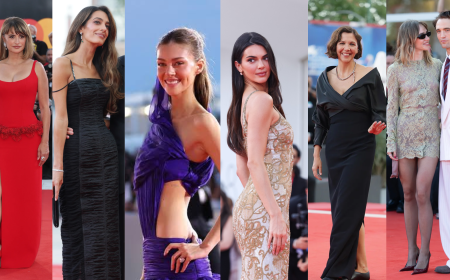
Robbie’s appearance also belongs to the wider evolution of celebrity red-carpet dressing in 2026, where craftsmanship, archival fashion and contemporary design continue to shape how major appearances are discussed. Fashionwalt’s coverage of Best Dressed Celebrities at the 2026 Venice Film Festival explores the broader relationship between celebrity style and fashion storytelling.
For celebrity fashion, that distinction matters. A red-carpet gown can make an immediate impression in seconds, but the making of the garment can reveal another story — one measured not in minutes on the red carpet, but in hundreds of hours inside the atelier.

Fashion and culture writer with a keen eye for red-carpet style, celebrity dressing, beauty, and the intersection of fashion and film. Their work explores the ideas and stories behind the looks, from emerging trends and archival fashion to the evolving language of modern celebrity style.