Menswear On the Red Carpet: How Tuxedo Rulebook Is Changing
For much of modern red-carpet history, men’s formal wear followed a familiar formula: black tuxedo, white shirt, bow tie, formal trousers, and polished shoes. The details could change, but the basic language remained remarkably consistent.
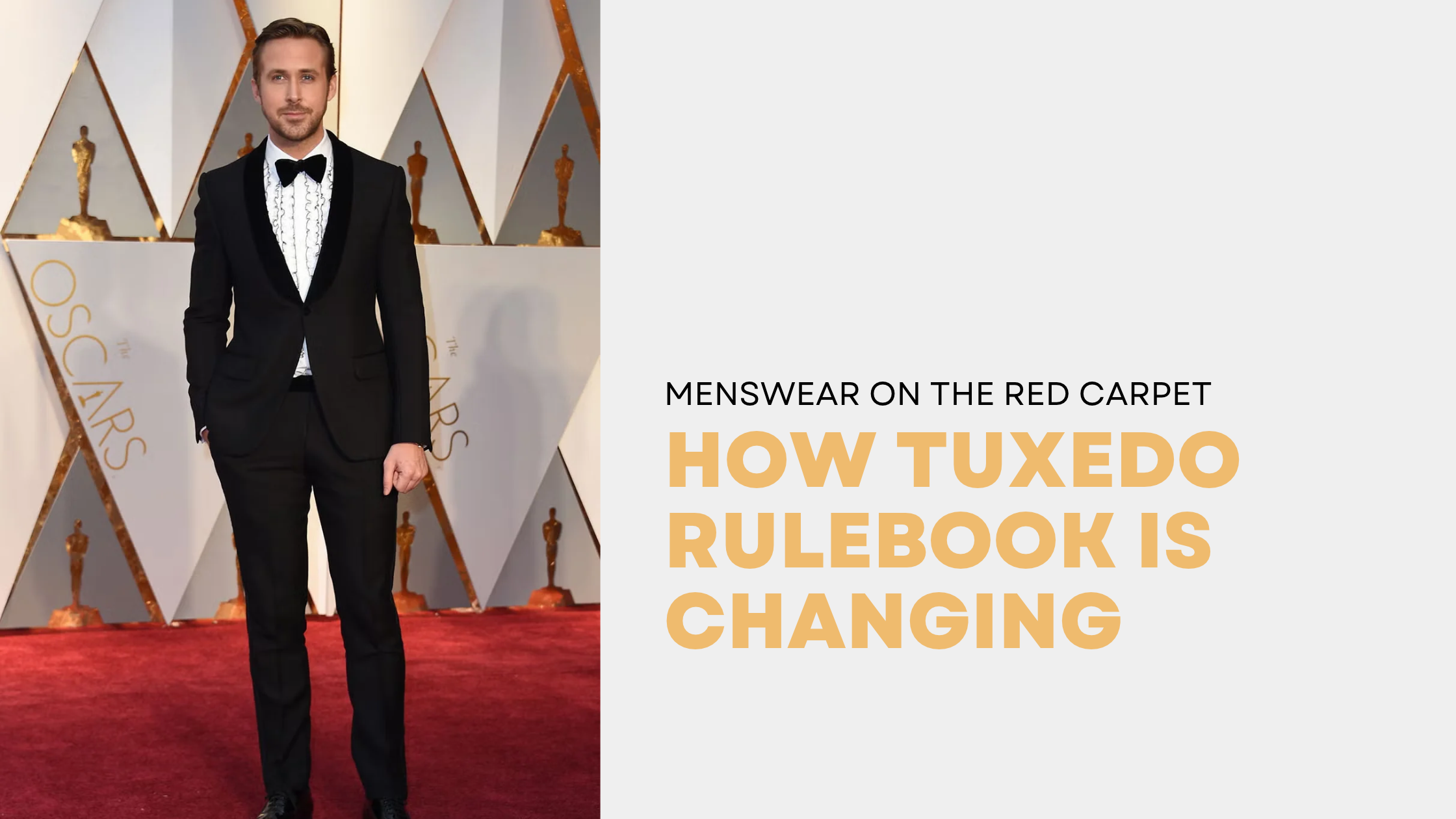
In 2026, that formula is still visible. What has changed is how much room there is to reinterpret it.
Across awards ceremonies, film festivals and major entertainment events, celebrities are experimenting with wider trousers, alternative colors, unusual accessories, open shirts, unconventional proportions and tailoring that borrows from couture. The result is not the disappearance of the tuxedo. Instead, the traditional tuxedo is increasingly being treated as a framework rather than a fixed set of rules.
At the 2026 Golden Globes, menswear coverage highlighted tie-free formal looks, brooches, bow-shaped accessories, peak lapels and wider or flared trousers. At the 2026 Grammys, Bad Bunny wore a Schiaparelli tuxedo based on a womenswear couture design, while Kendrick Lamar wore Chanel’s first custom men’s tuxedo.
By the 2026 Emmys, the range had widened further, from Matthew Rhys’s Thom Browne three-piece tuxedo to Emma D’Arcy’s flowing Soshiotsuki tailoring and Colman Domingo’s robe-style Valentino jacket and flared trousers.
The question, then, is no longer whether men are wearing tuxedos.
It is what a tuxedo can be in 2026.
Not every formal red-carpet look is technically a tuxedo: suits, eveningwear separates and fashion-led tailoring are increasingly part of the same conversation.
The Old Red-Carpet Rulebook
Traditional black-tie dressing is built around a recognizable set of conventions.
A classic tuxedo uses a black or midnight-blue jacket with satin or grosgrain lapels, formal trousers, a white evening shirt, bow tie, and polished dress shoes. Proportions tend to be controlled, jewelry is restrained and the overall objective is formal consistency.
That framework has not disappeared.
Matthew Rhys’s look at the 2026 Emmys is a useful reminder. His Thom Browne ensemble included a black tuxedo, bibbed Oxford shirt and cashmere vest, showing how a structured interpretation of eveningwear continues to coexist with more experimental red-carpet styling.
What is changing is the assumption that every element must remain conventional at the same time.
A celebrity can retain the tailoring and formal structure while changing the shirt. Another can keep the shirt and trousers but experiment with the jacket. Someone else can maintain a classic black tuxedo while using jewelry or unusual footwear to change its character.
The modern red-carpet approach is therefore less about rejecting formalwear and more about editing its rules.
Rule No. 1: The Tie Is No Longer Mandatory
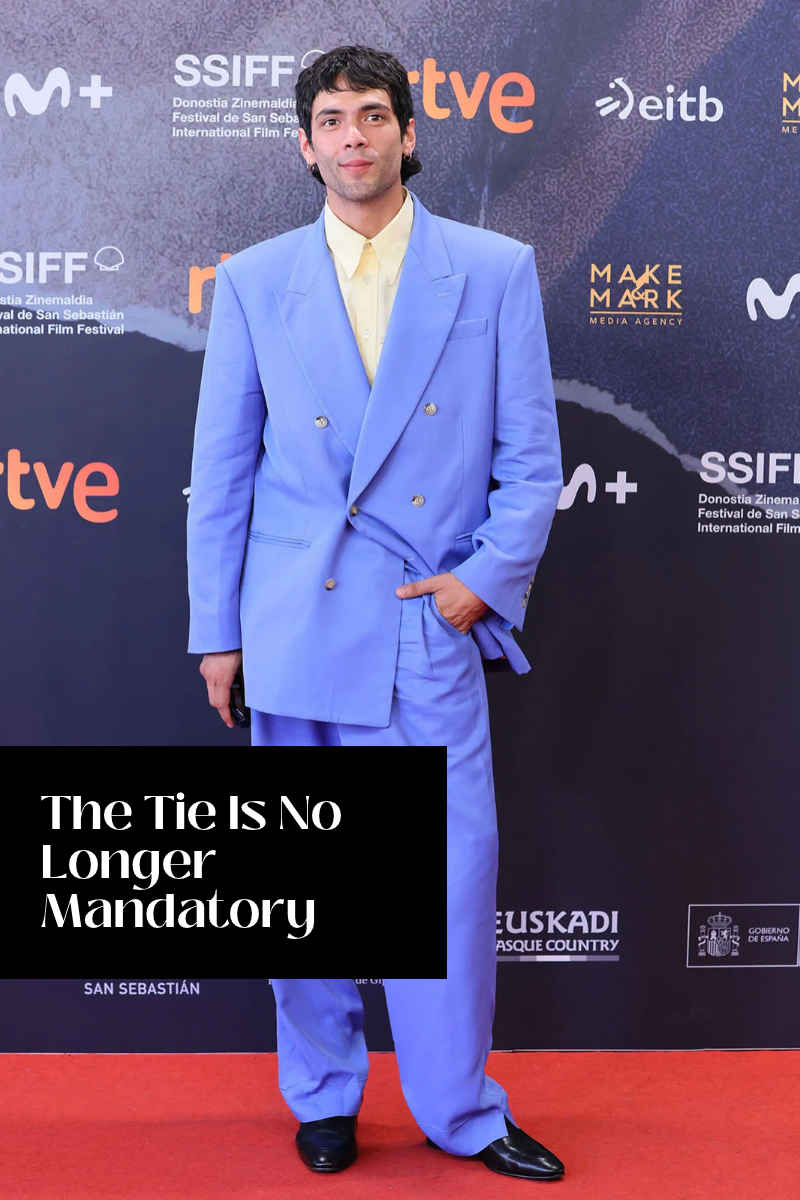
One of the clearest changes in red carpet menswear is that conventional neckwear is no longer the only way to style formally.
The 2026 Golden Globes provided a particularly visible example, with GQ highlighting tie-free tuxedos among the evening’s notable menswear developments.
There is also a subtler alternative: keeping the tie but changing how it is worn.
Vogue documented a “stealthy tie-tuck” among Hollywood men in early 2026, describing celebrities including Manu Rios, Tom Blyth and Finn Bennett wearing ties tucked partly or entirely into their shirts. The technique preserves the formal element while making it less visually dominant.
That distinction matters.
A formal look without a traditional bow tie is not automatically casual. The tailoring, fabric, construction, and styling can still communicate eveningwear.
The change is really about control over the degree of formality.
Instead of treating the tie as mandatory, contemporary red-carpet styling can use it, hide it, loosen it, or remove it altogether.
Rule No. 2: The Shirt Has Become Part of The Statement
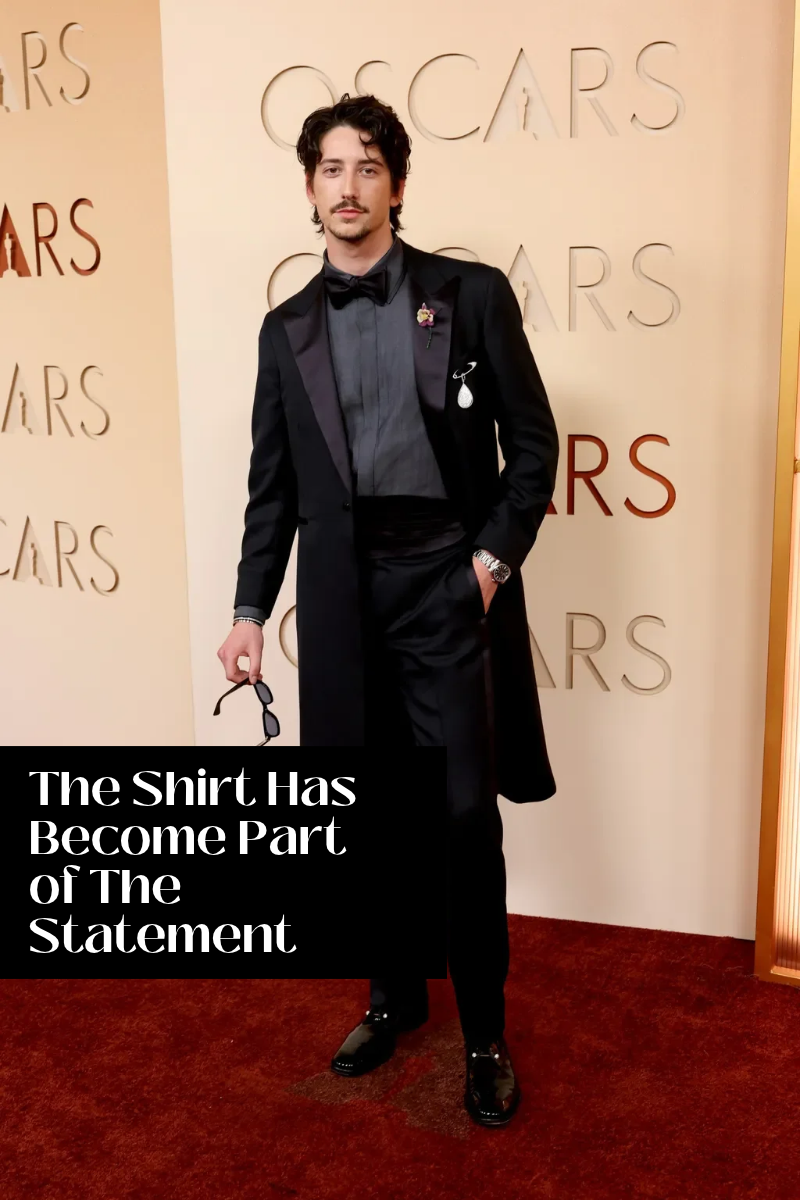
The shirt has traditionally played a supporting role in the tuxedo. In 2026, it can become one of its most visible features.
Open collars and low-buttoned shirts have appeared prominently in menswear coverage from Cannes, where Vogue highlighted several men experimenting with more revealing and relaxed styling.
That approach also connects with a broader shift toward more sensual men’s red-carpet dressing. Vogue has documented celebrities including Harry Styles, Alexander Skarsgård and Colman Domingo using open or shirtless styling to make formal looks feel less conventional.
The important fashion distinction is that the jacket itself may remain highly tailored.
What changes is what happening underneath it.
A low-buttoned shirt, an exposed chest, an unusual collar, or a deliberately minimal base layer can completely alter the visual effect of a conventional jacket.
The modern tuxedo can therefore communicate personality through what happens underneath the jacket.
Rule No. 3: Trousers Are Getting More Interesting
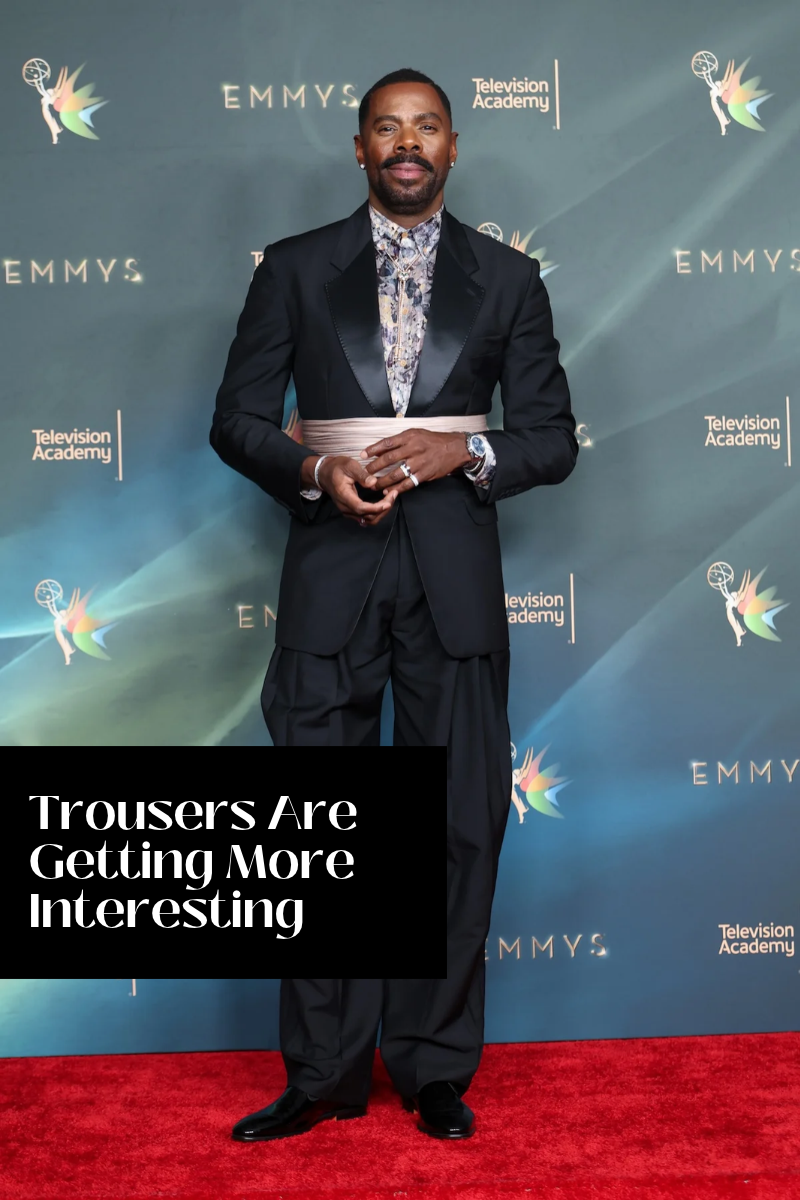
Menswear experimentation is not limited to jackets and shirts.
Trouser proportions are increasingly important to the overall shape of formal dressing. At the 2026 Golden Globes, GQ highlighted wide-legged and flared trousers alongside peak-lapel jackets and unconventional suits.
Wider trousers change the relationship between the jacket and the lower half of the outfit. They can make formalwear appear more relaxed, more retro, or more architectural without removing its tailored foundation.
The effect can also be seen beyond awards ceremonies. At the 2026 Emmys, Emma D’Arcy wore a loose, flowing Soshiotsuki suit with wide-leg trousers, while other men at the ceremony continued to use more traditional proportions.
That contrast is important.
There is no evidence that slim trousers have simply been replaced. Instead, red-carpet menswear now accommodates a broader range of proportions.
The trouser has become another place where a celebrity can determine how traditional — or fashion-forward — a formal look feels.
Rule No. 4: Black Isn’t the Only Option
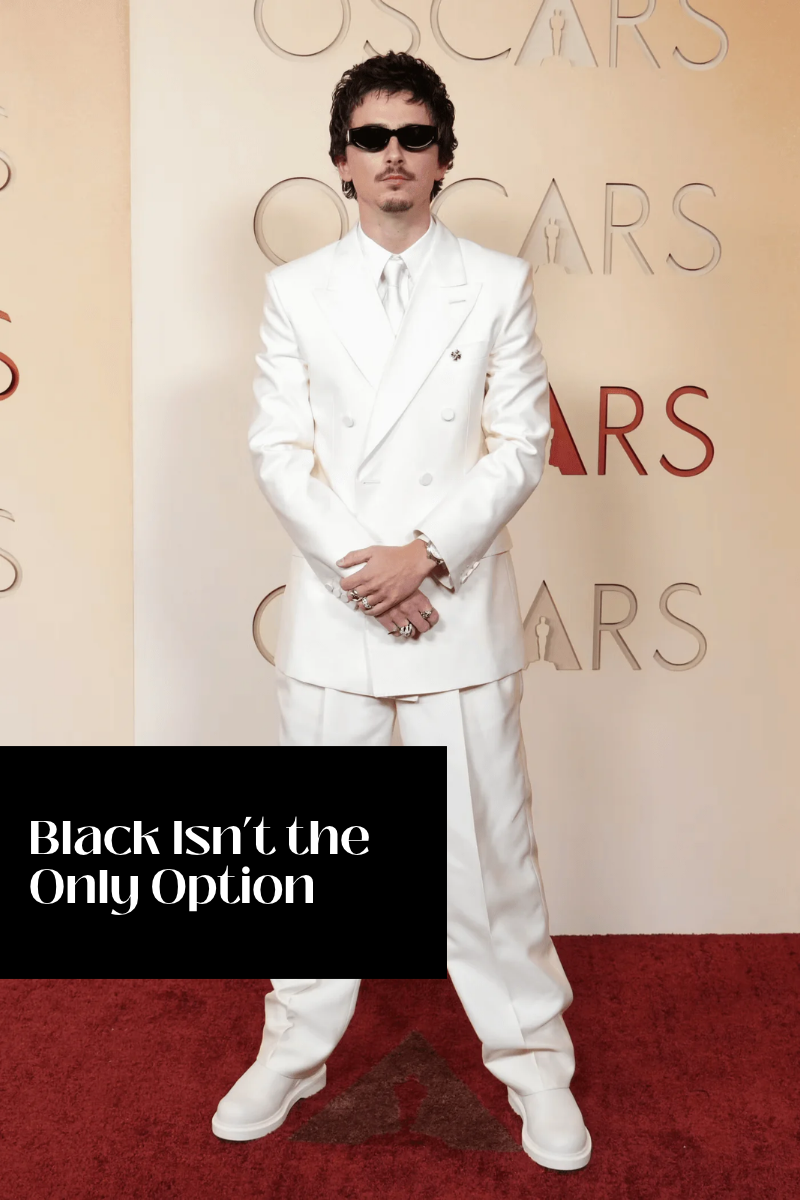
Black remains central to men’s eveningwear, but 2026 red carpets have demonstrated a broader color vocabulary.
At Cannes, Harris Dickinson wore a brown double-breasted Balenciaga look at the Kering Women in Motion Awards, while Colman Domingo appeared in a custom purple Valentino evening look. Vogue’s Cannes coverage described the festival’s menswear as increasingly willing to move beyond conventional black and navy.
Timothée Chalamet took the idea even further at the 2026 Oscars, arriving in a custom all-white double-breasted Givenchy suit designed by Sarah Burton. He paired it with white boots and small sunglasses.
These looks should not be interpreted as evidence that one color is replacing black.
The more significant development is that formal menswear has a broader color vocabulary.
Brown, white, purple, and other richer tones can now participate in an eveningwear conversation that was once dominated by black and midnight blue.
The tuxedo is not losing its formality simply because its color changes.
Rule No. 5: Couture Is Crossing into Menswear
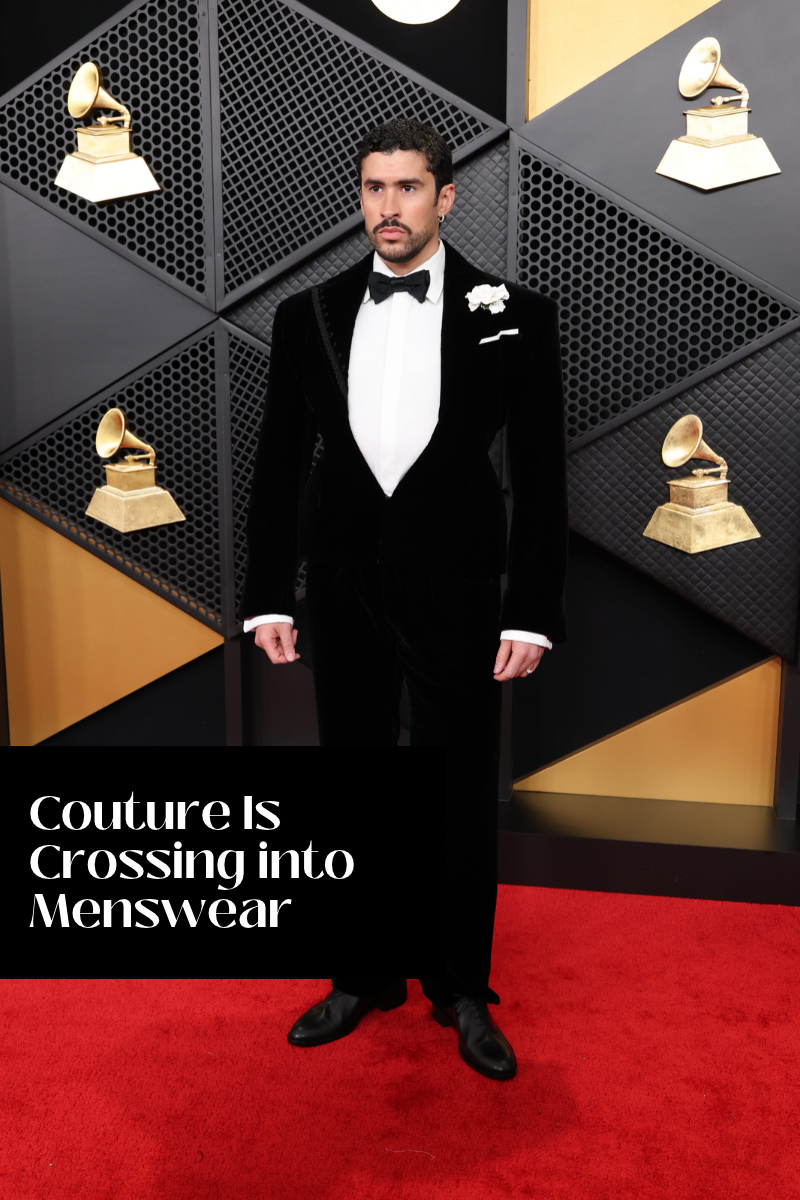
The clearest example of the changing tuxedo rulebook came at the 2026 Grammys.
Bad Bunny wore a sculptural black-and-white Schiaparelli tuxedo based on a womenswear couture look from the house’s Spring 2023 couture collection. The design retained the recognizable structure of a tuxedo from the front while incorporating a laced-up detail across the back and Schiaparelli’s signature measuring-tape motif on the lapels.
The look is significant because it demonstrates how menswear can borrow construction ideas from outside conventional men’s tailoring.
This is not simply a case of menswear copying womenswear.
It is better understood as cross-pollination between fashion categories.
Couture techniques, sculptural construction, and design ideas traditionally associated with womenswear can be translated into a male red-carpet context without abandoning the visual language of formal tailoring.
Bad Bunny’s stylist Storm Pablo also described the outfit’s exaggerated shoulder and its play between masculinity and femininity in Vogue’s behind-the-scenes coverage.
The result is a tuxedo that functions not just as formal clothing, but as a fashion object.
Rule No. 6: Accessories Are Doing More Work
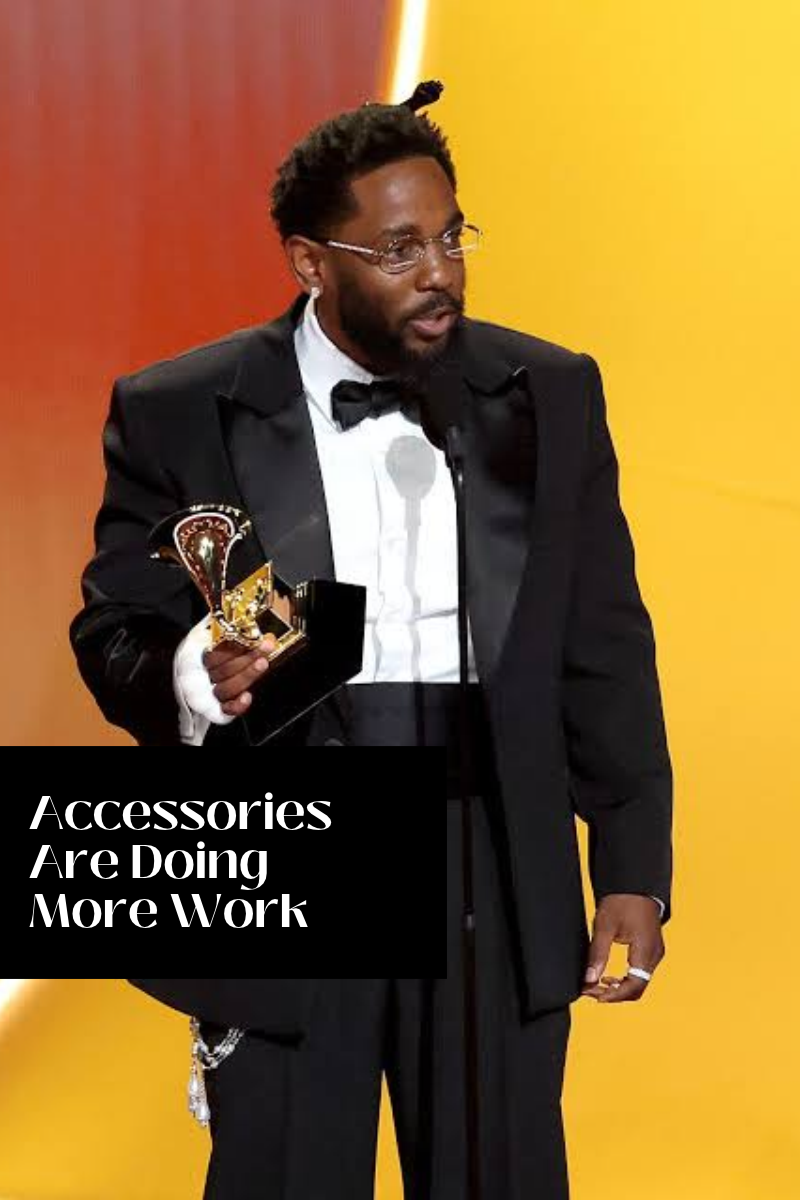
When the suit itself remains traditional, accessories can provide variation.
GQ’s 2026 menswear coverage highlighted brooches and tie pins as notable details, noting their continued visibility on the red carpet.
The Golden Globes similarly produced a noticeable selection of brooches and bow-shaped accessories.
Kendrick Lamar’s 2026 Grammys look offers another useful example. His custom Chanel tuxedo was deliberately classic, with black grain de poudre construction, satin lapels, and a white pleated plastron shirt. But a jeweled chain and Chanel sunglasses changed the overall effect. The tuxedo took 207 hours to make and marked the first custom tuxedo Chanel had created for a client.
This demonstrates a useful principle in modern formalwear.
A traditional foundation can make a small accessory particularly effective.
A brooch, chain, ring, watch, or pair of sunglasses can turn a familiar tuxedo into something recognizably individual without requiring an entirely unconventional outfit.
Rule No. 7: The Tuxedo Can Be Sexy
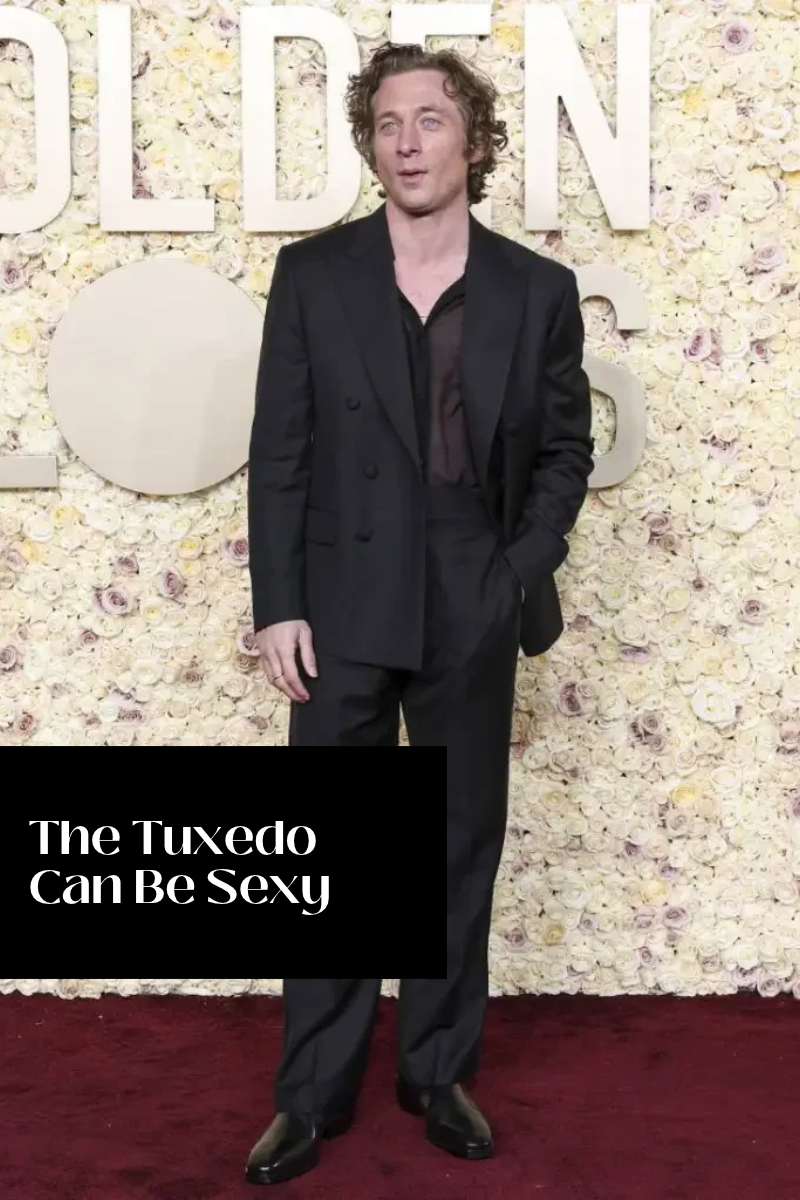
Men’s red-carpet formalwear is also becoming more comfortable with sensual styling.
Vogue’s 2026 coverage identified a broader movement toward sexier men’s red-carpet dressing, pointing to open shirts, plunging necklines and shirtless tailoring among the ways celebrities are challenging traditionally conservative formalwear.
Harry Styles demonstrated one version of this at the 2026 Grammys, wearing a custom Dior Bar jacket without a shirt underneath. Paired with straight-leg jeans and mint-green ballet flats, the look was not a conventional tuxedo but showed how formal tailoring can be pushed into a more relaxed eveningwear context.
Cannes offered another version, with Vogue documenting several low-buttoned shirts and more exposed styling among the men’s looks.
The important point is that sensuality is being expressed through clothing construction and styling.
The conversation is about open shirts, necklines, proportions, fabrics, and layering — not about evaluating celebrities’ bodies.
The Red Carpet Is Becoming More Like Fashion Week
The larger change may be that red carpets increasingly function as fashion platforms.
Traditional red-carpet dressing emphasized polish, elegance, and correctness. Contemporary menswear still values those qualities, but increasingly adds personality, experimentation, designer identity, and storytelling.
The 2026 Emmys offered a particularly useful example.
Emma D’Arcy wore a loosely tailored suit from Japanese menswear label Soshiotsuki, bringing the emerging brand to a major red carpet. D’Arcy’s stylist, Rose Forde, told GQ that the choice reflected a desire to champion emerging designers and distinctive fashion perspectives.
That is significant beyond one outfit.
Celebrity styling can also bring designers to audiences beyond the conventional runway system. The red carpet can become a place to discover fashion rather than simply document formal dressing. The relationship between fashion and visual storytelling also appears in films, where costume design can establish character, identity, and atmosphere.
The same principle is visible in the relationship between celebrities, stylists, and established houses. Kendrick Lamar’s Chanel tuxedo, Bad Bunny’s Schiaparelli look and Timothée Chalamet’s Givenchy suit were not interchangeable black-tie outfits. Each connected the wearer to a particular designer language.
That makes modern red-carpet menswear increasing like fashion-week dressing: the clothes are expected to communicate an idea.
The New Tuxedo Formula
| Traditional Formula | Traditional Formula |
| Black tuxedo | Black, white, brown, jewel tones, or unusual textures |
| Bow tie | Open collar, tucked tie or unconventional neckwear |
| Slim trousers | Wide, flared, or architectural trousers |
| White formal shirt | White formal shirt, bibbed, open, or statement shirt |
| Minimal jewelry | Chains, brooches, rings, and statement pieces |
| Dress shoes | Loafers, boots, or unexpected footwear where appropriate |
| Conservative silhouette | Double-breasted, oversized, or sculptural proportions |
| Traditional menswear codes | Couture and cross-category references |
| Jacket as focal point | Whole outfit treated as a fashion composition |
The table is a framework for understanding how the same formalwear vocabulary is being expanded.
Designers Driving the Change
The evolution of red carpet menswear is not being driven by celebrities alone.
The 2026 red carpet shows designers and fashion houses offering different ways to reinterpret formalwear, from traditional tuxedo construction to exaggerated proportions and cross-category references.
Chanel demonstrated how a highly traditional men’s tuxedo can incorporate distinctive house details. Schiaparelli showed how couture construction can enter men’s eveningwear. Givenchy’s white double-breasted suit for Chalamet demonstrated how color and proportion can change the character of formal tailoring.
Meanwhile, Cannes demonstrated that formal menswear could move into more colorful and relaxed territory without abandoning tailoring altogether.
Instead of simply asking whether a celebrity is wearing a tuxedo, red-carpet fashion increasingly asks which designer’s idea of formalwear they are wearing.
Why The Change Matters
Is the tuxedo becoming less formal?
Not necessarily.
A more precise description is that formality itself is becoming more personal.
A celebrity can remain unmistakably dressed for an awards ceremony while changing the proportion of the trousers, the color of the jacket, the shirt underneath, the amount of visible skin, the jewelry, the footwear or even the designer’s relationship to conventional menswear.
Matthew Rhys’s Thom Browne tuxedo at the Emmys and Bad Bunny’s Schiaparelli couture-inspired look represent quite different approaches, but both demonstrate the continuing importance of formal dressing.
The difference is that one follows the traditional framework closely while the other stretches it.
That range is the real story.
What Is Changing About Menswear on The Red Carpet?
In 2026, red-carpet menswear has increasingly modified traditional black-tie codes through wider trousers, unconventional neckwear, statement accessories, alternative colors, relaxed tailoring, and more revealing shirt styling. The tuxedo remains central, but celebrities and designers are treating its conventions as adjustable rather than absolute.
That explains why apparently contradictory looks can coexist.
A traditional black three-piece tuxedo can appear at the same event as a flowing wide-leg suit. A classic Chanel tuxedo can sit alongside a couture-inspired Schiaparelli design. A white Givenchy suit can share the same awards-season conversation as conventional black tailoring.
The red carpet is not choosing one new uniform.
It is expanding the definition of what formal menswear can include.
Conclusion: Tuxedo Is Evolving, Not Disappearing
The 2026 red carpet does not show the end of the tuxedo.
It shows celebrities, stylists and designers negotiating with its conventions.
The jacket can become oversized or sculptural. The trousers can widen. The shirt can open. The tie can disappear or be tucked away. Black can give way to white, brown or richer colors. A brooch or chain can become the focal point. Couture construction can enter a traditionally menswear silhouette.
The underlying idea remains the same: formalwear is still about occasion, tailoring, and polish.
What has changed is the amount of room for interpretation.
The modern red-carpet tuxedo can be traditional, relaxed, colorful, sensual, oversized, sculptural or highly personal — and still belong to the same formalwear conversation.
The rulebook is not being thrown away.
It is rewritten one detail at a time.
FAQs - Menswear On the Red Carpet: How Tuxedo Rulebook Is Changing

Fashion and culture writer with a keen eye for red-carpet style, celebrity dressing, beauty, and the intersection of fashion and film. Their work explores the ideas and stories behind the looks, from emerging trends and archival fashion to the evolving language of modern celebrity style.