How To Tie a Scarf 10 Different Ways
A scarf can make an outfit feel completely different without buying anything new. Tie a silk square around your neck for a polished finish, drape a long wool scarf over your coat for extra warmth, or wrap a printed scarf around your handbag to add a pop of color.
If you have ever wondered how to tie a scarf beyond your usual neck wrap, there are plenty of options to try. The secret is choosing the right scarf size, folding it correctly and adjusting its placement to suit your outfit.
Fashion’s 2026 collections have also embraced more expressive scarf styling. Vogue’s coverage highlights scarves worn as belts, layered over shoulders, and incorporated into outfits in unexpected ways. These ideas make the accessory useful for more than cold-weather dressing.
Here are ten diverse ways to tie and style a scarf, with effortless steps, outfit suggestions, and tips for getting each look right.
Before You Start: Choose the Right Scarf
The size and fabric of your scarf determine which styles work best.
| Scarf Type | Best For |
| Small silk square | Neckties, bandanas, and headbands |
| Medium silk square | French knots and headscarves |
| Long, skinny scarf | Neckties and loose draping |
| Long rectangular scarf | Classic loops and double wraps |
| Large square scarf | Headscarves, waist styling, and wraps |
| Chunky wool scarf | Warm winter wraps and statement draping |
Silk creates smooth folds and elegant knots, while cotton works well for casual bandana styles. Wool and cashmere provide warmth and volume, and lightweight viscose creates fluid, relaxed drapes.
You do not need a designer scarf to try these techniques. A simple printed square or everyday winter scarf can work just as well. Choosing versatile accessories that work with multiple outfits is also a smart way to make the most of your clothing budget. Read our guide on how to build a 2026 capsule wardrobe on a budget for more practical wardrobe ideas.
10 Different Ways to Tie a Scarf
The Classic Loop
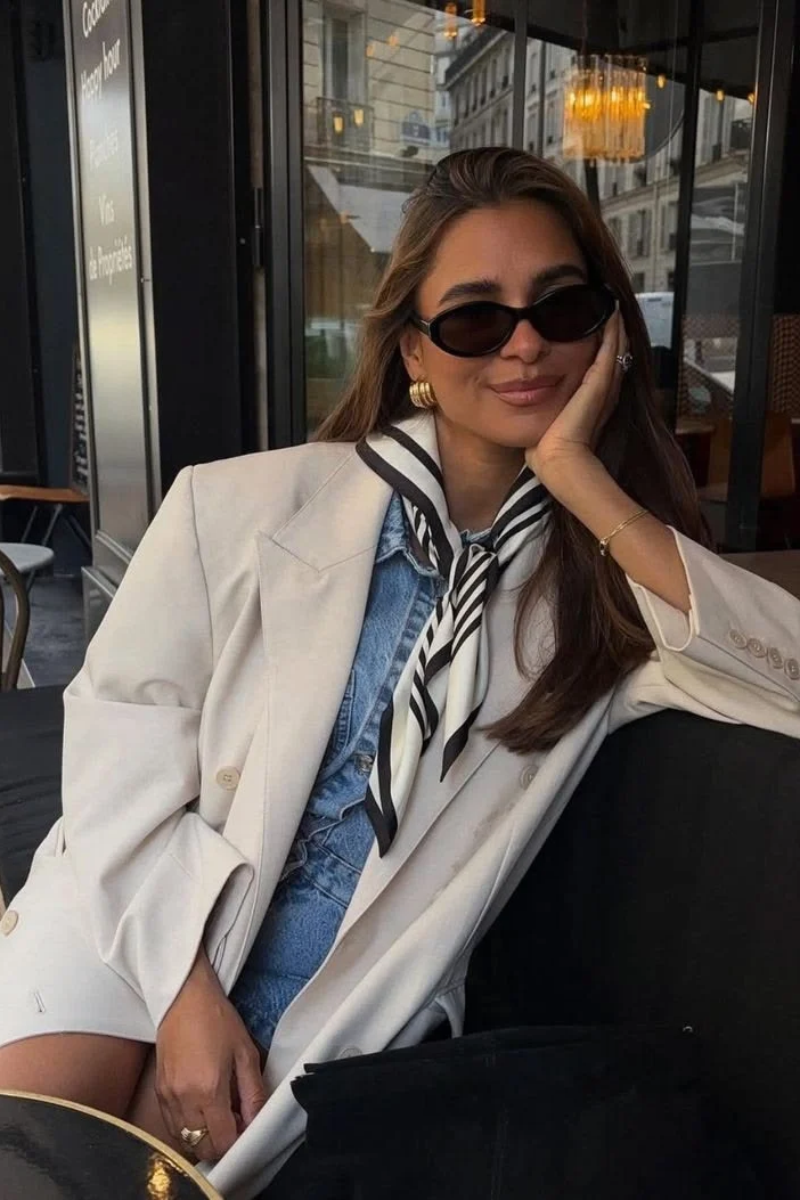
Best scarf: long rectangular scarf.
The classic loop is one of the easiest scarf-tying techniques for beginners. It creates a neat, balanced finish that works with everyday outfits and winter layers.
How to do it:
- Fold your scarf half lengthwise if it is wide.
- Fold it in half across the middle to create a loop at one end.
- Place the scarf around your neck, with the loop on one side and both loose ends on the other.
- Pull the loose ends through the loop.
- Gently adjust the loop and end until the scarf sits comfortably.
Best with sweaters, denim jackets, blazers, and winter coats.
Styling tip: keep the loop lose for a relaxed look or position it closer to your neck when you need extra warmth. Avoid pulling it too tightly.
The French Knot
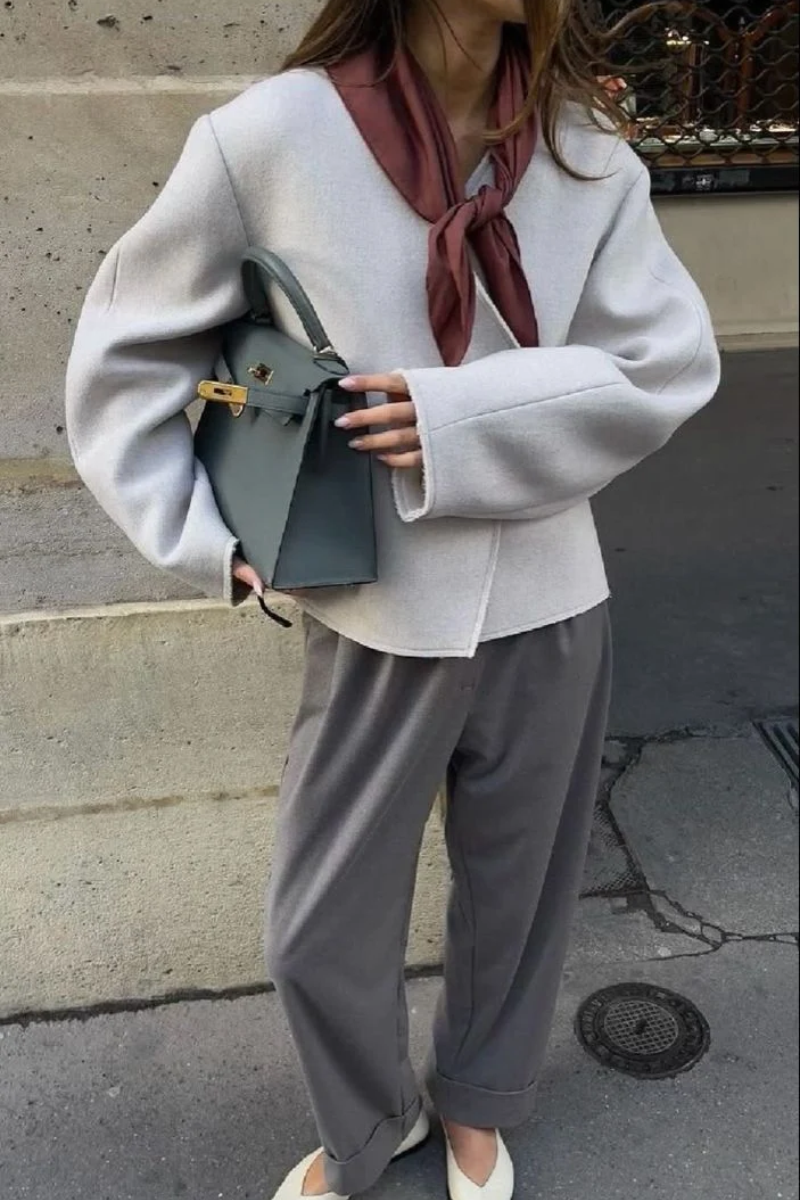
Best scarf: small or medium silk square.
A French knot adds a polished detail to simple outfits. It works particularly well with structured clothing because the compact shape keeps the neckline looking tidy.
How to do it:
- Fold the square diagonally into a triangle.
- Fold the triangle repeatedly until you have a narrow band.
- Place the band around your neck, with the ends at the front.
- Cross one end over the other.
- Pass one end through the opening to form a simple knot.
- Adjust the knot to sit at the center or slightly to one side.
Best with a white shirt, tailored blazer, crewneck knit or simple dress.
Styling tip: choose a contrasting print to brighten a neutral outfit. For more folding inspiration, explore Hermès’ official scarf-knotting guide.
The Loose Drape
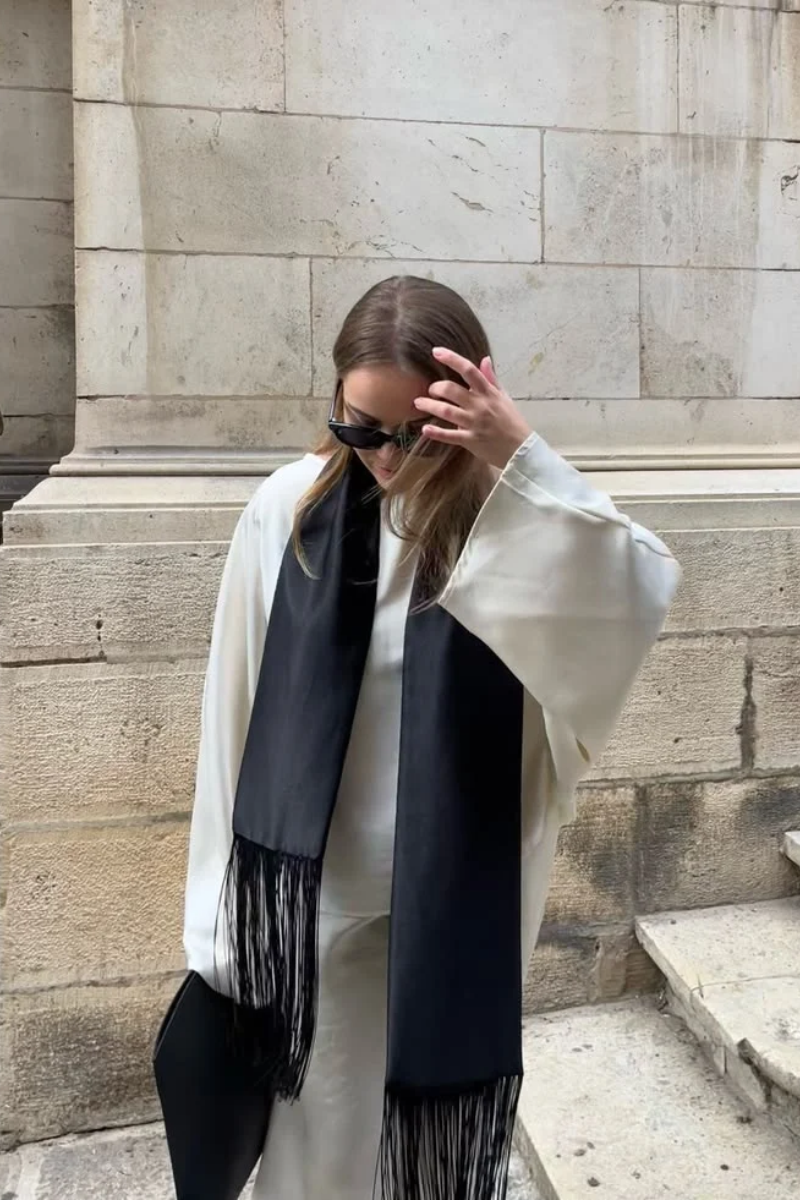
Best scarf: long, lightweight rectangular scarf.
For a relaxed look that requires almost no knotting, simply let your scarf fall naturally over the outfit. This technique adds color, movement, and texture without creating bulk around your neck.
How to do it:
- Open the scarf fully or fold it lengthwise if it is incredibly wise.
- Place it around the back of your neck.
- Let both ends hang down the front.
- Adjust the ends so they are equal or slightly uneven.
- Smooth the fabric over your shoulders.
Best with tailored coats, open blazers, button-down shirts, and lightweight knitwear.
Styling tip: use a printed scarf over a plain outfit to make the pattern stand out. This is a good option when you want a decorative accessory rather than a tightly wrapped layer.
The Shoulder Knot
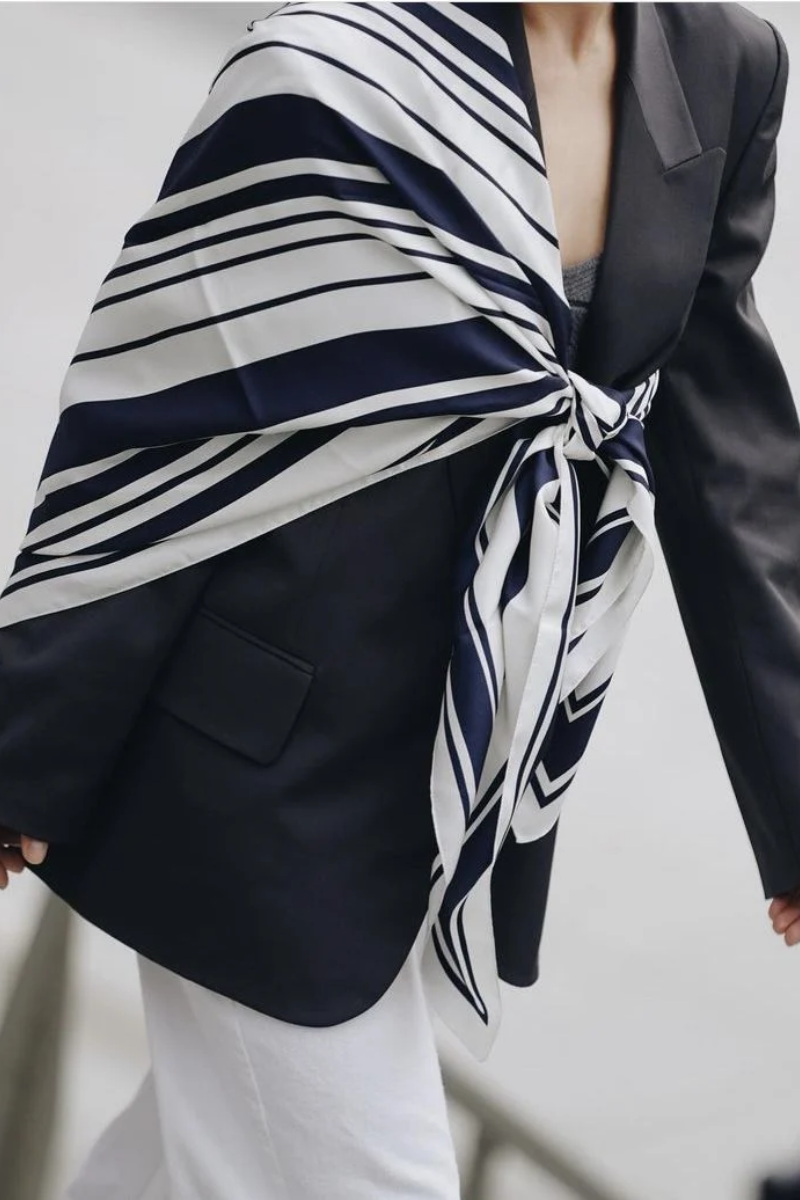
Best scarf: medium or large silk scarf, or a lightweight rectangular scarf.
The shoulder knot creates an asymmetrical finish that feels more deliberate than a simple drake. It is particularly effective when you want your scarf to become a visible part of your outfit.
How to do it:
- Fold the scarf into a long band if necessary.
- Place it around your neck, leaving one end longer than the other.
- Bring the ends towards one shoulder.
- Cross them and tie a loose knot.
- Arrange the fabric so the knot resets on or just below the shoulder.
- Spread the ends slightly for a softer finish.
Best with tailored trousers, a simple black dress, a blazer, or a minimalist top.
Styling tip: keep the knot relaxed rather than pulling it tight. Pair it with simple earrings and clean lines so the scarf remains the focal point.
The Bandana Fold
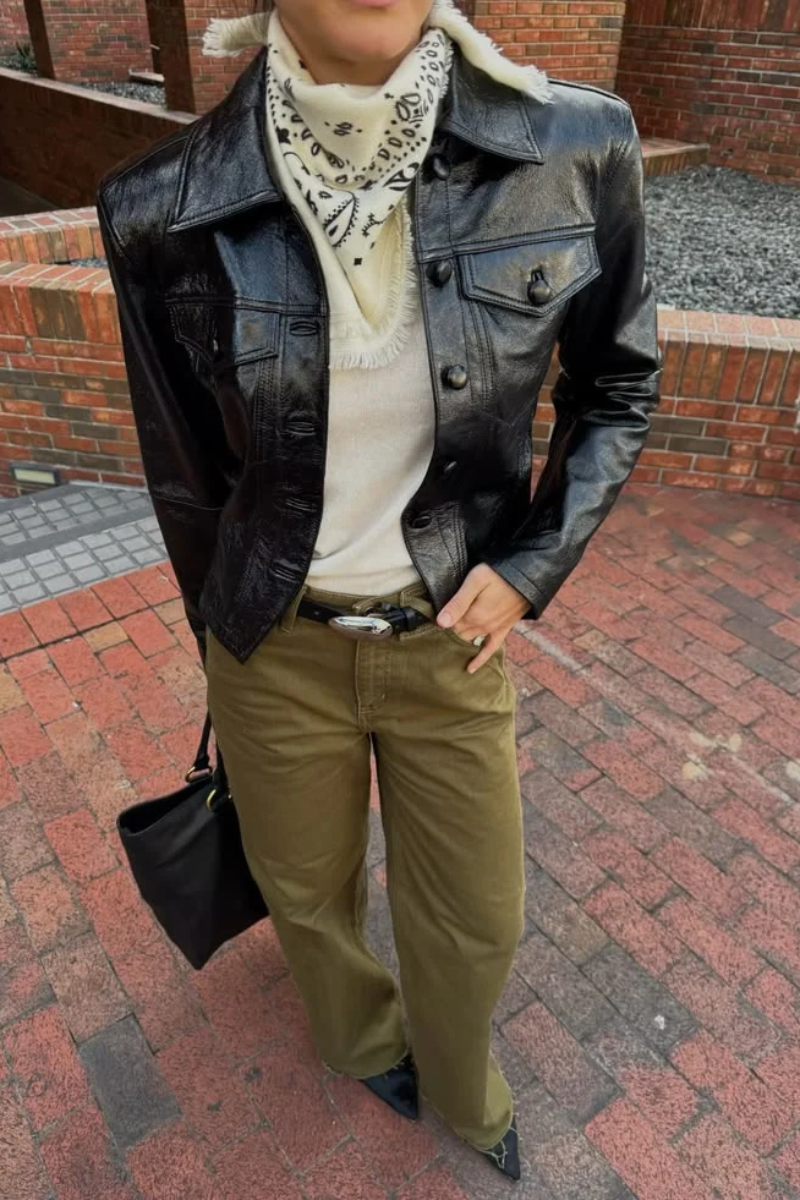
Best scarf: small or medium square cotton scarf.
The bandana gold gives casual outfits a playful finish. Unlike the French knot, which emphasizes a compact neckline, this style places triangular points at the front.
- Lay the scarf flat and fold it diagonally into a triangle.
- Position the triangle point at the front of your neck.
- Bring the two ends around the slides of your neck.
- Tie them securely at the back.
- Adjust the front triangle so it ties flat against your chest.
Best with a white T-shirt, denim jacket, leather jacket, or casual blazer.
Styling tip: choose a small-scale print for a subtle accent or a bold pattern to add contrast, cotton is a useful choice because it holds its shape well.
The Necktie Scarf
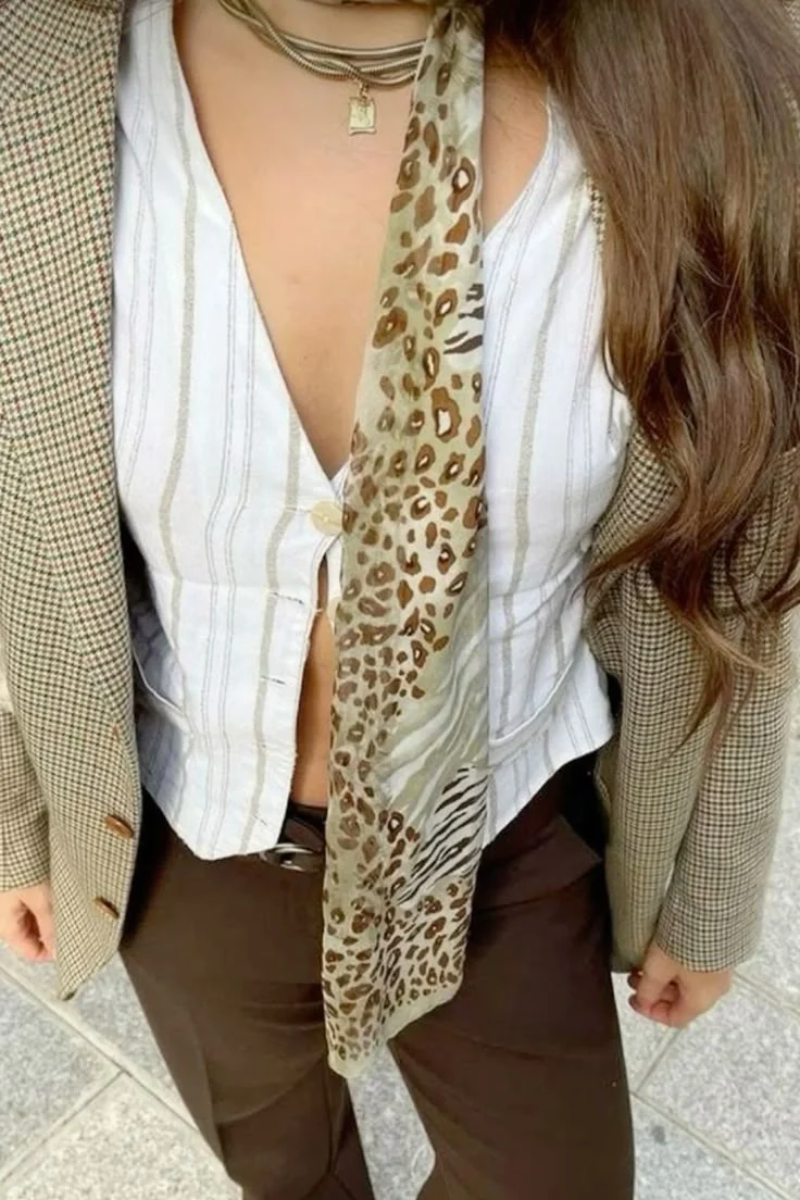
Best scarf: long, skinny silk scarf.
If you prefer a tailored look, wear a narrow scarf like a slim necktie. The vertical lines draw attention to the neckline and add interest without the volume of a chunky scarf.
How to do it:
- Fold the scarf lengthwise until it forms a narrow strip.
- Place it around your neck, with one end slightly longer.
- Cross the longer end over the shorter one.
- Bring the longer end underneath and through the opening at the neck.
- Pass it through the front loop to create a simple tie-style knot.
- Adjust the knot and let both ends fall vertically.
Best with button-down shirts, waistcoats, tailored blazers, and trousers.
Styling tip: wear it over a buttoned shirt or beneath an open blazer. A solid-color scarf works well with a patterned shirt, while a printed scarf can enliven a neutral outfit.
The Double Wrap
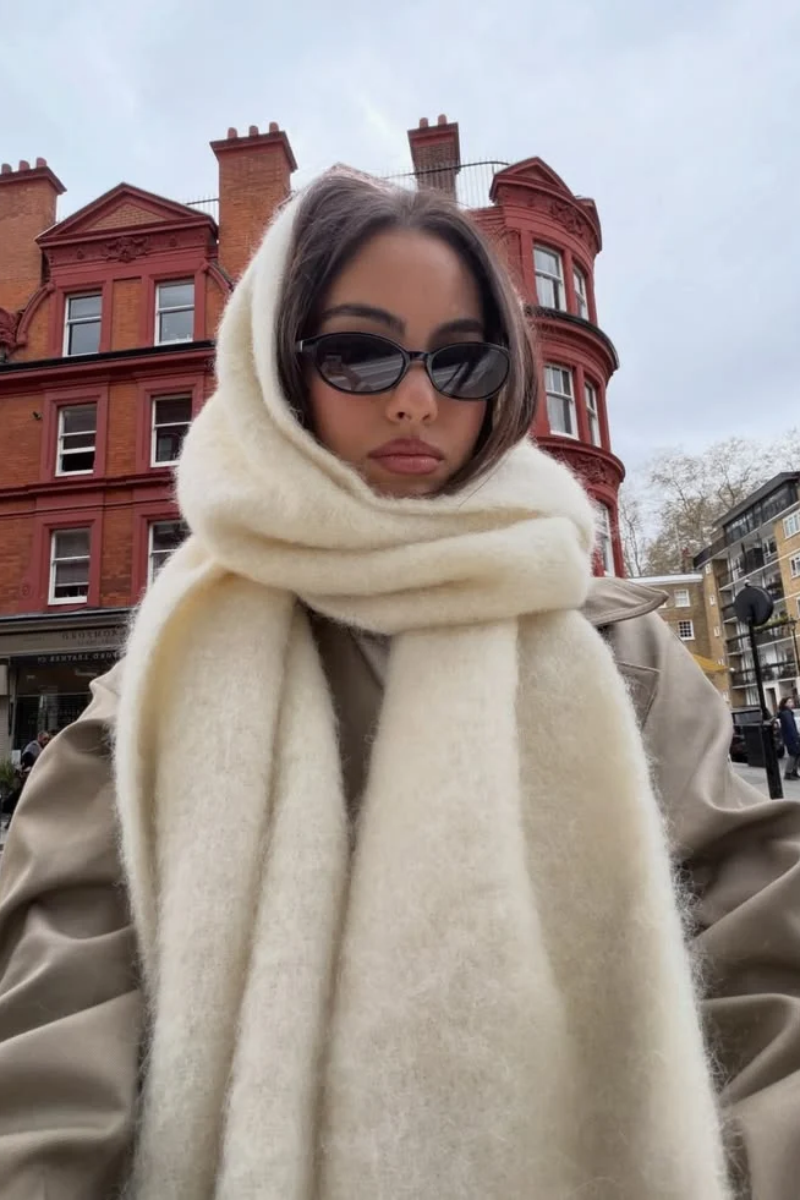
Best scarf: long rectangular wool or cashmere scarf.
When the temperature drops, the double wrap offers more coverage than a loose drape. It also creates a fuller silhouette around the neck, making it a practical option for colder days. For more cold-weather outfit inspiration, explore our guide to ten pieces that carry you through winter.
How to do it:
- Place the scarf around your neck, leaving both ends hanging in front.
- Take one end and wrap it around your neck.
- Repeat with the other end or continue wrapping the scarf around your neck if its length allows.
- Bring the ends forward.
- Tuck them loosely beneath the wrapped layers or tie a relaxed knot.
- Adjust the fabric so it feels secure without restricting movement.
Best with wool coats, puffer jackets, trench coats, and chunky sweaters.
Styling tip: let a little of the scarf show above your coat collar. Choose a contrasting color if you want the scarf to stand out against neutral outerwear.
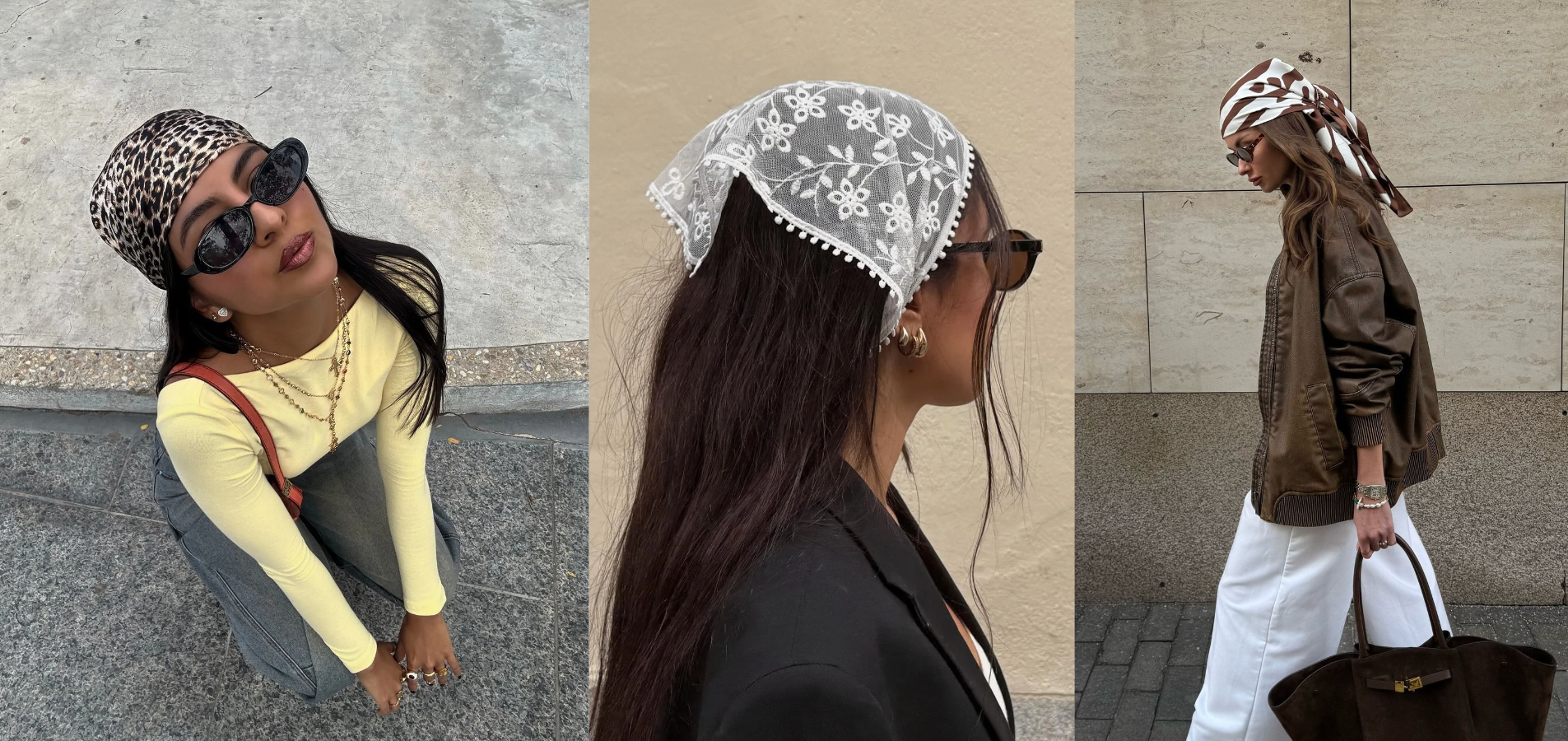
The Headscarf:
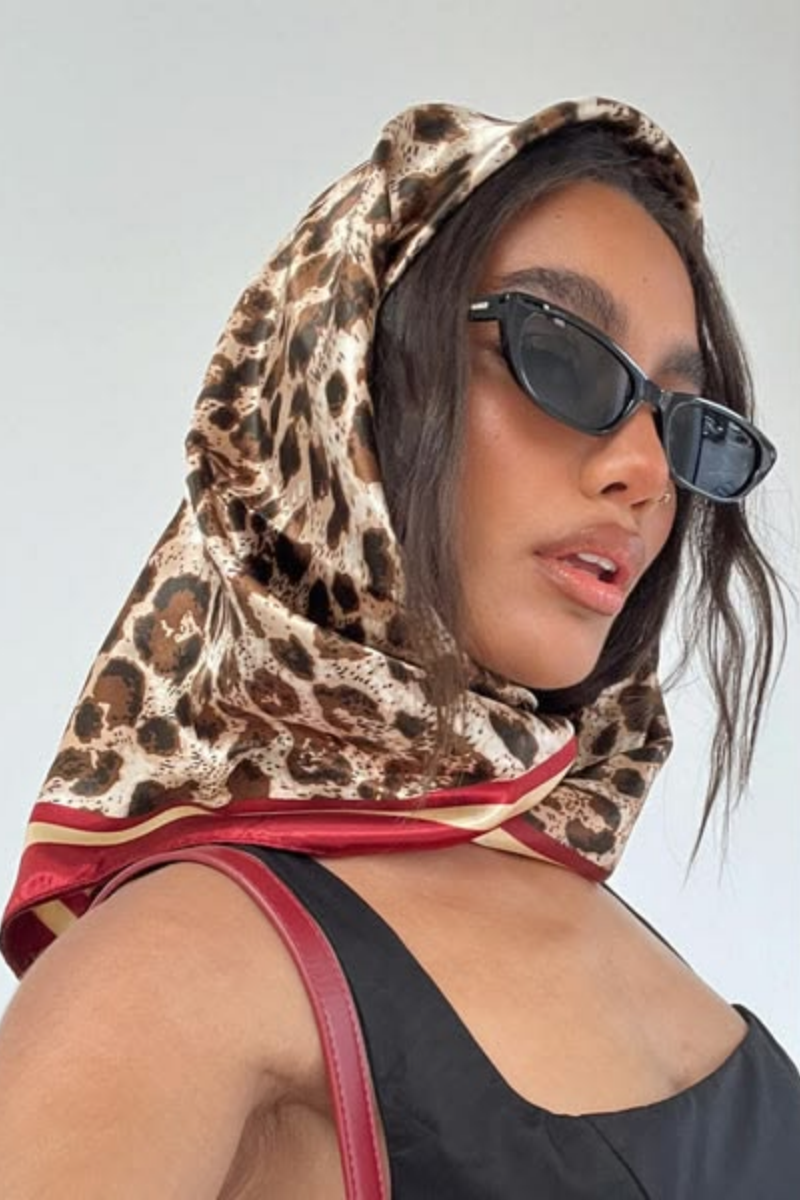
Best scarf: medium or large square silk or cotton scarf.
A headscarf can bring color to a simple outfit while keeping hair away from your face. It works with casual daytime clothing as well as more polished looks.
How to do it:
- Fold the square diagonally into a triangle.
- Place the long-folded edge across your forehead or just behind your hairline.
- Bring the ends down along the slides of your head.
- Tie them under your chin or behind your head, depending on the finish you prefer.
- Adjust the fabric around your temples and ears.
Best with sunglasses, simple coats, summer dresses, and tailored separates.
Styling tip: let a printed silk scarf provide the color against a neutral outfit. If the scarf slips, try a fabric with more grip or adjust the fold so it sits securely without pulling your hair.
The Scarf Belt
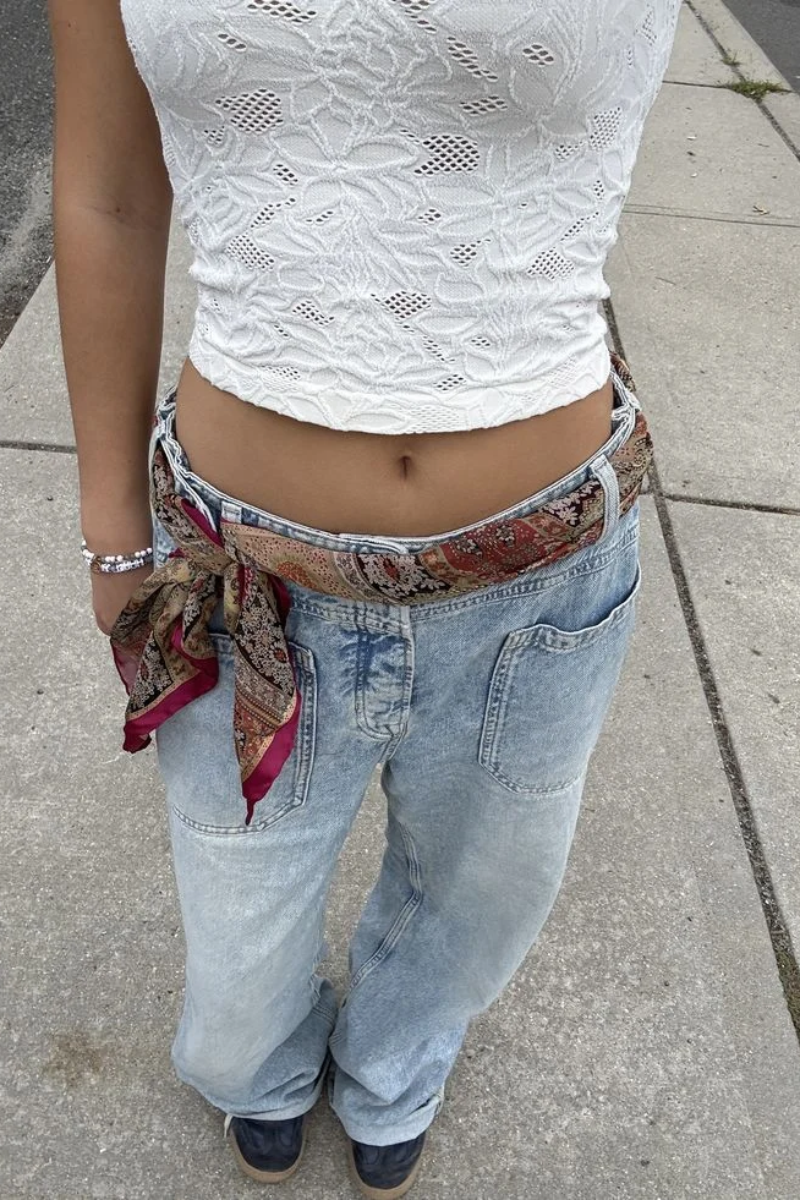
Best scarf: long, lightweight silk or viscose scarf.
A scarf belt is an effortless way to add color around your waist without using a conventional belt. It can also introduce a print to an otherwise simple outfit. Vogue’s 2026 styling coverage highlights the scarf as a versatile waist and layering accessory.
How to do it:
- Fold the scarf lengthwise into a narrow strip.
- Thread it through your trousers or skirt belt loops if the scarf is long enough.
- Bring both ends to the front or side.
- Tie a simple knot or bow.
- Adjust the tails so they hang neatly.
Alternatively, wrap the scarf around your waist over a dress or coat and tie it at the side.
Best with jeans, tailored trousers, maxi skirts, simple dresses, and trench coats.
Styling tip: keep the knot comfortable and avoid tying delicate silk too tightly. If you use the scarf over clothing rather than through belt loops, check that it stays in place as you move.
The Bag Handle Wrap
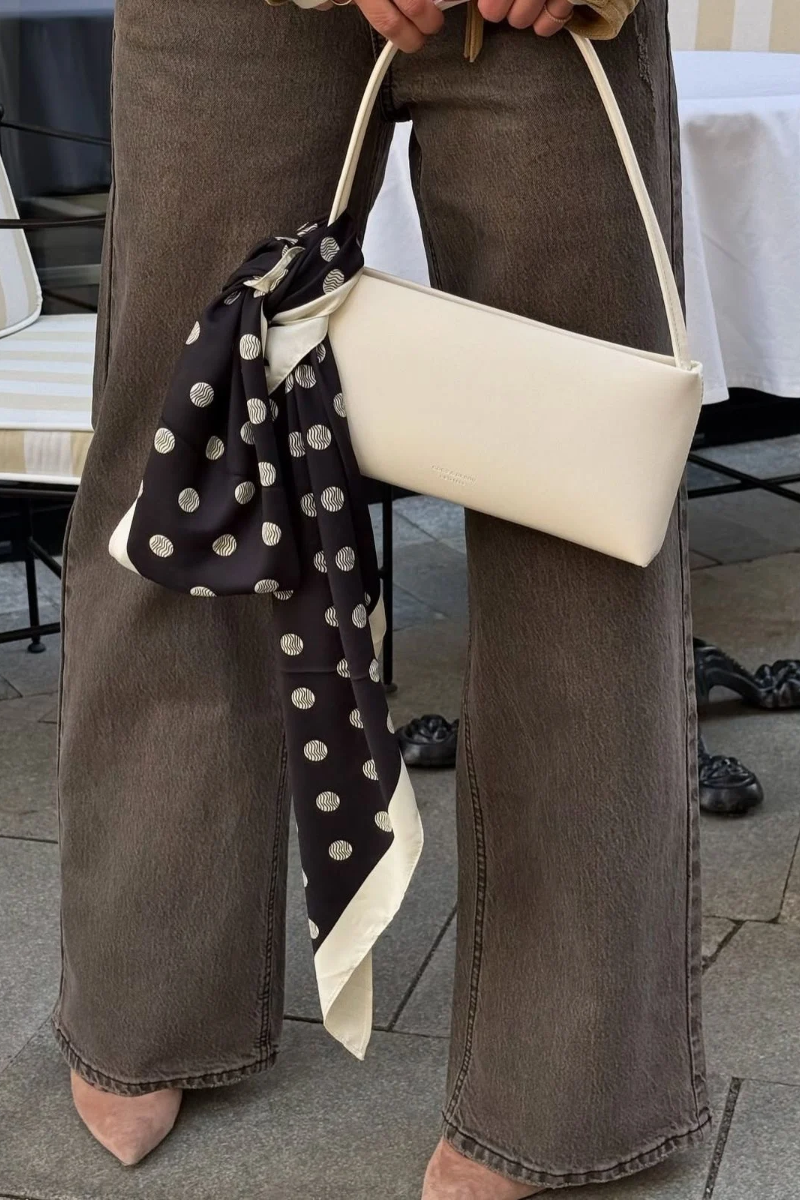
Best scarf: small silk square or long, narrow scarf.
Your handbag can become another place to experiment with scarf styling. A handle wrap adds a small flash of color and can coordinate with other accessories without changing the rest of your outfit.
How to do it:
- Fold the scarf into a narrow strip.
- Secure one end around the base of the bag handle with a small knot.
- Wrap the fabric around the handle, overlapping each turn slightly.
- Continue until you reach the other end.
- Tie the end securely or tuck it neatly beneath the wrapped fabric.
Best with structured handbags, totes, and shoulder bags.
Styling tip: match one color in the scarf to your shoes, clothing, or jewelry for a coordinated look. Avoid wrapping delicate fabric around rough hardware that could snag it.
Which Scarf Style Should You Choose?
| Your Styling Goal | Try This Method |
| Extra warmth | Double wrap |
| Classic polish | French knot |
| Everyday simplicity | Classic loop |
| Minimal effort | Loose drape |
| A statement neckline | Shoulder knot |
| Casual styling | Bandana fold |
| Tailored dressing | Necktie scarf |
| A hair accessory | Headscarf |
| Waist definition | Scarf belt |
| A handbag accent | Bag handle wrap |
How to Make Scarf Styling Look Modern in 2026
The easiest way to update scarf styling is to experiment with placement rather than buying a new accessory. Vogue’s Fall 2026 accessory report highlights printed silk scarves and larger draped styles, while its Spring 2026 silk-scarf guide explores uses ranging from neckwear to belts and tops.
Try these simple ideas:
- Pair classic knots with modern tailoring: wear a French knot with an oversized blazer or a necktie scarf with straight-leg trousers.
- Add contrast to neutral outfits: a colorful scarf can refresh a black coat, white shirt, or grey knit.
- Experiment with placement: move the scarf from your neck to your waist, head, or handbag.
- Play with proportions: a large scarf creates a statement against fitted clothing, while a narrow scarf suits structured outfits.
- Mix prints thoughtfully: look for a shared color or vary the scale of the patterns to keep the combination balanced.
A scarf worn as a top or substantial wrap can also make a stronger statement but choose a sufficiently large piece and secure it appropriately for coverage and movement.
Scarf Styling Ideas for Different Outfits
Not sure which method suits what you are wearing? Use these combinations as a starting point.
| Outfit | Scarf Method |
| White shirt and jeans | French knot |
| Blazer and tailored trousers | Necktie scarf |
| Long coat | Loose drape |
| Sweater and denim | Classic loop |
| Simple dress | Shoulder knot |
| Trench coat | Scarf belt |
| Leather jacket and jeans | Bandana fold |
| Winter coat | Double wrap |
| Minimal handbag | Bag handle wrap |
| Sunglasses and a simple outfit | Headscarf |
Common Scarf-Tying Mistakes to Avoid
- Choosing the wrong size: a small square will not create the volume of a long rectangular scarf.
- Pulling every knot too tightly: a little movement often makes a scarf look more relaxed.
- Ignoring proportions: balance oversized scarves with simpler clothing and delicate outfits with a suitable neckline.
- Adding too many statement details: let a bold scarf stand out against a simple outfit.
- Using the wrong fabric: choose wool for warmth and lightweight silk for decorative knots and draping.
How to Keep a Scarf Knot in Place
Tie knots securely without pulling them too tight. Tuck loose ends beneath clothing layers where appropriate and choose a fold that suits the fabric. Slippery silk may need more careful adjustment than cotton.
Final Thoughts
Learning how to tie a scarf opens more styling options without adding clothes to your wardrobe. Start with the classic loop, French knot, or loose drape, then experiment with a headscarf, belt or handbag wrap when you want something different.
The best scarf styling technique is the one that feels comfortable, suits your outfit, and makes use of what you already own. With a few simple folds and knots, one accessory can create a surprising range of looks.
For delicate or expensive scarves, follow the care label when steaming or ironing, and avoid pins or clips that could damage the fabric.
FAQs - How To Tie a Scarf 10 Different Ways

Fashion and culture writer with a keen eye for red-carpet style, celebrity dressing, beauty, and the intersection of fashion and film. Their work explores the ideas and stories behind the looks, from emerging trends and archival fashion to the evolving language of modern celebrity style.