How To Build A 2026 Capsule Wardrobe on A Budget
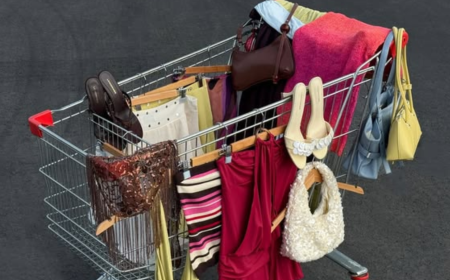
A full wardrobe does not necessarily mean you have enough outfits. If getting dressed still feels difficult, buying another 20 or 30 pieces may not solve the problem.
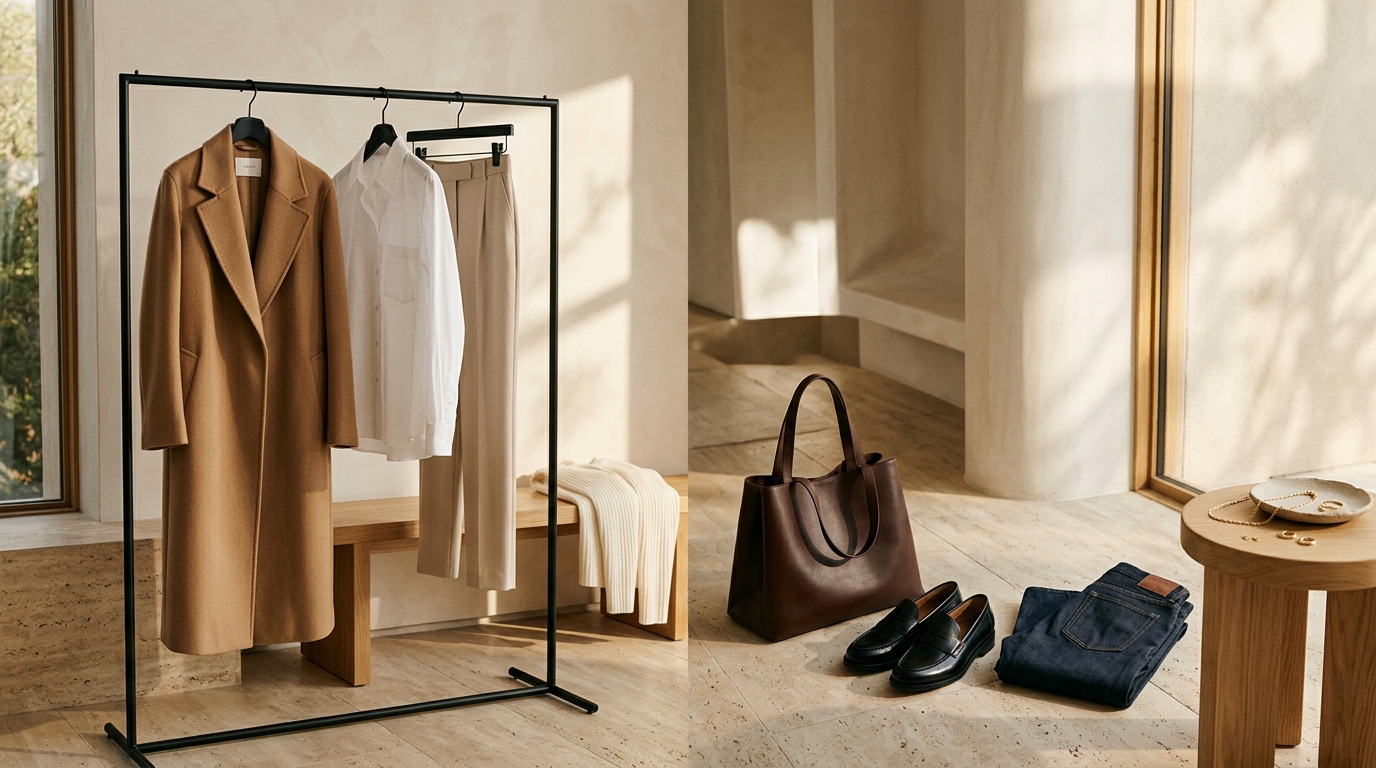
The smarter approach is to start with what you own, identify the gaps that make getting dressed harder and spend selectively on versatile pieces. A few thoughtful updates to your denim, knitwear, outerwear, or accessories can refresh your style without requiring a complete wardrobe overhaul.
How do you build a capsule wardrobe on a budget? Audit your existing clothes, set a realistic spending limit, identify genuine gaps, and choose pieces that work across multiple outfits.
What Is a Capsule Wardrobe?
A capsule wardrobe is a deliberately edited collection of clothing in which pieces can be combined across multiple outfits and occasions.
There is no official number of pieces required. A 10-piece, 30-piece or 40-piece wardrobe can all function as a capsule if the clothes suit the person’s lifestyle and work together. Recent capsule-wardrobe guides similarly emphasize compatibility rather than a universal item count.
The most useful budget principle is simple:
Versatility matters more than quantity.
One pair of trousers that works with five tops may be more valuable than three inexpensive pairs that each work with only one outfit.
Step 1: Audit the Wardrobe You Already Own
Before opening a shopping app, look at your closet.
Take everything out if you have the time, or work category by category.
Then divide your clothes into four groups:
| Group | What to do |
| Wear constantly | Keep and build outfits around these pieces |
| Like but rarely wear | Work out why they are being ignored |
| Needs repair or alteration | Fix before considering replacement |
| Never wear | Donate, resell or recycle appropriately |
Now ask yourself:
- Which colors do I repeatedly reach for?
Step 2: Choose Your Budget Before Shopping
For example, imagine you have $250 available for a wardrobe refresh. You could divide that budget among five practical categories:
| Budget Approach | Strategy |
| Extremely limited | Shop your wardrobe first, then use secondhand, resale and sales for essentials |
| Moderate | Replace the weakest high-use pieces and add a few current updates |
| Flexible but value-conscious | Spend selectively on frequently worn pieces and keep trend purchases inexpensive |
These figures are illustrative, not fixed prices. Adjust the amounts based on what you already own, local prices and which items you need most.
What Should You Buy First?
Buy or replace the item that solves your most frequent outfit problem, rather than choosing a trend-led piece first. If you repeatedly struggle to find trousers that work with your tops, prioritize a versatile pair of trousers. If your outfits feel incomplete without a layer, consider a blazer, cardigan or jacket that complement several pieces you already own. The best first purchase is the one that makes the greatest number of existing outfits easier to wear.
The important point is the order: fill gaps first, experiment second.
Step 3: Choose a Flexible Color Palette
A coordinated color palette makes a budget wardrobe easier to style.
You could use neutrals such as:
- Black
- Cream
- White
- Navy
- Gray
- Brown
Then add one or two accent colors.
If you want to update a neutral capsule for autumn, try adding an accent color such as cherry red, purple or cobalt blue. Brown and plum are other options if they complement the colors, you already wear. Choose shades that suit your personal style rather than replacing your wardrobe to follow a trend.
Step 4: Build Around Clothing Categories
Instead of following an arbitrary list of garments, create a flexible foundation that reflects your lifestyle.
Tops
A useful starting point could include:
- 2-3 everyday T-shirts
- 1 button-down shirt
- 1 more polished top
- 1-2 sweaters or knits
One 2026 update worth considering is a V-neck knit. Fashion coverage has identified V-neck styles as a current alternative to the classic crew neck, while contemporary retailers are offering them in colors including brown, red, and purple.
But if you love crew necks, keep wearing them. A trend is useful only when it works for you.
Bottoms
A flexible starting point could be:
- 1 everyday pair of jeans
- 1 second denim or trouser option
- 1 tailored trouser
- 1 skirt, dress or additional trouser
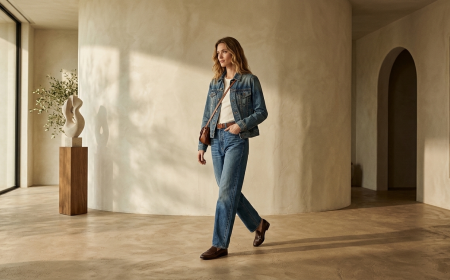
For 2026, denim remains a useful capsule foundation, but there is no single silhouette everyone needs to wear. Current coverage spans straight-leg, bootcut, flared, wide-leg and baggy silhouettes. If you already own wide-leg jeans, our guide to how to style wide-leg jeans for the office offers another way to make a current denim silhouette work beyond casual outfits.
Straight-leg jeans are a practical capsule choice if you like their proportions, but do not buy them simply because they are fashionable. The best denim silhouette is the one you feel comfortable wearing and can style with several pieces you already own.
If you’re unsure which silhouettes and proportions feel most comfortable on you, our practical guide to dressing for your body type can help you make more confident choices when building your capsule.
Layers and Outerwear
Prioritize according to your climate:
- 1 blazer
- 1 versatile jacket
- 1 weather-appropriate coat
- Optional cardigan or lightweight layer
A well-fitting blazer can work with jeans, trousers, skirts, dresses, T-shirts, and knitwear, making it a high-use piece.
For a 2026 update, funnel-neck outerwear is worth considering. Fall 2026 coverage highlights funnel-neck jackets and coats as one current direction, alongside longer and more sculptural outerwear..
Shoes
A compact shoe selection could include:
- Everyday sneakers
- Loafers or polished flats
- Ankle or knee-high boots
- Optional occasion shoes
Loafers remain useful because they can bridge casual denim, tailored trousers, and dresses. Brown footwear can also provide a simple alternative to black as brown continues to feature strongly in current autumn styling.
The One-Statement-Piece Rule
A budget capsule does not have to look boring.
Choose one affordable statement piece — such as a colorful knit, printed skirt, distinctive jacket, statement bag, or bold jewelry — and pair it with basics you already own.
This lets you experiment with 2026 trends without making major wardrobe purchases.
Where to Spend, Save and Thrift
The goal is not to prove that expensive clothes are better. It is to put your limited budget where quality, fit or frequency of use matters most.
| Category | Consider Spending More | Consider Saving |
| Coat | Fit, fabric, and construction | Trend-led seasonal coat |
| Blazer | Fit and structure | Trend color |
| Jeans | Fit and denim quality | Trend wash |
| T-shirts | Comfort and fabric | Basic colors |
| Knitwear | Fabric and durability | Trend colors |
| Occasion wear | Fit and re-wearability | Highly seasonal details |
| Accessories | Daily-use pieces | Trend accessories |
A higher price is not automatically better. Spend more where poor construction, bad fit or frequent replacement would create greater long-term cost.
Where to Shop on a Budget
High Street: useful for basics, trend updates, seasonal colors, and accessories.
Secondhand and resale: particularly useful for coats, blazers, denim, leather goods, and higher-priced pieces.
Sales and outlets: useful for shoes, outerwear, and quality basics when the original price would otherwise exceed your budget.
Your existing wardrobe: still the cheapest source of all.
Current 2026 retail coverage shows that affordable wardrobe updates are available across denim, knitwear, tailoring, jackets, and everyday basics, including discounted seasonal options.
Before buying, compare the garment’s fabric, construction, fit and expected frequency of wear rather than looking at the price alone. When shopping secondhand, inspect seams, zippers, buttons, stains, and signs of fabric wear. For sale items, check the return policy and compare the final price with similar alternatives. A lower price is useful only when the item fits well, works with your wardrobe and is likely to be worn regularly.
How to Avoid the “Budget Haul” Trap
A low price does not automatically make something a good purchase.
Before buying, ask:
- Can I style it at least three ways?
- Does it work with clothes I already own?
- Would I want it if it weren’t trending?
- Do I already own something similar?
- Is the fit quality worth the price?
Prioritize usefulness over the number of items you can buy.
Build More Outfits from Fewer Pieces: 24 Outfit Formula
A budget capsule wardrobe becomes more useful when you know how to combine its pieces. Instead of buying something new whenever an outfit feels repetitive, experiment with different layers, shoes, proportions, and accessories.
Here are 24 outfit formulas using versatile wardrobe staples.
White Shirt: 5 Outfit Combinations
- White shirt + straight-leg jeans + loafers.
- White shirt + tailored trousers + ballet flats.
- White shirt + midi skirt + ankle boots.
- White shirt + knit sweater + jeans + sneakers.
- White shirt worn open over a T-shirt + relaxed trousers + sneakers.
Jeans: 5 Outfit Combinations
- Straight-leg jeans + white T-shirt + loafers.
- Wide-leg jeans + fitted knit + ankle boots.
- Jeans + button-down shirt + blazer + flats.
- Jeans + V-neck sweater + sneakers.
- Jeans + statement top + polished shoes for an evening outfit.
Tailored Trousers: 4 Outfit Combinations
- Tailored trousers + basic T-shirt + sneakers.
- Tailored trousers + knit sweaters + loafers.
- Tailored trousers + button-down shirt + blazer.
- Tailored trousers + statement top + occasion shoes.
Blazer: 4 Outfit Combinations
- Blazer + jeans + white T-shirt + loafers.
- Blazer + tailored trousers + button-down shirt.
- Blazer + midi skirt + simple top + ankle boots.
- Blazer + casual dress + sneakers or flats.
Knitwear and Layering: 3 Outfit Combinations
- V-neck sweater + straight-leg jeans + loafers.
- Cardigan + T-shirt + tailored trousers + flats.
- A sweater layered over a white shirt + jeans + ankle boots.
Skirts, Dresses and Accessories: 3 Outfit Combinations
- Midi skirt + basic T-shirt + sneakers.
- Simple dress + blazer + loafers.
- Neutral outfit + colorful scarf, bag, or statement jewelry.
These formulas show how a small collection of clothing can create a range of outfits for casual days, work, social plans, and evenings out. You can adapt each combination to your climate, personal style, and the clothes you already own.
The key is to reuse your wardrobe creatively. Before buying another item, see whether changing your shoes, adding a layer or introducing an accessory can give a familiar outfit a fresh look.
A Sample 2026 Budget Capsule
This example focuses on everyday clothing, layering pieces, shoes, and accessories. It does not include underwear, sleepwear, activewear, uniforms, or specialist clothing, which you can manage separately according to your needs. Some categories can also overlap, for example, a versatile jacket might serve as both your everyday layer and your main outerwear in a mild climate.
Here is a framework, not a prescription:
| Category | Example Quantity |
| Everyday tops | 3 |
| Shirts/versatile tops | 2 |
| Jeans/trousers | 2 |
| Skirt or dress | 1 |
| Knitwear | 2 |
| Blazer | 1 |
| Everyday jacket | 1 |
| Weather-appropriate coat | 1 |
| Shoe options | 3 |
| Accessories | 2-3 |
Someone who works from home may need fewer tailored pieces and more comfortable layers. Someone commuting to a formal office may need more trousers, shirts, and polished shoes.
The right capsule is the one that supports your actual week.
How to Make a Capsule Wardrobe Feel Like 2026
You can give the capsule wardrobe a current feel in 2026 with small updates to silhouettes, colors, and accessories. Choose one or two trends that complement your existing clothes rather than rebuilding your wardrobe.
Straight-leg, bootcut or another current denim silhouette: choose the shape that suits your body and existing wardrobe. Current 2026 denim coverage is notably diverse, so there is no need to force one cut.
V-neck knitwear: an easy alternative to a familiar crew neck.
Funnel-neck outerwear: a practical way to introduce a more sculptural shape.
Loafers or polished flats: useful for making casual outfits feel more finished.
Brown accessories: an easy alternative to an all-black accessory wardrobe.
One stronger color: red, purple or another current shade can provide a modern focal point without changing your whole palette.
Build a Capsule Around Your Lifestyle
There is no universal minimalist wardrobe because there is no universal lifestyle.
| Lifestyle | Prioritize |
| Office-based | Tailored trousers, blazers, shirts, and loafers |
| Hybrid/remote | Knitwear, denim, comfortable trousers, and versatile layers |
| Student | Denim, relaxed trousers, sneakers, and jackets |
| Creative work | Reliable basics plus statement pieces and accessories |
| Frequent traveler | Versatile layers and wrinkle-resistant pieces |
| Mostly casual | Great denim, T-shirts, knitwear, sneakers and one polished layer |
Climate matters too. A capsule for a hot climate will look quite different from one designed for a cold winter.
Adjust the Capsule Seasonally
A capsule does not have to remain completely static for 12 months.
Spring: lighter denim, breathable shirts, lightweight knits, and flats.
Summer: cotton or linen pieces, dresses, lightweight trousers, and sandals.
Autumn: knitwear, blazers, boots, and transitional coats.
Winter: heavier coats, substantial knitwear, warm layers, boots, and cold-weather accessories. If you are building a more complete cold-weather wardrobe, our guide to 10 pieces that carry you through winter can help you identify the winter staples worth prioritizing.
The core can stay stable while a smaller seasonal section rotates.
Common Budget Capsule Mistakes
Buying everything at once: Build gradually as genuine needs emerge.
Choosing basics you dislike: A conventional wardrobe staple is not essential if it does not suit your lifestyle or personal style.
Buying too many neutrals: Add accent colors that reflect your preferences.
Confusing cheap with good value: Consider fit, durability and how often you will wear the item.
Following every 2026 trend: Choose only updates that complement your existing wardrobe.
Ignoring alterations: A simple alteration can make an existing garment more wearable.
Forgetting your lifestyle: Choose clothes that suit your daily activities, climate, and work environment.
The 30-Day Budget Capsule Challenge
Week 1: Audit
Wear outfits from your existing wardrobe. Photograph combinations you like and note the pieces you repeatedly reach for.
Week 2: Identify gaps
Write down only the garments you genuinely cannot replace with something you already own.
Week 3: Shop strategically
Check your own wardrobe first, then consider resale, secondhand, sales and affordable retailers.
Week 4: Style
Create at least 15–20 outfit combinations before deciding whether you need anything else.
The objective is not to finish with a perfectly minimalist closet. It is to finish with a wardrobe that makes getting dressed easier.
The Bottom Line
A budget capsule wardrobe starts with editing, not shopping. Keep the clothes you wear, repair what you can identify the gaps that make getting dressed difficult. Then spend selectively on pieces that fit your lifestyle, budget, and personal style.
You do not need a fixed number of garments to build a useful capsule. A few thoughtful updates can keep your wardrobe feeling current in 2026 while helping you create more outfits from what you already own.
One wardrobe, many outfits. That is a real budget-friendly capsule.
FAQs - How To Build A 2026 Capsule Wardrobe on A Budget

Fashion and culture writer with a keen eye for red-carpet style, celebrity dressing, beauty, and the intersection of fashion and film. Their work explores the ideas and stories behind the looks, from emerging trends and archival fashion to the evolving language of modern celebrity style.