How To Layer Jewelry Without It Looking Cluttered
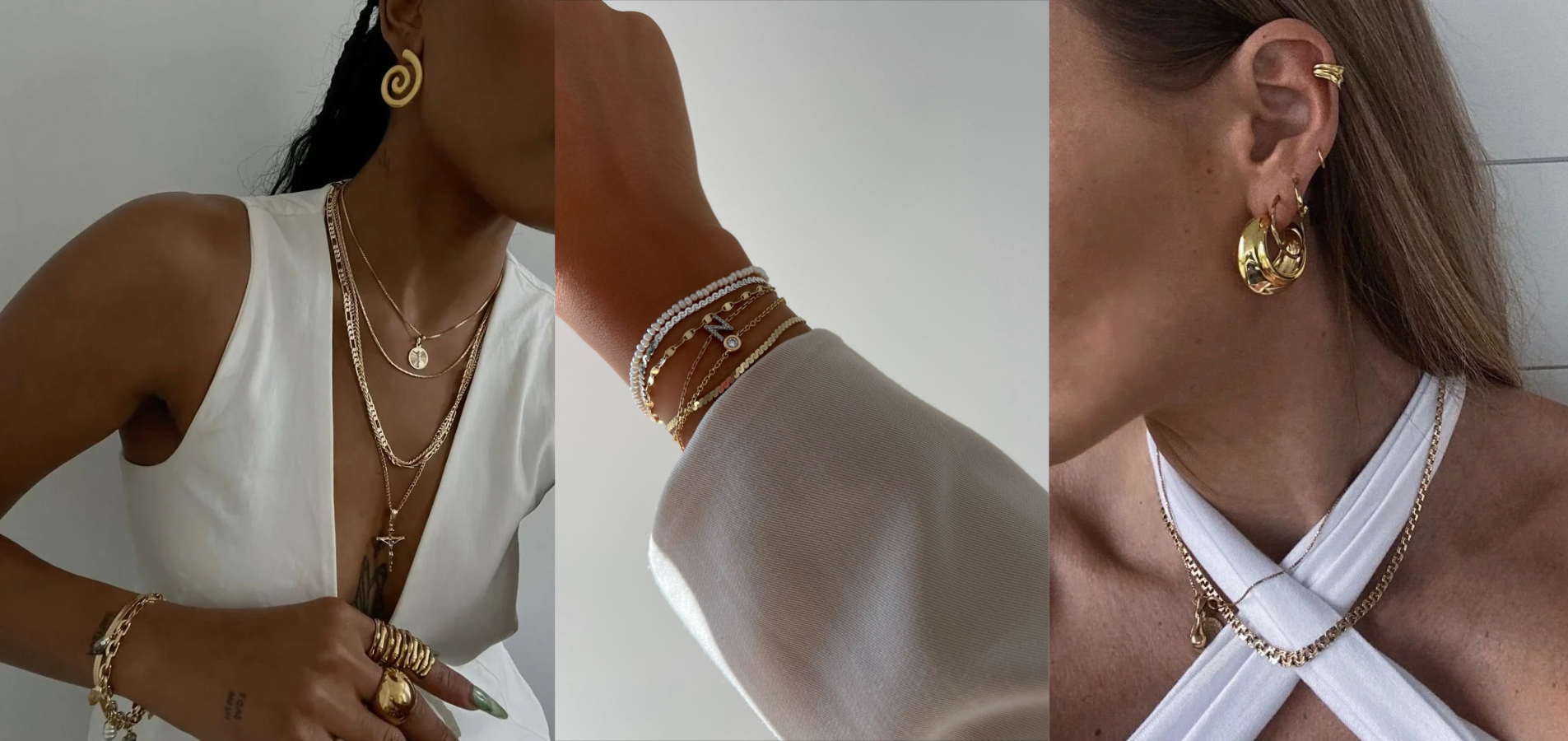
Layering jewelry can add character and interest to an outfit, but too many clashing pieces can make the whole ensemble look busy. The main thing is to know how to mix and match necklaces, rings, bracelets, and earrings so that they all complement each other without overpowering your outfits.
The Golden Rule: Choose One Main Focus
The easiest way to create jewelry layering without making it look cluttered is to let the jewelry itself draw attention or let one area have most of the jewelry as a focal point.
For example, if you were to wear a few necklaces layered together, you may want to keep your earrings simple. Or if you were to wear statement earrings, then you may want to keep your necklaces delicate or have less rings in your jewelry layering.
Use these three principles to keep your layers balanced:
- Choose a focal point: Decide whether your necklaces, earrings, rings, or bracelets will be the main feature.
- Vary proportions: Combine pieces of different lengths, sizes, or thicknesses to create contrast.
- Keep the rest balanced: Let supporting pieces complement your main feature instead of competing with it.
You do not need to follow strict rules or limit yourself to delicate jewelry. The aim is to create a combination in which each piece has a purpose and the overall look feels intentional.
How to Layer Necklaces Without Looking Cluttered
Necklace layering works best when each piece has room to be seen. Start with jewelry you already own before buying a matching set. For additional inspiration, see Vogue's guide to wearing layered necklaces.
Start With an Anchor Necklace
Choose a piece that establishes the combination: a fine chain, a pendant, a short choker, a sentimental necklace, or a slightly heavier chain. It does not have to be the largest piece; it simply gives the other necklaces a starting point.
Add a Different Length
Choose a second necklace that falls clearly above or below the first. When two chains sit at the same point, they can overlap and hide their details. Adjust their lengths until each piece is visible.
Introducing Texture or a Pendant
Easy three-layer formula: Fine chain + medium pendant necklace + longer chain.
Vary the chain thickness, texture, or pendant shape to create contrast without making the layers look overly coordinated.
Check Necklace Placement and Movement
Look at your necklaces against the actual top or dress you plan to wear. If several pendants meet at the same point, adjust their lengths or remove one. Move around, bend slightly and turn your head to check whether the chains tangle or catch on to the fabric.
Choose chains with clearly different lengths to help prevent pendants from meeting at the same point. Consider how chain thickness, weight, and construction affect how each necklace moves against the others. Before heading out, test the combination by walking and turning your head rather than judging it only in a mirror. If tangling remains a problem, try a necklace separator or a purpose-designed layered necklace, but remember that neither option guarantees tangle-free wear.
A useful starting combination is one short chain, one medium necklace and one longer pendant. Two well-chosen pieces can work just as well.
Necklace combinations to try:
- White T-shirt: Fine chain and small pendant.
- Open-collar shirt: Short chain and medium-length pendant.
- Crew-neck knit: One visible chain and a longer pendant.
- Square-neck or strapless top: Short necklace with a second, longer layer.
- Plain black dress: Delicate chain and one distinctive pendant.
- Printed top: One or two simple necklaces.
These are flexible suggestions, not fixed measurements. Chain thickness, pendant size, neckline, and personal preference all affect the result.
How to Stack Rings Without Overcrowding Your Hands
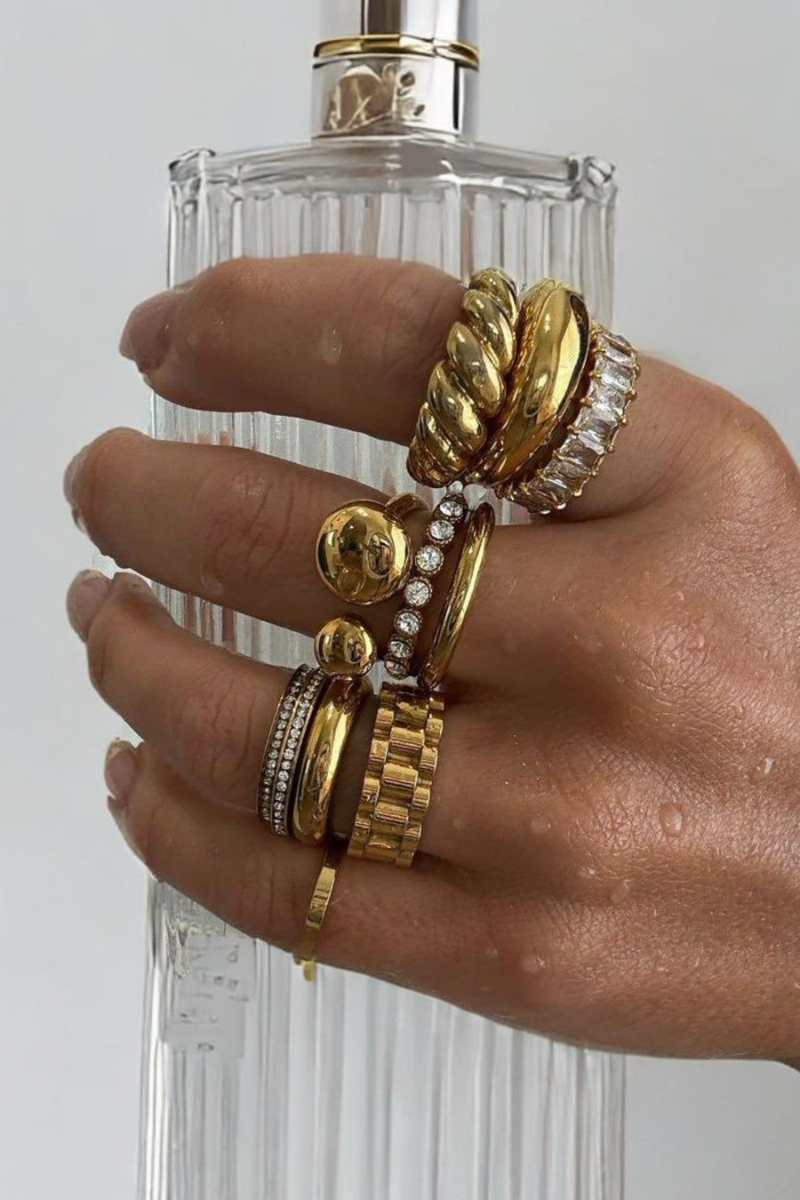
Ring stacking does not mean covering every finger. Distributing rings across your hand can give individual pieces more space than placing several bulky designs on one finger.
Combine different proportions, such as a slim band with a substantial signet ring, or a smooth ring with a textured design. Repeating a metal finish or shape can connect pieces from different sets. Leave some fingers bare if the arrangement feels crowded.
Try these three approaches:
- Minimal: One simple ring on each of two fingers.
- Mixed proportions: A narrow band, a signet ring and a textured ring distributed across the hand.
- Statement stack: Several rings clustered on one or two fingers, with simpler jewelry elsewhere.
British Vogue's Spring/Summer 2026 runway coverage highlighted stacked signet rings, offering inspiration for a bolder look. For everyday styling, adapt the idea to your comfort and wardrobe.
Fit matters as much as appearance. Rings should not pinch, restrict normal movement, or feel insecure. If stacking makes your fingers uncomfortable, redistribute the pieces.
How to Layer Bracelets Without Making Your Wrist Look Busy
Bracelets can work together through a shared width, finish, material, or color. Once you establish that connection, introduce contrast through texture.
Try two slim bangles, a chain bracelet with a cuff, a watch with a simple bracelet, or a smooth bangle beside a textured chain. Beaded bracelets can also complement a metal piece when a bead color or finish connects them.
Different metals can work together when their proportions or finishes complement each other.
Consider movement, too. Bracelets should not repeatedly catch on sleeves, restrict your wrist, or interfere with your watch. Test the combination with the clothing you intend to wear.
How to Layer Earrings
You can create a layered earring look with multiple piercings or a single pair. The key is to vary scale while keeping the pieces visually related.
With several piercings, try a medium hoop or drop earring in the main piercing, a smaller hoop in the next and a tiny stud or huggie in an upper piercing. With one piercing, wear a statement earring with a simple necklace, or pair a medium hoop with stacked rings.
The pieces do not need to be identical. Relate them through their shape, metal, finish, or color. Multiple piercings are not necessary to experiment with layered jewelry.
How to Mix Gold and Silver Jewelry?
Gold and silver jewelry can work together when both metals appear intentionally throughout your look. You do not need equal amounts of each; choose one as the dominant metal and use the other as an accent.
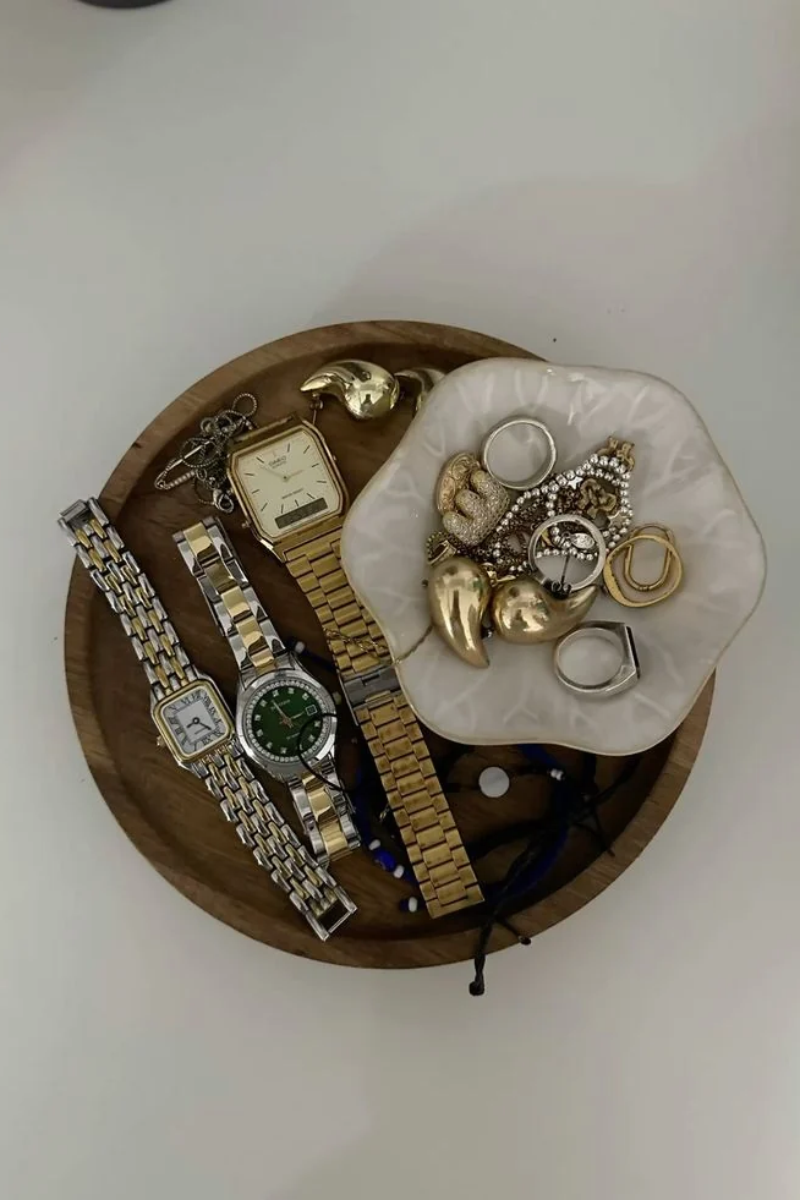
Three simple ways to combine them:
- Repeat both metals. Pair a gold necklace with silver earrings and a two-tone ring.
- Choose a connector piece. A mixed-metal bracelet or necklace can bring the two finishes together.
- Keep the overall styling balanced. If your jewelry includes several bold pieces, keep the remaining accessories simpler.
The aim is to create a combination that feels intentional rather than perfectly matched. Start with a few pieces and add more if the overall look feels balanced.
How to Combine Delicate and Statement Jewelry
Contrast is useful; competition is what needs managing. Pair a fine chain with a bold pendant, small hoops with a sculptural cuff, or delicate rings with a chunky signet. A simple necklace can also complement dramatic earrings when the rest of the outfit leaves room for both.
If your necklace, earrings, and rings are all large and highly detailed, decide whether they work together through a shared color, shape, or material. If the combination feels disconnected, simplify one area rather than removing every statement piece.
Maximalist styling can include several focal points. The goal is not to make every accessory subtle, but to make the overall combination feel considered.
Match Jewelry to Your Neckline
Your neckline affects where necklaces sit and how they interact with clothing. Use these suggestions as a starting point, then check the whole outfit in the mirror.
| Neckline or outfit | Jewelry approach |
| Crew neck | A short necklace that sits above the neckline or a longer pendant |
| V-neck | A pendant or layers that echo the V shape |
| Square neck | A short chain, collar necklace, or carefully spaced layers |
| Button-down shirt | Fine chains inside the collar or a pendant over an open neckline |
| Strapless top | A short necklace, layered chains, or statement earrings |
| High neck | Emphasize earrings, rings, or bracelets; wear a necklace over the garment if desired |
| Printed top | Simpler jewelry or one standout piece |
| Minimalist dress | Layered jewelry or a statement combination |
These are suggestions, not rules. A necklace over a high-neck sweater can become an intentional styling feature rather than something to avoid.
Use Color and Texture to Connect Your Jewelry
Jewelry does not have to match exactly to look coordinated. Shared colors, shapes, and materials can create a connection between pieces, even when their designs differ.
- Repeat a shape: Combine hoop earrings with a rounded pendant or a ring featuring a similar curved design.
- Connect gemstone colors: Pair earrings with green stones with a ring or bracelet featuring a similar shade.
- Mix finishes thoughtfully: Combine polished metal with brushed or hammered finishes for contrast while keeping the overall look cohesive.
- Balance varied materials: Pair pearls with delicate gold chains or combine beads with simple metal jewelry to create variety without overwhelming the outfit.
Choose one visual detail to repeat across two or more pieces. This creates a subtle connection without making every accessory look identical.
How to Layer Jewelry with Different Clothing Styles
Use these outfit formulas as starting points. For more ideas on creating versatile outfits around the pieces you own, explore how to build a 2026 capsule wardrobe on a budget.
| Outfit | Jewelry combination |
| White shirt and jeans | Fine chain, small pendant, and simple ring |
| Black dress | Layered necklaces or statement earrings |
| Oversized blazer | Chain worn over the top or simple jewelry beneath an open collar |
| Fine-knit sweater | Pendant necklace and bracelet stack |
| Printed blouse | Simple hoops and one ring or bracelet |
| T-shirt and cardigan | Two distinct necklace lengths and small earrings |
| Evening outfit | Statement earrings with fewer competing necklaces |
| Casual summer outfit | Beaded or cord necklaces with simple rings |
British Vogue's Spring/Summer 2026 runway report documented necklaces worn over polo shirts, shirting, and outerwear. Try the idea with a pendant over an open shirt or a longer chain over a plain knit. Runway styling offers inspiration; your own outfit determines what feels practical.
If you are styling accessories for a fashion event, you can also explore what to wear to Fashion Week if you are just attending for ideas on putting together a complete look.
Minimalist vs. Maximalist Jewelry Layering
Jewelry layering can range from subtle combinations to bold, expressive styling. The difference lies in how many pieces you wear and how you connect them visually.
- Minimalist: Wear a small number of related pieces, such as two delicate necklaces with slightly different lengths or textures.
- Everyday layered: Combine a few necklaces with selected rings and a bracelet or watch for a balanced, wearable look.
- Statement layered: Emphasize one prominent accessory area, such as a bold necklace or dramatic earrings, while keeping the rest of your jewelry simple.
- Maximalist: Layer jewelry across multiple areas, such as necklaces, rings, bracelets, and earrings, connecting the pieces through color, material, shape, or personal meaning.
None of these approaches are automatically better than another. The best choice depends on your personal style, outfit, and occasion. For a deeper look at this contrasting aesthetics, read Quiet Luxury vs. Maximalism: Where Fashion Sits Now. Whatever style you choose, intentional combinations help your jewelry feel cohesive rather than cluttered.
Common Jewelry-Layering Mistakes
- Wearing too many statement pieces: Several bold necklaces, oversized earrings and chunky rings can compete for attention.
- Overcrowding necklaces: Too many chains close together can make the neckline too busy.
- Ignoring proportions: pieces that are all similar in size and weight may lack visual contrast.
- Mixing pieces without a connection: Jewelry can look disjoined when the shapes, finishes or colors have no visual relationship.
- Over-accessorizing: Too many layers can compete with detailed clothing or other statement accessories.
How to Edit Your Jewelry Before Leaving the House
- Check the balance: If several pieces are in contention for attention, remove one or simplify the combination.
- Check the spacing: Make sure that necklaces and bracelets are not crowding each other.
- Check the outfit: Make sure your jewelry complements your neckline, clothing details, and other accessories.
- Check your comfort: Remove items that snag, tangle, or restrict movement.
The goal is not to wear fewer pieces automatically, but to make sure each one contributes to the overall look.
Final Thoughts
It is essential to layer pieces to create depth and dimension when styling jewelry so that every item has a purpose, and the overall appearance is harmonious and balanced. It is also worth experimenting with different lengths, textures, and metals to create an outfit that reflects the individual’s personality.
FAQs - How To Layer Jewelry Without It Looking Cluttered

Fashion and culture writer with a keen eye for red-carpet style, celebrity dressing, beauty, and the intersection of fashion and film. Their work explores the ideas and stories behind the looks, from emerging trends and archival fashion to the evolving language of modern celebrity style.