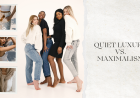
QUIET LUXURY VS. MAXIMALISM: WHERE THE PENDULUM SITS NOW
Fashion is like a pendulum. Minimalism gets too quiet, maximalism gets too loud, and eventually the mood swings back again.
It is an appealing theory — and an increasingly incomplete one.
The conversation around quiet luxury vs maximalism suggests that fashion must choose between discreet tailoring and dramatic expression, neutral palettes and saturated colors, barely-there branding, and statement accessories. The 2026 fashion landscape is far less binary than that.
Quiet luxury has not disappeared. Nor has maximalism become a universal replacement for it. Instead, existing collections and street-style coverage point toward something more fluid: quality, restraint, color, texture, proportion, and personality being used in different combinations. The biggest fashion moments of 2026 reflect that broader shift, with different forms of expression existing alongside one another.
The pendulum, in other words, is not swinging from one extreme to another.
It is becoming adjustable.
WHAT IS QUIET LUXURY IN 2026?
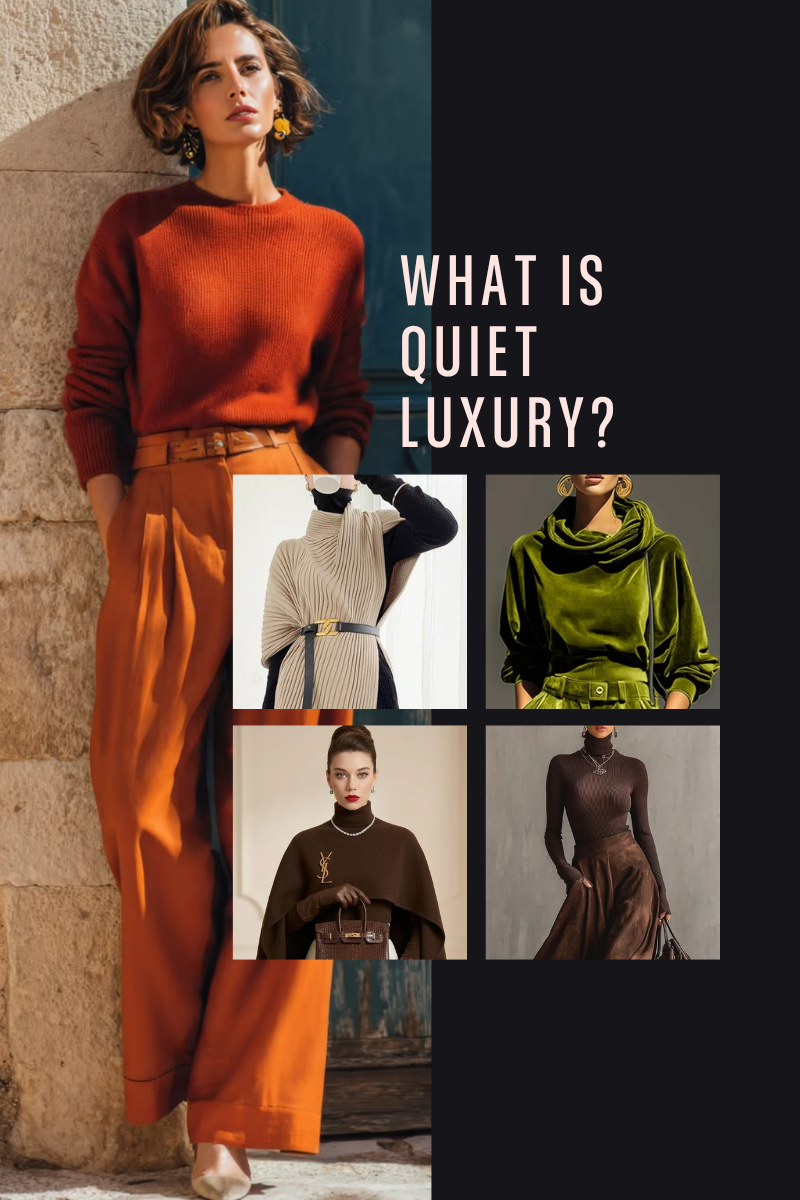
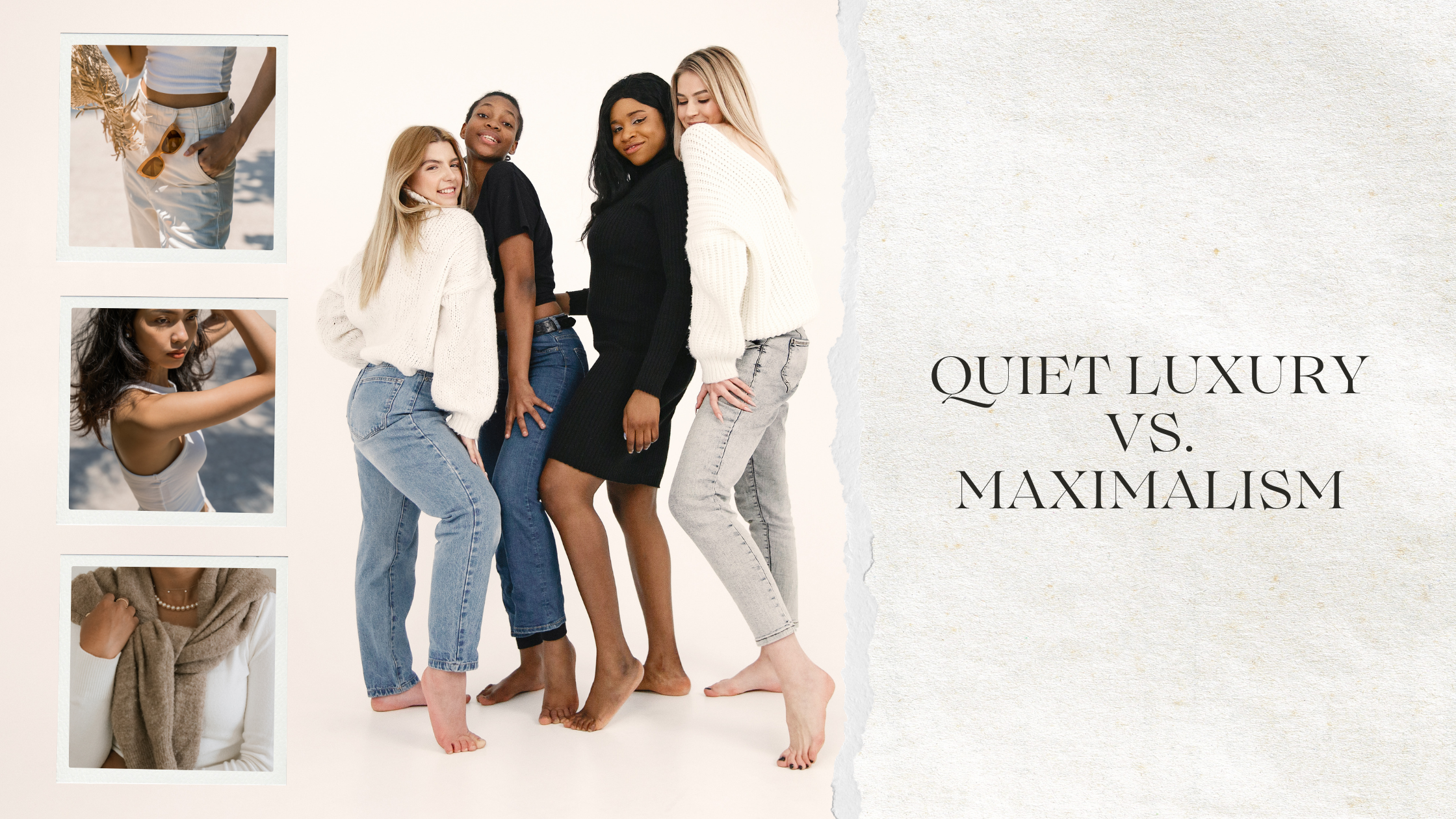
Quiet luxury is best understood not as a fixed color palette but as a philosophy of understatement.
Its familiar codes include minimal branding, elevated basics, refined tailoring, fine knitwear, premium-looking fabrics, leather accessories, and silhouettes that rely on cut and material rather than obvious decoration.
The aesthetic became particularly visible in the early 2020s, when discreet dressing became shorthand for a particular idea of luxury: expensive looking without overtly announcing expense.
But its 2026 iteration is more relaxed.
Ongoing fashion coverage describes contemporary quiet luxury through relaxed silhouettes and luxurious fabric combinations, pointing to a softer interpretation of the aesthetic rather than the rigid neutral uniform often associated with it.
Quiet luxury does not have to mean beige trousers, a cream sweater, and a logo-free handbag every day. The underlying idea can instead be expressed through proportion, fabric, construction, and restraint.
A soft grey cardigan with wide-leg trousers can be quiet luxury.
So can a beautifully cut navy coat.
So can an understated leather bag with a simple white shirt.
The point is not that the outfit contains nothing interesting. It is that the interest is controlled rather than crowded.
And in 2026, that distinction matters.
WHY MAXIMALISM KEEPS RETURNING
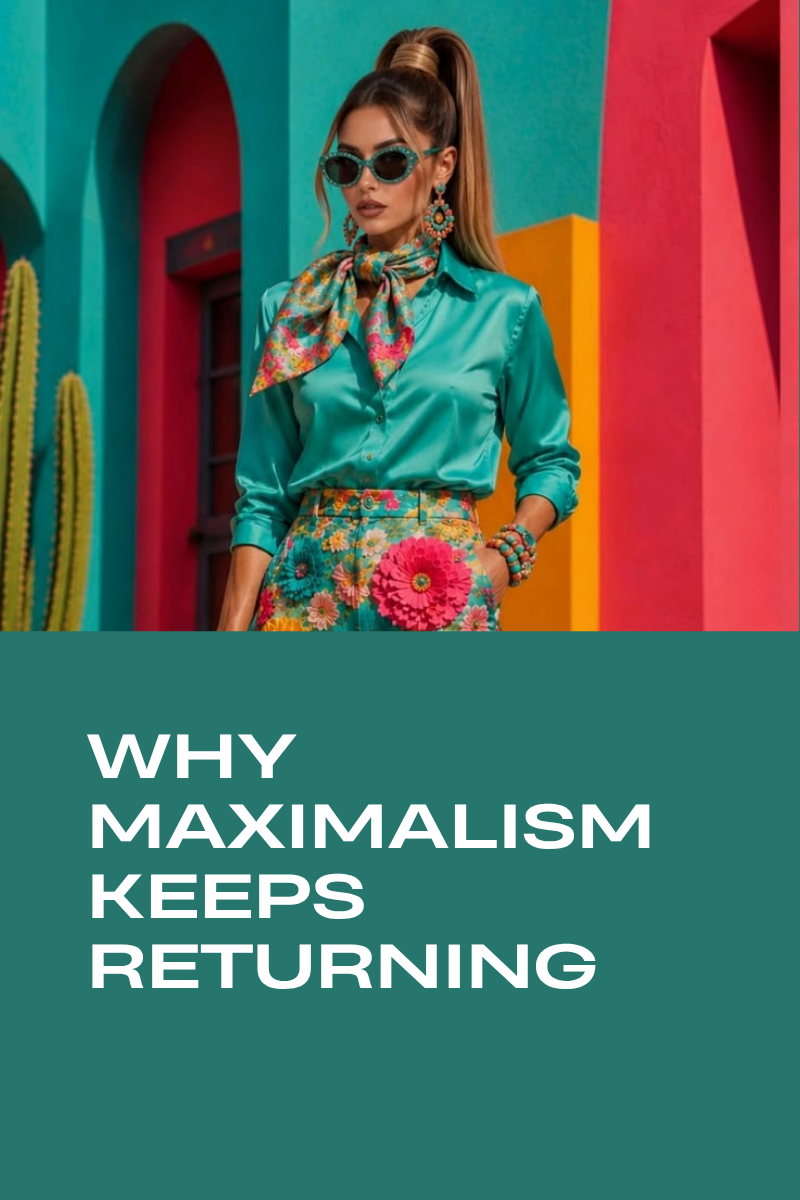
Maximalism operates according to a different visual logic.
Where quiet luxury edits, maximalism accumulates.
It can involve saturated color, elaborate prints, dramatic proportions, embellishment, statement jewellery, decorative details, multiple layers, or accessories that deliberately attract attention.
It is also connected to nostalgia and personal styling. Instead of treating clothes as a uniform, maximalism treats them as a collection of references: vintage, contemporary, sentimental, glamorous, eccentric, or playful.
The 2026 runways provide plenty of evidence for this expressive direction.
Vogue’s Spring 2026 trend reporting highlighted bold color, nostalgic prints, fringe, volume, and embellished details across different collections. Prada and Saint Laurent, for example, brought bold colors forward, while Chloé explored bright 1980s-inspired florals; other designers used volume, panniers, prints, and embellishment to create more dramatic silhouettes.
That does not mean every designer has suddenly embraced maximalism.
Quite the opposite.
The more important point is that maximalist elements are operating alongside minimalist ones.
That is the more interesting trend.
WHERE QUIET LUXURY AND MAXIMALISM MEET
This is where the old aesthetic debate starts to break down.
An outfit can have a quiet-luxury foundation and a maximalist finish.
Consider a few possibilities:
● Minimal tailoring with oversized statement jewellery.
● A neutral coat with dramatic footwear.
● Fine knitwear paired with sculptural earrings.
● A classic handbag styled with an unexpected vintage charm.
● A restrained palette interrupted by one saturated accessory.
● A traditional silhouette exaggerated through proportion.
● A simple outfit finished with an elaborate scarf, brooch, or belt.
These combinations matter because they change the role of luxury.
Instead of asking whether an outfit is minimalist or maximalist, the more useful question becomes:
Where is the visual emphasis?
A charcoal trouser suit can remain understated while a huge pair of earrings change the entire impression.
A simple white dress can become expressive through an oversized coat.
A classic leather handbag can feel completely different depending on whether it is styled conventionally or surrounded by charms, jewellery, and contrasting textures.
The clothes do not have to belong to one aesthetic.
The styling creates a conversation between them.
That is increasingly visible in the current fashion cycle. Vogue’s reporting on Spring/Summer 2026 described the collections as personality-driven and rooted in wearability, but also highlighted proportion play, bold retro prints, color, and decorative details.
THE NEW DEFINITION OF LUXURY
The biggest change is that luxury itself is becoming less dependent on a single visual code.
| Style Element | Quiet Luxury | Maximalism | Current Hybrid |
| Color | Neutral | Saturated/mixed | Neutral base + accent |
| Silhouette | Refined | Dramatic | Classic + exaggerated elements |
| Accessories | Discreet | Statement | One or two focal pieces |
| Branding | Minimal | Can be visible | Depends on styling |
| Texture | Subtle | Layered | Mixed |
| Overall Effect | Understated | Expressive | Personal |
This is a framework rather than a ranking.
There is no inherent hierarchy between restraint and excess. A minimalist outfit can be highly considered; a maximalist outfit can be equally deliberate.
What changes is the amount of information the outfit communicates visually.
Quiet luxury says: look closer.
Maximalism says: look again.
The hybrid approach says: look where I want you to look.
WHAT THE 2026 RUNWAYS ARE TELLING US
The Spring/Summer 2026 collections offer some of the clearest examples of why the minimalist-versus-maximalist binary is becoming less useful. Fall 2026 fashion runway coverage also pointed toward a fashion landscape where refined basics, stronger proportions, expressive details, and contrasting aesthetics can exist simultaneously.
At Prada, Miuccia Prada and Raf Simons used the visual regularity of military-inspired shirts and trousers as a foundation, then disrupted that uniformity with details including drop earrings, a top-handle bag and satin opera gloves. It is a particularly useful example of how restraint and statement dressing can occupy the same look.
At Chanel, Matthieu Blazy’s first Spring 2026 collection was described by Vogue as modern and easy while retaining the house’s emphasis on finesse and savoir-faire. The collection demonstrates that refinement does not require visual austerity.
Elsewhere, the season made room for much more obvious visual expression. Vogue’s Spring trend report highlighted enormous volume, panniers, prints, and embellishment, while its broader Summer 2026 coverage pointed to proportion play, retro prints, and personality-driven dressing.
Even quiet luxury itself has changed shape. British Vogue’s analysis describes its 2026 version through relaxed proportions and luxurious combinations rather than the ultra-controlled silhouettes associated with the aesthetic at its peak.
The message from the runways is therefore not minimalism out, maximalism in.
It is closer to this: refinement and expression are being mixed more freely.
CELEBRITY AND STREET STYLE: THE MIDDLE GROUND
Runways show designers’ intentions. Street style shows what people do with those ideas.
And here, too, the boundaries are increasingly porous.
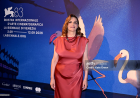
Celebrity styling in 2026 has included both pared-back dressing and more playful accessories. Vogue’s Summer trend coverage, for example, highlighted everything from minimal white denim to leopard-print bags among celebrity looks. A celebrity appearance at the 2026 Venice Film Festival provides another useful example of how red-carpet fashion can balance polished silhouettes with more expressive styling choices.
Fashion-week street style offers an even broader picture because it combines designers, vintage, high street, personal collections, and styling choices that may never appear together in a single runway collection.
The most interesting outfits often rely on contrast:
A classic coat with experimental shoes; tailored trousers with a vintage top; a minimal dress with oversized jewellery; designer accessories mixed with older pieces.
This is not necessarily maximalism in its traditional sense. Nor is it strictly quiet luxury.
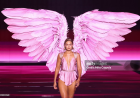
It is personal styling. Gigi Hadid at NYFW offers another example of how individual styling can move between polished, understated and more directional fashion codes.
That distinction is particularly important because street style is not a controlled measure of what everyone is wearing. Fashion-week attendees are a specific, highly visible group, and contemporary street-style culture is also increasingly shaped by social media and commercial relationships. Vogue has reported on how the fashion-week street-style ecosystem has become more commercialised, making it important to distinguish photographed fashion-week looks from broader consumer behaviour.
So, the street-style evidence is useful as a cultural signal — not as proof that one aesthetic has replaced another.
HOW TO MIX QUIET LUXURY WITH MAXIMALISM
The easiest way to experiment with both aesthetics is to think in terms of contrast rather than commitment.
| Styling Formula | How to wear it |
| Restrained Base | Neutral tailoring + one dramatic accessory |
| Statement Coat | Simple outfit + expressive outerwear |
| Jewellery Switch | Minimal clothing + oversized jewellery |
| Color Injection | Tonal outfit + saturated bag or shoe |
| Texture Mix | Cashmere + leather + embellishment |
| Proportion Play | Classic pieces + exaggerated silhouette |
These are styling possibilities, not rules.
The principle is simple: if the clothing is quiet, let the accessories speak. If the accessories are dramatic, give them a calm backdrop.
This creates visual hierarchy without requiring an outfit to become completely maximalist.
A neutral trouser and knit combination, for example, can take on an entirely different character with a sculptural necklace.
Likewise, a dramatic printed coat can feel surprisingly polished when worn over simple trousers and a plain knit.
This is where understated luxury becomes particularly useful: it provides a foundation rather than a complete aesthetic identity.
SO, WHERE DOES THE PENDULUM SIT NOW?
Not at quiet luxury.
Not at maximalism.
And not at some fixed point between the two.
The more accurate description is intentional eclecticism.
Quality still matters. Simplicity still works. Tailoring remains relevant. Fine materials and restrained accessories continue to communicate refinement.
At the same time, color, embellishment, unusual proportions, nostalgia, expressive accessories, and playful styling have more room in the fashion conversation.
Vogue’s 2026 trend analysis explicitly identified individuality, self-expression, and personal style as growing influences, while predicting that quiet luxury would continue alongside more playful, colorful, and textured directions.
That makes the current moment less about replacing one aesthetic with another and more about expanding the number of ways luxury can look.
The most contemporary wardrobe may therefore contain both:
the beautifully cut neutral coat and the outrageous statement shoe;
the fine cashmere knit and the oversized necklace;
the classic handbag and the vintage charm;
the quiet foundation and the unexpected flourish.
Fashion’s pendulum has not stopped moving.
It has simply stopped insisting that everyone stand at the same end of it.
Frequently Asked Questions - QUIET LUXURY VS. MAXIMALISM
I’m a fashion and entertainment writer specializing in celebrity style, red carpet fashion, beauty, and emerging cultural trends. My work combines fashion knowledge with editorial research to provide informed perspectives on the designers, celebrities, collections, and style moments shaping contemporary popular culture.