What Demna’s First Gucci Show Actually Signals

When Demna presented his first runway collection for Gucci on February 27, 2026, he was doing more than introducing a new creative direction. He was showing how he intended to work with one of luxury fashion’s most recognizable houses.

Nov 02, 2026 - 16:13
What Demna’s First Gucci Show Actually Signals

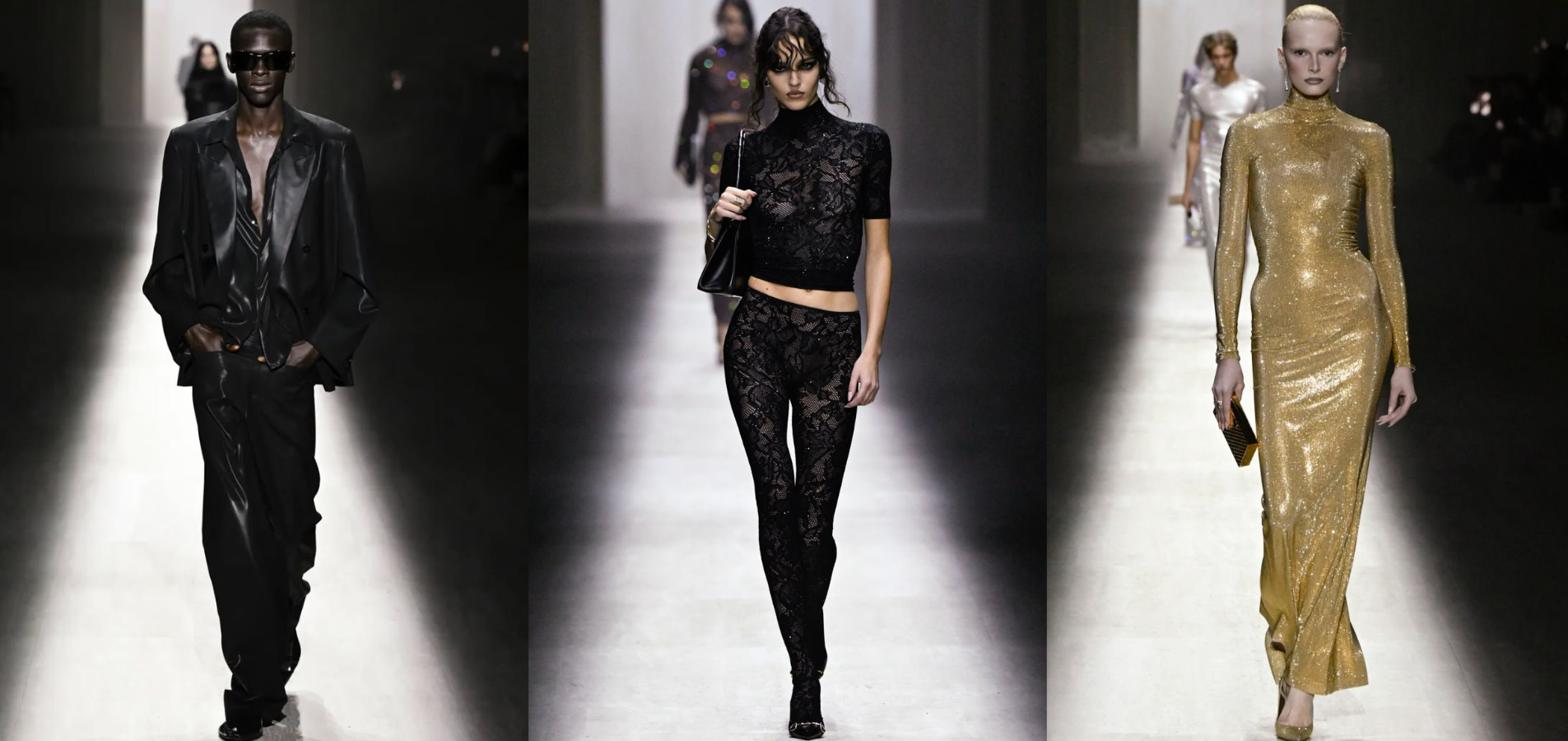
The Fall 2026 collection combined references to Gucci’s archive with body-conscious silhouettes, provocative styling and the glamour associated with Tom Ford’s years at the brand. Its monumental, museum-inspired set connected the presentation to Florence’s cultural heritage, while the clothes placed sensuality and contemporary attitudes towards dressing at the center of the show.

But a debut can establish an intention without defining an entire creative era. Demna’s subsequent Spring/Summer 2027 show, presented on September 25, offered a second opportunity to understand his direction. This time, the collection moved across equestrian references, sharp tailoring, preppy styling, and eveningwear, inside a purpose-built environment resembling a Gucci store.

The distinction matters: Fall 2026 introduced Demna’s runway vision, while Spring/Summer 2027 showed how he was expanding it. Together, the collections suggest five signals about the Gucci he is trying to build – without proving that the brand’s commercial recovery is complete.

Signal One – Demna Is Reconnecting Gucci with Its Own Archive 

The archive was central to Demna’s debut, but the presentation was not simply a nostalgic exercise. Its museum-inspired setting drew on Florence’s artistic heritage, connecting Gucci to a broader Italian cultural story.

In its Fall 2026 runway coverage, Vogue discussed the collection's monumental setting and Demna’s interest in Gucci’s cultural significance. The presentation framed the house as part of Italy’s wider artistic history rather than treating its past as a collection of logos and familiar motifs.

Gucci’s archive contains several distinct identities: equestrian references, recognizable leather goods, monograms, Italian glamour, and the sensuality of earlier creative eras. Demna drew on these codes while presenting them through contemporary styling and proportions.

This is where archival fashion becomes more than reproduction. A designer must identify what made an earlier design language distinctive and decide how it can speak to a different audience today. The challenge is to make familiar references feel relevant without turning the collection into a retrospective.

Signal Two – Sensuality Is Part of the New Gucci Vocabulary 

Sensuality was one of the clearest visual statements of Demna’s Fall 2026 debut. Close-fitting tops, body-conscious dresses, high heels, and revealing evening wear placed the body at the center of the collection.

The combination of sexual confidence and polished glamour recalled Tom Ford’s Gucci of the late 1990s and early 2000s. In its Fall 2026 runway coverage, Vogue identified that era as an important reference point. 

Demna used these familiar codes to establish a provocative mood, while leaving room for tailoring, accessories, and more practical pieces within Gucci’s wider wardrobe. Sensuality emerged as a defining statement of the debut, not the limit of the brand’s identity.

Signal Three – He Is Not Simply Repeating His Balenciaga Playbook

Demna brought a recognizable design language from Balenciaga, including exaggerated proportions, confrontational styling, and an interest in challenging conventional ideas of taste. At Gucci, however, those instincts take on a distinctive character. Rather than relying on disruption alone, they are placed against the house’s established codes of Italian glamour, sensuality, and equestrian heritage.

Gucci’s Spring/Summer 2027 collection made that contrast visible. The opening looks drew on riding clothes, with fitted jackets, white breeches and tall boots recalling the house’s equestrian roots. Horsebit details reinforced that identity, giving the collection a recognizably Gucci foundation. From there, Demna introduced a more disruptive mix: rugby shirts, tartan kilts, oversized horsebit belts, heavy chains, and voluminous bomber jackets. The familiar symbols of country-club dressing and Italian luxury remained, but their styling became more rebellious and deliberately excessive.

The collection also showed how Demna’s approach changes when applied to Gucci’s relationship with the body. At Balenciaga, exaggerated volume and distorted proportions often challenge the conventional silhouette. At Gucci, oversized outerwear and stronger shoulders appeared alongside closely fitted tailoring, short hemlines, and body-conscious eveningwear. Slinky dresses and revealing cut-outs brought the body back into focus, connecting Demna’s sharper styling to Gucci’s tradition of sensual glamour. The result was not simply a repetition of his earlier visual language, but a tension between control and excess, polish, and provocation.

That distinction matters. Gucci’s glamour is built around desire, visibility, and the appeal of a particular lifestyle; Demna’s previous work often approached fashion through irony, discomfort, and the disruption of familiar codes. At Gucci, those more confrontational instincts are softened and redirected through recognizable house signatures. His first two collections suggest that he is not simply transferring the Balenciaga formula to a new label. He is testing how far his design language can move while allowing Gucci’s own identity to remain visible.

Signal Four – Gucci Is Being Built Around Multiple Characters, Not One Uniform Look

Gucci’s history encompasses glamour, eccentricity, maximalism, sensuality and recognizable status accessories. Demna’s early collections suggest that he wants these different personalities to coexist rather than impose one uniform aesthetic.

His La Famiglia project introduced character-driven looks before the Fall 2026 runway debut. Spring/Summer 2027 developed this approach through equestrian references, country-club influences, preppy styling, narrow tailoring, and eveningwear. Harper’s Bazaar’s Spring 2027 review explored the collection’s relationship with bourgeois style and the tension between belonging and rebellion.

Each style draws on a different part of Gucci’s vocabulary: equestrian details connect to its heritage, preppy looks offer a more casual mood, tailoring adds structure and evening wear brings drama. Shared design codes and the house's established identity help connect these different expressions.

The challenge is to make this variety work as a coherent wardrobe, spanning separate occasions without losing brand recognition. Demna’s early collections present Gucci as a house of distinct but connected personalities; how successfully that approach translates into future products remains to be seen. 

Signal Five – The Spring 2027 Show Makes Retail Part of the Creative Statement

The September presentation introduced an important development beyond the February debut: the retail environment became part of the show itself.

On September 25, 2026, Gucci presented its Spring/Summer 2027 collection inside a purpose-built environment resembling a luxury Gucci store. The setting was designed to represent a concept for the brand’s future retail spaces, connecting the runway to the experience of shopping.

The shift changed the emphasis. The museum-inspired environment of Fall 2026 positioned Gucci within a story about culture and heritage. The store-inspired setting invited the audience to consider the brand as a place where clothing, handbags, shoes, and accessories come together.

A runway show usually presents products through a carefully sequenced visual narrative. A store environment suggests how those products might be encountered, combined, and chosen by customers. It brings the creative proposition closer to the shopping experience.

The collection’s variety supported that idea. Tailoring, equestrian influences, preppy pieces, and evening wear appeared as parts of a wider wardrobe rather than isolated runway statements.

This connects creative expression with a practical luxury-business question: how can a brand generate cultural attention while presenting products customers understand and want to buy?

However, a purpose-built set is not proof that a retail strategy has been fully implemented or that it will increase sales. The show revealed a concept; its impact will depend on how it is developed and how customers respond.

What the Debut Says About Gucci’s Commercial Priorities

Demna’s creative direction is unfolding against a challenging business backdrop for Gucci. Gucci needs to rebuild momentum while maintaining the cultural visibility expected of one of luxury fashion’s most recognizable houses. Turning a distinctive creative vision into products that customers want to buy is central to that challenge. 
According to Kering’s 2025 results, Gucci generated €5.992 billion in revenue in 2025, down 22% as reported and 19% on a comparable basis. These figures describe the company’s performance during 2025, not the commercial impact of Demna’s subsequent runway collections.

The first two collections point to several areas of focus: recognizable archival codes, handbags, sensual statement pieces, and a broader mix of clothing for separate occasions. The Spring/Summer 2027 store-inspired set also connected the creative presentation with the way Gucci might highlight its products to customers.

The runway can communicate a creative direction and show how products fit into a wider brand identity. It cannot, by itself, establish stronger demand or a commercial recovery. Judging whether the strategy is working will require evidence from product performance, customer response, and future financial results.

Does Demna’s First Gucci Show Mean the Brand Is Returning to the Tom Ford Era?

Not exactly. The Fall 2026 debut revisited the sensuality and glamour associated with Tom Ford’s Gucci, particularly the late-1990s and early-2000s period. However, the collection also reflected Demna’s own approach to silhouette, styling and contemporary fashion culture.

The Spring/Summer 2027 follow-up broadened the picture through equestrian references, preppy dressing, tailoring, accessories, and a retail-focused presentation. Gucci’s history is a source of inspiration rather than a template for reproducing.

Is Demna’s Vision for Gucci Fully Defined Yet?

Not yet. The Fall 2026 debut and Spring/Summer 2027 follow-up reveal recurring themes in Demna’s approach, including Gucci’s archive, sensuality, and the house’s multiple identities. How these elements evolve across future collections remains to be seen.

Conclusion: The Debut Was a Statement of Direction, not a Final Verdict 

Demna’s first two Gucci runway collections suggest a direction built around the house’s archive, sensuality, and multiple style identities, with the Spring/Summer 2027 presentation also connecting the creative vision to a retail environment. Together, the shows offer an early picture of how he intends to interpret Gucci’s heritage through a contemporary wardrobe. Whether this direction delivers lasting creative and commercial success will depend on future collections, customer response, and business results.

FAQs - What Demna’s First Gucci Show Actually Signals

Demna presented his first runway show for Gucci on February 27, 2026, during Milan Fashion Week. The collection was for Fall 2026.

The debut revisited Gucci’s archive and Italian cultural heritage while emphasizing sensuality, body-conscious styling, and recognizable codes from earlier eras of the house.

Not exactly. The Fall 2026 debut drew on the sensuality and glamour associated with Tom Ford’s Gucci, but Demna’s subsequent collection broadened the direction through equestrian references, preppy styling, tailoring, and eveningwear.

The September 25, 2026, presentation expanded his emerging direction through multiple style identities and a purpose-built environment resembling a Gucci store, linking the runway collection with the brand’s broader retail concept.
Lucy Wagner

Fashion and culture writer with a keen eye for red-carpet style, celebrity dressing, beauty, and the intersection of fashion and film. Their work explores the ideas and stories behind the looks, from emerging trends and archival fashion to the evolving language of modern celebrity style.