How To Style Oversized Blazers for Petite Frames


An oversized blazer can look effortlessly polished on a model or hanger, then feel surprisingly bulky when you try it on. The shoulders may sit differently than expected, the sleeves might cover your hands, or the hem may not work with your favorite jeans. None of that means petite women need to avoid the silhouette.
Learning how to style oversized blazers for petite frames comes down to assessing the garment. Shoulder construction, sleeve length, hem placement, and the clothes underneath all affect the final outfit. You can create contrast with straight-leg jeans, coordinate relaxed tailoring, or layer a blazer over a dress without following a strict formula.
Oversized blazers are also part of the Fall 2026 styling conversation. Glamour UK’s autumn guide highlights relaxed tailoring across designers including Saint Laurent, Victoria Beckham, Magda Butrym, and Tolu Coker. The useful takeaway is to make the volume feel intentional—not to dress according to rules about height.
An oversized blazer is designed with extra room or a relaxed shape. A blazer that is simply too large may feel awkward because its shoulders, sleeves or body do not work with your proportions. The difference is how the garment hangs and feels, not the size printed on the label.
Dropped shoulders can be part of an oversized design, so the seam does not always need to sit exactly at your natural shoulder point. Instead, check whether the shape looks deliberate, the sleeves join the body cleanly and the jacket remains comfortable when you move your arms. If the shoulders buckle, slip or distort when buttoned, try another cut before considering alterations.
Long sleeves can add to the relaxed effect, but they should not interfere with everyday movement. Try a neat cuff or single fold to reveal some wrist if you like that finish. If the blazer fits well elsewhere, sleeve shortening may be possible, although working buttonholes, lining and construction can affect the alteration.
A blazer that ends around the hip can work well with jeans and trousers, while a longer cut can create a deliberate longline silhouette. Try it with the actual skirt, dress, or trousers you plan to wear. Notice where the hem falls, how it relates to the waistband and whether the combined lengths feel right to you. Neither a short nor a long blazer is automatically the better choice.
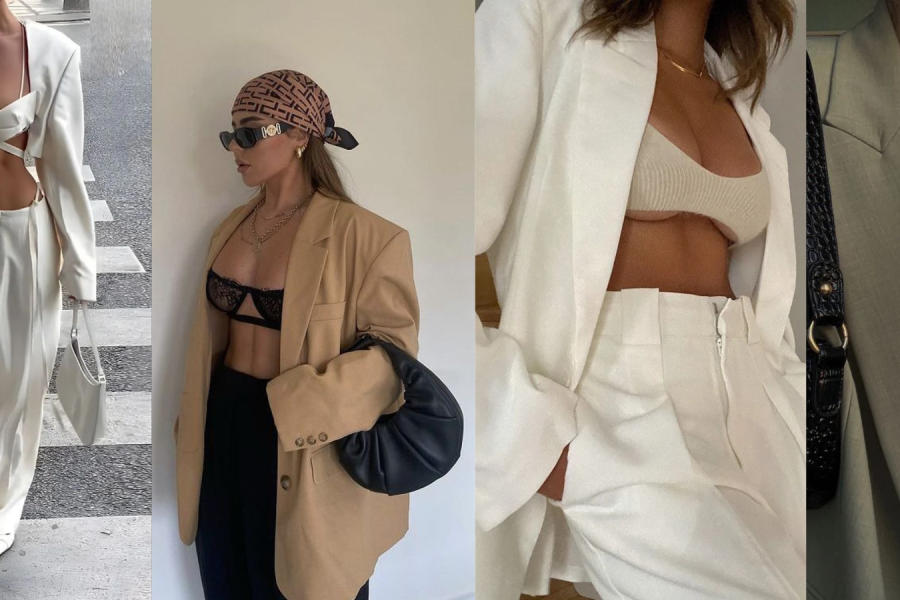
For an easy starting point, pair a roomy blazer with a simple top and a streamlined bottom. If you prefer a relaxed silhouette, try wider trousers or a matching suit instead. The goal is to make the pieces work together, not to make everything underneath tight.
A tucked-in shirt, fine-knit top or T-shirt can make the waistband more visible when you wear your blazer open. This is especially useful with high-waisted jeans or trousers, but it is not essential. A full-length top worn untucked can look just as intentional if you prefer more coverage.
Wear the open blazer, button it, or add a belt if the cut and fabric suit that approach. A belt can introduce shape, but some jackets are designed to hang straight. High-, mid- and low-rise bottoms can all work; consider how each rise interacts with the blazer and your preferred styling.
A clean fold or cuff can be enough to make long sleeves feel more manageable. If the sleeves still get in the way, consider whether tailoring is worthwhile. Major shoulder changes are more involved than simple sleeve adjustments, so assess the shoulder fit before buying.
Loafers, ballet flats, sneakers, ankle boots, and heels can all complement an oversized blazer. Shoes influence the outfit’s formality and overall balance, but you do not need heels to wear this silhouette. Tonal footwear can connect the pieces, while a contrasting pair can become a focal point.
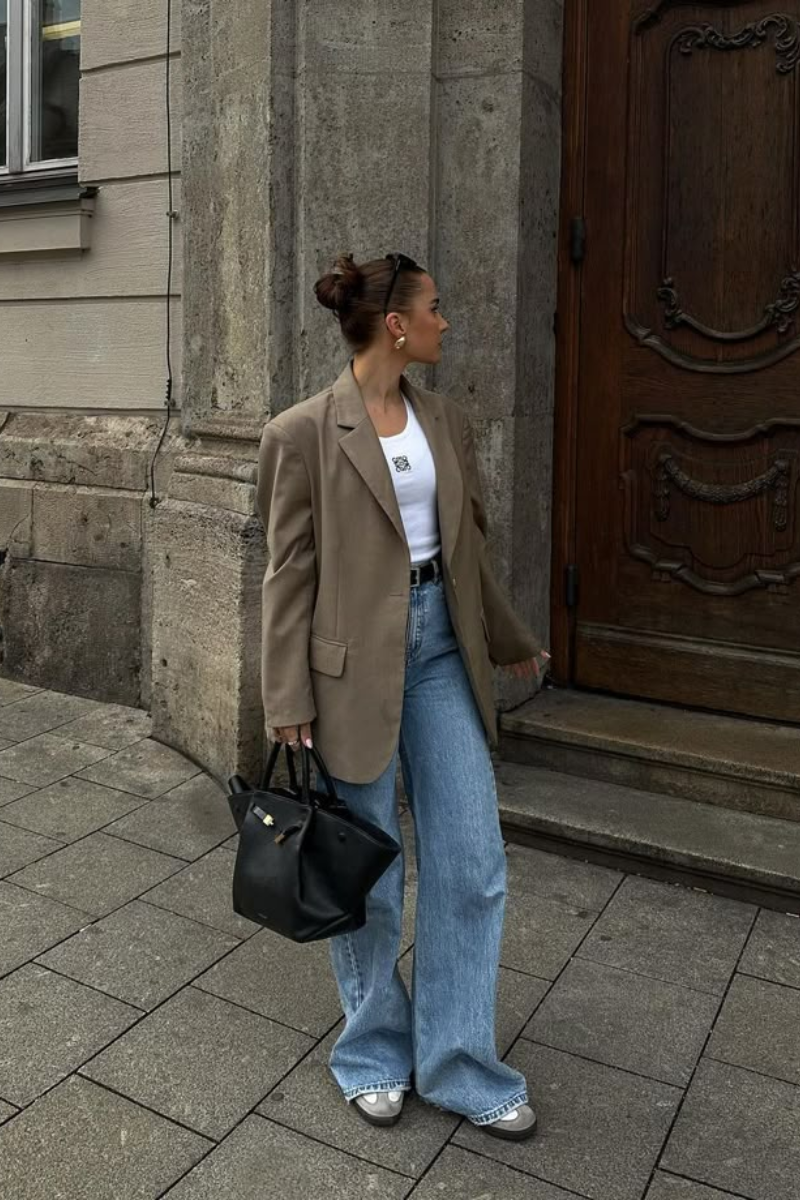
For an everyday oversized blazer with jeans petite outfit, try a camel blazer, white T-shirt, straight-leg blue jeans, and loafers. Tuck in the T-shirt if you want to show the waistband, or leave it untucked for a more relaxed feel.
Check where the blazer hem falls against the jeans’ rise and make sure the denim length works with your shoes. Sneakers or flats can replace loafers without changing the overall idea.
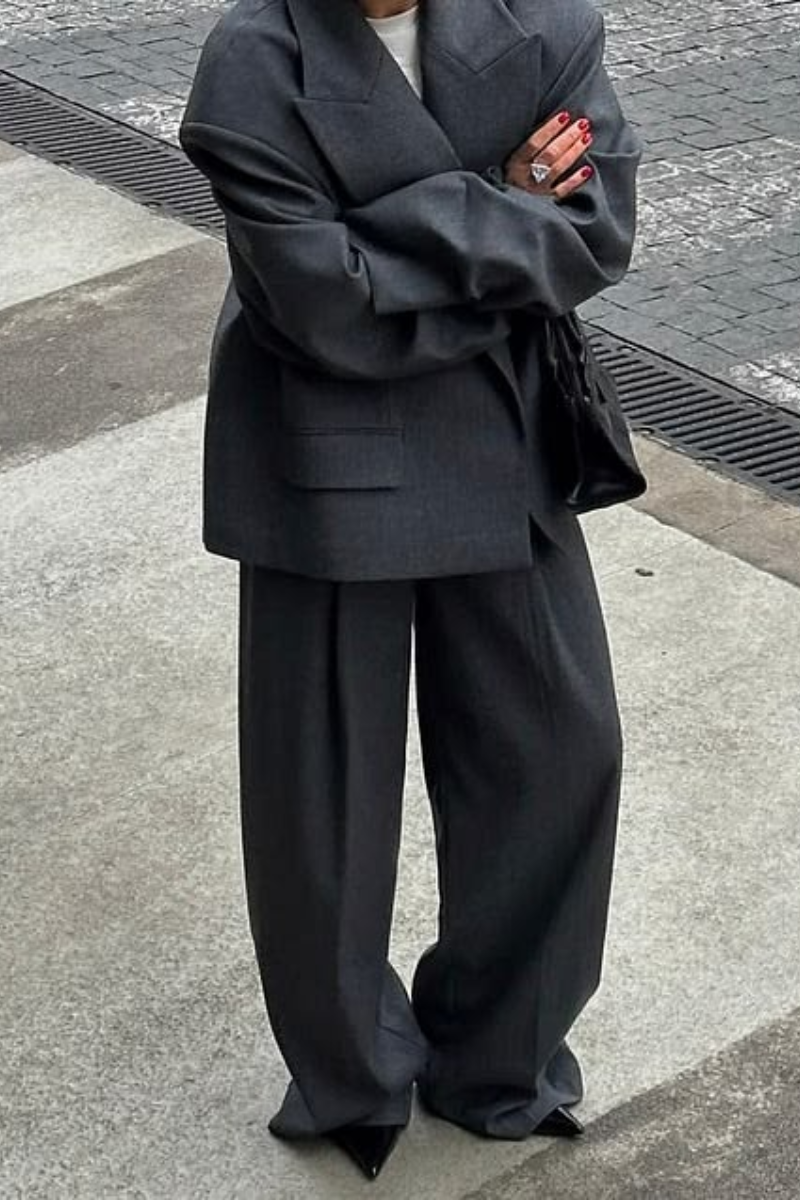
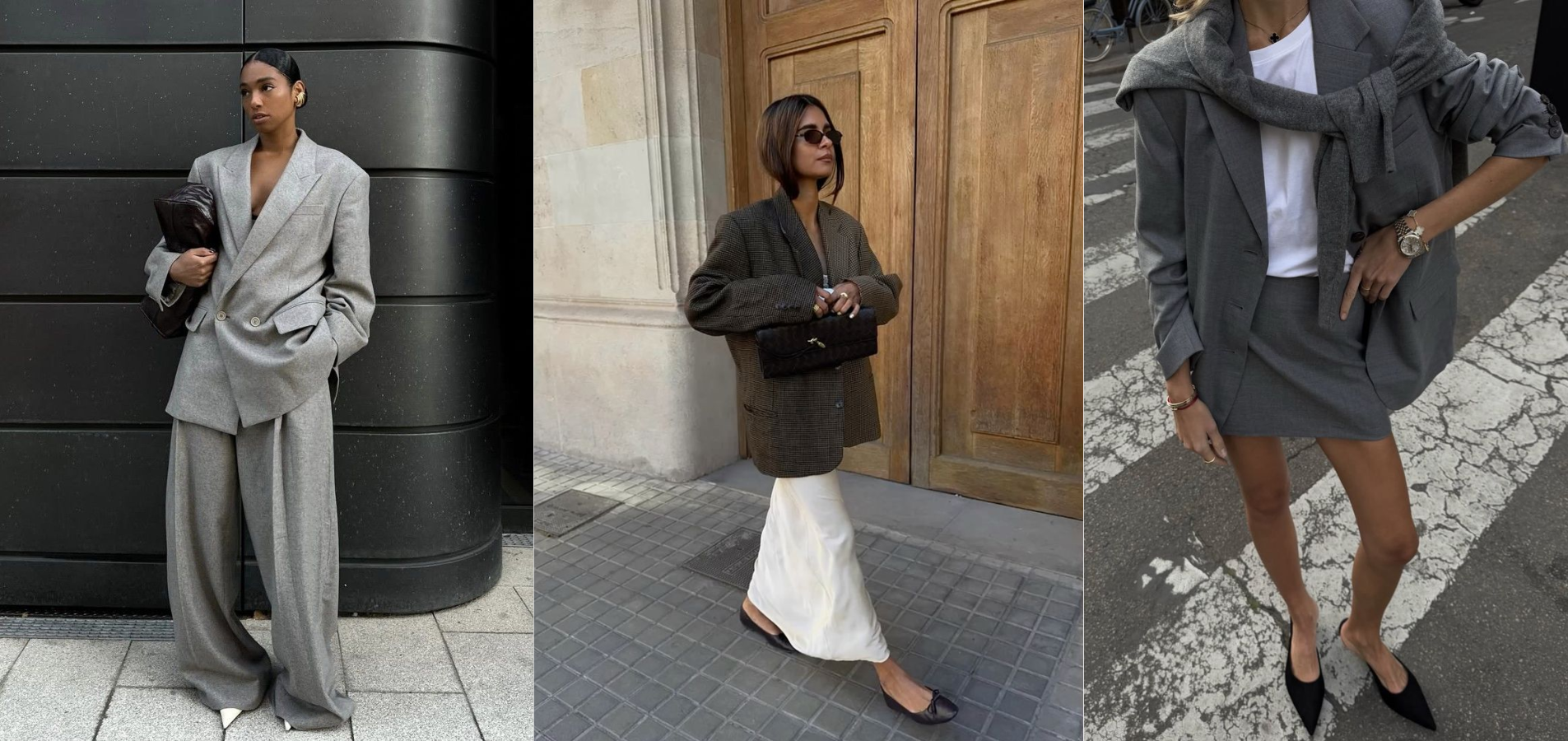
Pair a charcoal blazer with tonal trousers, a fine-knit top, and pointed-toe flats for a polished workwear option. Straight-leg or tapered trousers create a streamlined outline, while wide-leg trousers can make a coordinated, relaxed suit.
To try coordinated volume, keep the base layer simple and assess the jacket and trouser lengths together. You do not have to avoid wide-leg styles, the fitness, fabric, and overall combination matter more than a single rule about proportions.
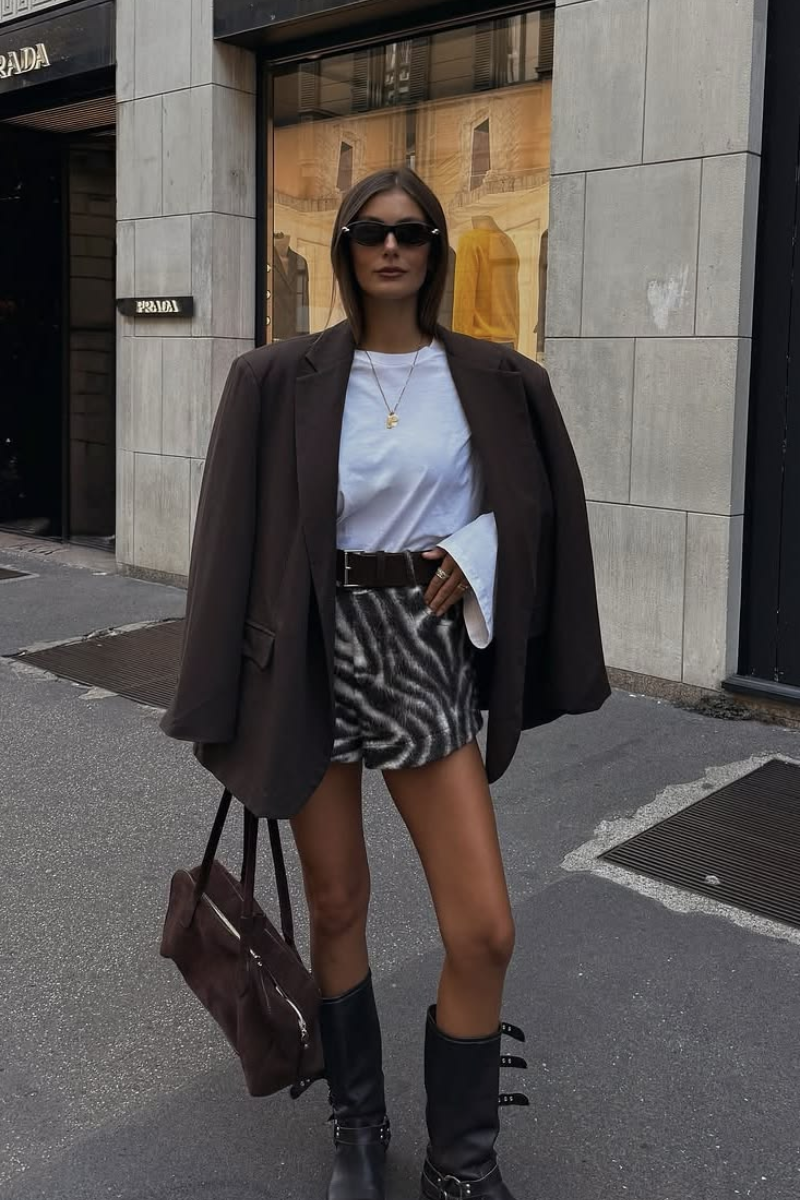
A black oversized blazer, simple top, tailored shorts and loafers or ankle boots create contrast between the jacket and the shorter hemline underneath. A mini skirt with tights and boots is another option for cooler weather.
Check how the blazer and skirt or shorts sit together when you stand, sit and walk. If you plan to wear the jacket open, make sure you feel comfortable moving around in the complete outfit.
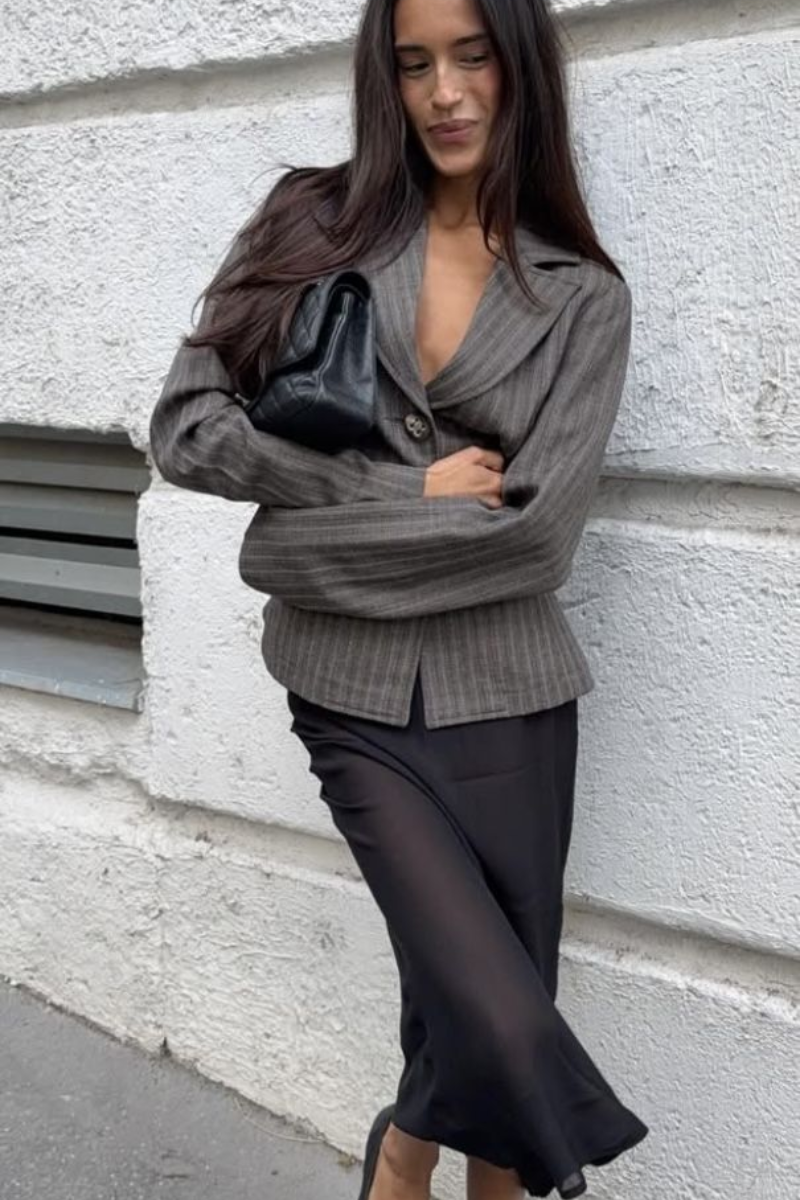
Try a grey oversized blazer with a black satin midi skirt, a simple top and ballet flats. Satin creates a dressier effect, while cotton or denim can make the combination feel more casual. A tucked shirt or fine knit can connect the pieces, but a loose top can work if the fabrics and lengths complement one another.
For more ideas on styling a fuller bottom half, explore Fashionwalt’s guide to how to wear balloon pants—another way to experiment with volume rather than automatically avoiding it.
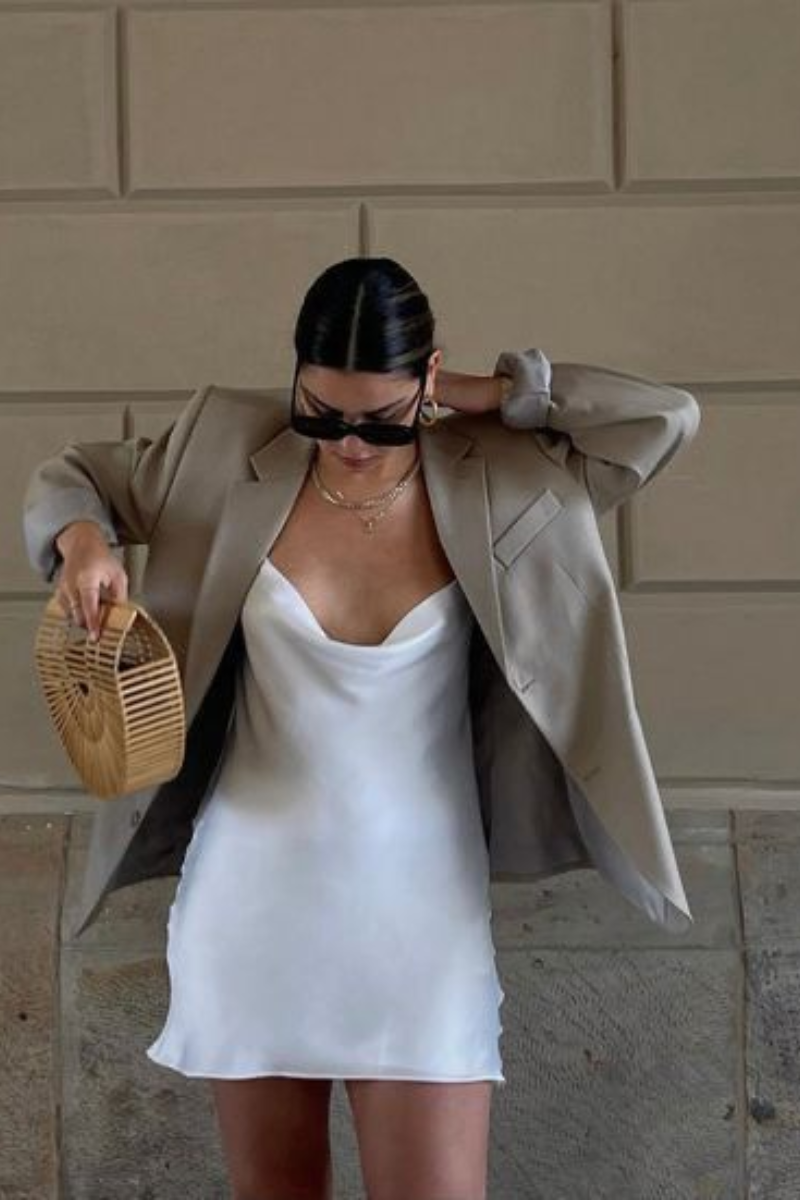
Layer a black oversized blazer over a slip dress, knit dress or column dress for dinner, events, or everyday wear. Leave the jacket open if you want the dress’s shape to remain visible or button it if that works with the cut.
Consider how the blazer hem relates to the dress hem, and choose ankle boots, flats, or heels according to the occasion. A belt is optional, not a requirement.
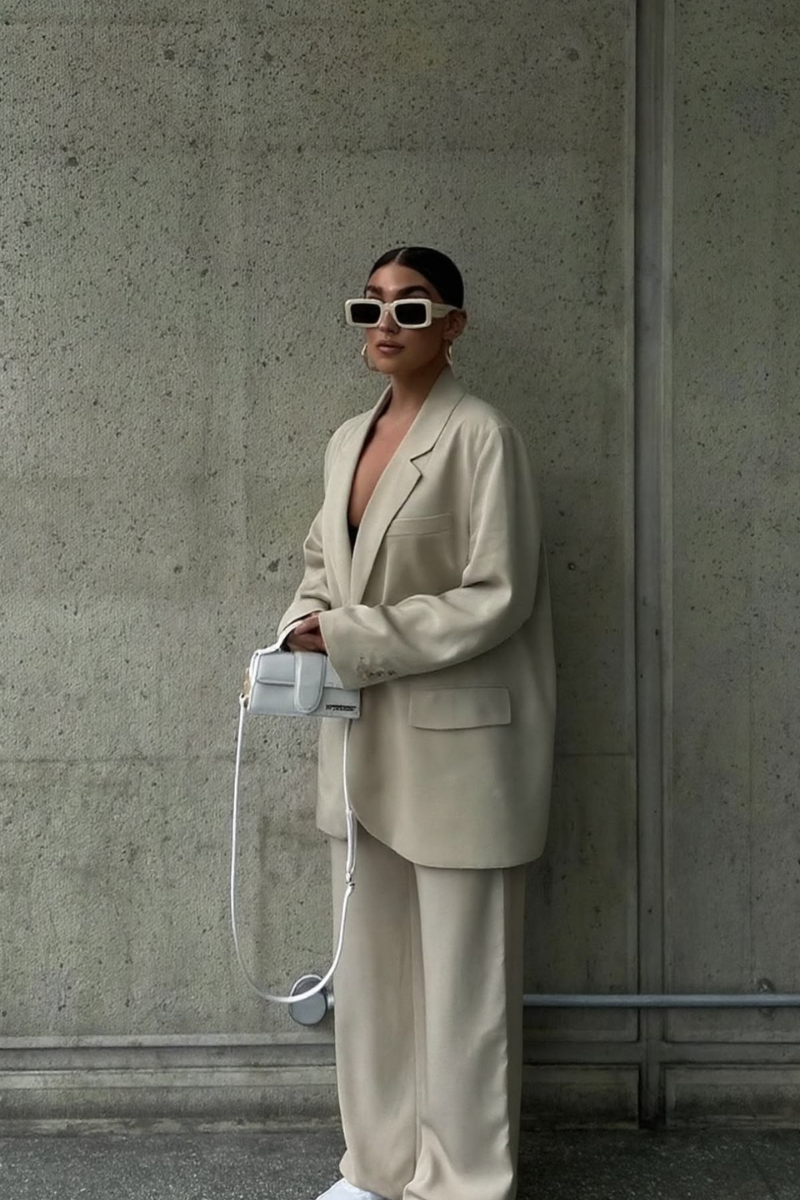
A matching blazer and trouser set make the relaxed silhouette feel like a deliberate outfit. Try a matching suit with a tucked-in top and loafers or clean sneakers. Similar colors and fabrics connect the pieces, while a contrasting top can introduce another point of interest.
This option is useful if you want the volume to remain the main feature. The trousers do not have to be slim; make sure the jacket and bottoms fit comfortably and work together.
Petite sizing may help if standard blazers consistently feel too long in the body or sleeves. However, a regular-size oversized blazer may work well if its shoulder construction and overall proportions suit you. Vintage and secondhand options can also be worth trying, provided the garment is in good condition.
| Option | What to check |
| Petite-sized blazer | Shoulder shape, body length, and sleeve placement |
| Regular-sized oversized blazer | Shoulder construction, hem, and button position |
| Vintage or secondhand blazer | Condition, lining, structure, and alteration potential |
| Blazer that needs tailoring | Alteration cost, construction complexity, and whether the oversized shape will remain intact |
Try the blazer with clothes and shoes you already own before buying something new. For more practical ideas on making versatile pieces work together without overspending, read how to build a 2026 capsule wardrobe on a budget. Alterations can improve sleeve length or the hem, but significant shoulder changes may be more complex, so assess the fit before committing.
For work: Pair them with tailored trousers, a shirt or knit and shoes appropriate for your workplace dress code.
For weekends: Wear it with straight-leg jeans, a T-shirt and sneakers or loafers. Keep the layers comfortable for walking and everyday activities.
For evenings: Layer it over a slip dress, satin skirt, or more decorative top. Refined flats, heels, or statement jewelry can change the mood. For accessory ideas, see Fashionwalt’s guide to layering jewelry without looking cluttered.
For transitional weather: Add a thin knit beneath the blazer or wear it over a dress. Check that the extra layer does not restrict your movement or create unwanted bulk.
Petite readers do not need to give up oversized blazers or follow a fixed set of rules to wear them. Start by checking the shoulders, sleeves, and them, then experiment with jeans, trousers, skirts, and dresses already in your wardrobe.
Before buying another jacket, try a few combinations with your existing clothes and shoes. Take photos if it helps you compare different lengths and proportions and consider alterations only when they genuinely improve their fitness. The aim is not to correct your height—it is to find an oversized silhouette that feels comfortable, considered, and personal.

Fashion and culture writer with a keen eye for red-carpet style, celebrity dressing, beauty, and the intersection of fashion and film. Their work explores the ideas and stories behind the looks, from emerging trends and archival fashion to the evolving language of modern celebrity style.