How To Dress for Your Body Type: A Practical Guide
Learning how to dress for your body type is often presented as a list of rules about what to hide, what to emphasize and what you should never wear. But getting dressed does not have to be about correcting your body.
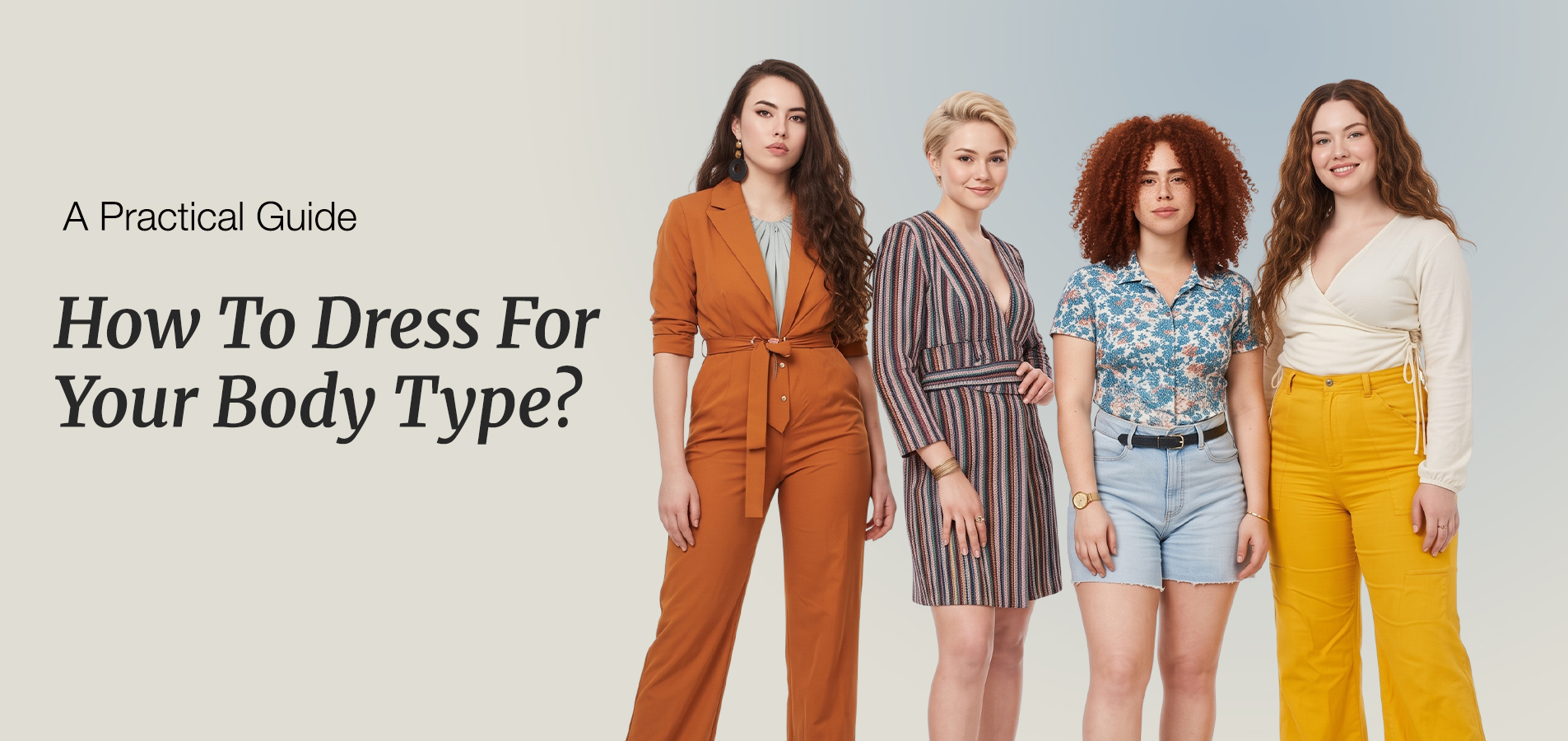
Understanding proportions can simply help you understand why certain silhouettes appeal to you and how different clothes change the way an outfit looks. Clothing can define, balance, elongate, add volume, create contrast, emphasize a feature, or create a particular visual line.
That makes body shape a useful styling language — not a set of restrictions.
How Do I Dress for My Body Type?
Dressing for your body type is less about following strict rules and more about understanding proportion. Use clothing to emphasize features you like, create visual balance if you want it, and experiment with silhouettes, colors and layers that make you feel comfortable, confident and like yourself.
Whether you want to emphasize your waist, create a longer-looking silhouette, experiment with oversized layers or simply understand why a particular pair of trousers works for you, the goal is the same: make more informed choices while leaving plenty of room for personal style.
What Does “Body Type” Actually Mean?
Body-shape categories describe broad visual proportions rather than size, weight, health, or attractiveness. Your proportions can also appear different depending on the clothes you wear.
Rise, fabric, shoulder structure, hemline, layering, pattern, and color can all change the visual relationship between your shoulders, waist, and hips.
You might have broad shoulders and a defined waist, fuller hips with a short torso, long legs with a shorter torso, or a straight silhouette with visible curves. You may also identify with more than one category.
Use body-shape categories as starting points, not diagnoses.
The Five Common Body-Shape Categories
| Body Shape | General Proportion | Styling Focus |
| Hourglass | Bust/shoulders and hips are balanced with a defined waist | Waist definition and proportion |
| Pear/Triangle | Hips appear visually wider than shoulders | Upper-body emphasis or balanced proportions |
| Inverted Triangle | Shoulders or bust appear broader than hips | Lower-body volume or softened shoulder emphasis |
| Rectangle/Straight | Shoulders, waist, and hips appear similar in width | Waist definition or a deliberately linear silhouette |
| Apple/Oval | Midsection appears fuller relative to shoulders and hips | Line, drape, structure and preferred focal points |
These categories are visual descriptions, not judgments. There is no “best” body shape, and you do not need exact measurements to use this framework.
Hourglass: Work With the Waist — or Don’t
An hourglass proportion describes shoulders or busts and hips that appear balanced, with a visibly defined waist.
If you enjoy emphasizing the waist, try wrapping dresses, belted coats, high-rise trousers, tailored blazers, and waist-defined dresses. Fitted knitwear can create a similar effect.
But a defined waist does not have to become the focus of every outfit.
Relaxed tailoring, oversized coats, column dresses, straight-leg trousers, and long layers can deliberately create a straighter silhouette. The choice depends on the look you want rather than what your proportions require.
Pear/Triangle: Balance Is One Option
A pear or triangle proportion describes hips that appear visually wider than the shoulders.
If you want to distribute visual emphasis more evenly, structured shoulders, interesting necklines, statement sleeves, printed tops, and cropped jackets can bring attention upward. A-line skirts, straight trousers, and flared trousers can also create different relationships between the waist and hem.
There is no requirement, however, to minimize the hips.
Fitted tops, bias-cut skirts, wide-leg trousers, body-skimming dresses, and monochromatic outfits can all embrace the proportions rather than attempting to “balance” them.
Inverted Triangle: Play With Lower-Body Volume
An inverted-triangle proportion means the shoulders or busts appear broader than the hips.
If you want to introduce more visual volume below the waist, consider wide-leg or pleated trousers, full skirts, A-line skirts, flared trousers, and fuller-skirted dresses.
At the top, clean necklines, softer fabrics, minimal shoulder padding, and streamlined jackets can create a visually softer upper-body silhouette.
But broad shoulders do not need fixing. These suggestions are simply ways to understand how volume is distributed across an outfit.
Rectangle/Straight: Create Definition — or Embrace the Line
A rectangle or straight proportion describes shoulders, waist and hips that appear similar in width.
If you want more waist definition, belts, cropped jackets, high-rise trousers, peplum shapes, wrap silhouettes and skirts with volume can create a stronger visual change between the waist and surrounding areas.
Alternatively, lean into the linear shape.
Long coats, column dresses, straight trousers, minimal tailoring, boxy jackets, and monochromatic outfits can make a straight silhouette look particularly intentional. A linear body shape is not something that needs to be reshaped.
Apple/Oval: Think About Line and Layering
Apple or oval proportions describe a midsection that appears fuller relative to the shoulders and hips.
Rather than thinking about hiding or concealing the body, focusing on line and movement. Open-front layers, longline jackets, V-necklines, straight-leg trousers, column silhouettes, fluid fabrics, and structured outerwear can create different visual effects.
Monochromatic dressing is another option because it reduces strong visual breaks between garments.
The objective is not to make the body look smaller. It is to understand how length, drape, structure, and layering affect the overall composition.
If You Don’t Fit One Shape
You do not have to identify with a single category before you can dress well.
Someone with a defined waist and broader shoulders might combine hourglass waist styling with inverted-triangle ideas. Someone with fuller hips and long legs might use traditional pear-shape suggestions while choosing silhouettes that deliberately emphasize the legs.
A straight torso with broad shoulders could borrow from both rectangle and inverted-triangle styling.
Think of the categories as a menu of ideas. You can take what works and leave the rest.
Dress for the Feature You Want to Emphasize
One of the most useful questions is not “what body type am I?” but: “what do I want this outfit to emphasize?”
Want to emphasize your waist?
Try belts, wrap silhouettes, tucked tops, high-rise bottoms, and cropped jackets.
Want to emphasize your shoulders?
Consider structured jackets, interesting necklines, statement sleeves, and off-the-shoulder styles.
Want to emphasize your legs?
Shorter hemlines, slits, high-rise trousers, and tonal shoes with trousers can direct attention downward.
Want to emphasize height or length?
Monochromatic dressing, long vertical lines, high-rise bottoms, long coats, and column silhouettes can create visual continuity.
This approach turns body-shape styling into something much more flexible and personal.
How Proportion Changes an Outfit
Understanding what individual garments do visually is often more useful than memorizing body-type rules.
| Styling Choice | Visual Effect |
| High-rise trousers | Defines the waist and can lengthen the lower-body line |
| Cropped jacket | Draws attention toward the waist |
| Long coat | Creates a continuous vertical line |
| Wide-leg trousers | Adds volume through the lower half |
| Structured shoulders | Adds visual width to the upper body |
| A-line skirt | Adds movement below the waist |
| Monochromatic dressing | Creates visual continuity |
| Belt | Defines a horizontal waist point |
| V-neckline | Creates a vertical opening |
| Oversized layers | Increase overall volume |
These effects are not guaranteed. Fabric, fit, color, and the rest of the outfit all influence the result.
Choosing Jeans for Your Proportions
Different jean silhouettes create different visual effects, so there is not objectively “best” style for a particular body shape.
Straight-leg jeans create a clean, even line from hip to hem.
Wide-leg jeans add volume through the lower half and can create a relaxed, elongated silhouette when the proportions are intentional. If you are building an office wardrobe around the silhouette, our guide to wide-leg jeans offers more practical ideas for making the shape feel polished and work-appropriate
Flared jeans introduce additional volume toward the hem.
High-rise jeans can visually lengthen the lower half while emphasizing the waist.
Low-rise jeans move the visual waistline downward and can create the impression of a longer torso.
The best choice depends on the relationship between the rise, leg shape, hem, footwear, and the rest of your outfit.
Choosing Dresses
Dress construction can change the entire visual composition.
| Dress Shape | Styling Effect |
| Wrap | Defines the waist and creates diagonal lines |
| A-line | Follows the waist and expands toward the hem |
| Column | Creates a long, uninterrupted line |
| Fit-and-flare | Defines the waist and adds lower-body volume |
| Slip dress | Skims the body |
| Shirt dress | Can be belted or worn straight |
| Empire waist | Moves the visual waistline upward |
Instead of deciding that one dress belongs to one body type, consider what you want the dress to do. A column dress may appeal when you want simplicity and length, while a wrap dress offers more waist definition.
Choosing Jackets and Coats
Outerwear has a major influence on proportion.
Cropped jackets can emphasize the waist and change the visual relationship between the torso and legs.
Long coats create a longer vertical line.
Belted coats add waist definition.
Double-breasted jackets can add visual width through the front.
Oversized coats create a deliberately relaxed silhouette and can obscure the body’s natural proportions.
Structured shoulders strengthen the upper-body silhouette.
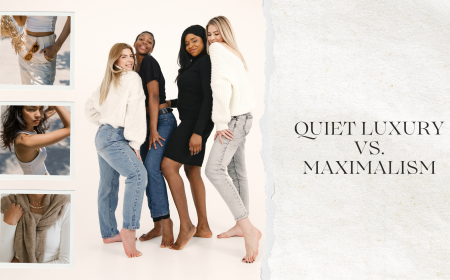
None of these effects are automatically better. The right choice depends on the proportions and mood you want. For a broader look at how contrasting aesthetics can change the way you approach proportions, see our guide to quiet luxury and maximalism.
Choosing Tops and Necklines
Necklines also influence visual composition.
A V-neck creates a vertical opening, while a crew neck creates a more contained neckline. A square neck draws attention toward the collarbone and shoulder area. A boat neck creates horizontal emphasis.
A halter naturally directs attention toward the shoulders and neck, while a high neck creates a more continuous upper-body line.
Use these effects as styling tools rather than rules about what you are allowed to wear.
The Role of Color and Fabric
Silhouette is only part of the equation.
Color can create continuity or contrast. Tonal dressing connects different pieces visually, while contrasting colors create stronger separation. Prints can also become a focal point.
Fabric changes the way a garment behaves.
Structured fabrics hold their shape and can create clearer edges. Fluid fabrics follow movement and produce softer lines. Textured fabrics add visual volume, while lightweight fabrics can create drapes. Chunky knits add both physical and visual volume.
Understanding these differences can help you choose clothes based on the effect you want.
Dressing for Different Heights
Height is separate from body shape.
If you are petite, high-rise trousers, cropped jackets and tonal dressing can create deliberate proportions, but that does not mean you have to avoid oversized or long pieces.
If you are tall, long coats, wide-leg trousers, midi and maxi lengths and layered proportions can work particularly well, but shorter silhouettes can be equally effective.
Proportion matters more than a fixed list of height-based rules.
Fit Matters More Than Labels
A garment can technically match a traditional body-shape recommendation and still feel wrong if the shoulders do not fit, the rise is uncomfortable, the hem is incorrect, the fabric pulls or the proportions do not suit your preferences.
Conversely, a garment outside traditional recommendations can work perfectly.
Before keeping an outfit, ask three questions:
Does it fit?
Do I like the proportions?
Do I feel comfortable and like myself in it?
Those questions are more useful than following a rigid chart.
Build Your Own Styling Rules
Try a simple three-part exercise.
Choose one feature to emphasize: waist, shoulders, legs, neckline, height, or overall silhouette.
Choose one proportion to experiment with: long, cropped, fitted, oversized, wide or narrow.
Choose one styling detail: belt, scarf, jewelry, color, texture, or print.
Then build an outfit around those three decisions.
This turns dressing for your body type from a restrictive formula into an experiment.
The Bottom Line
Learning how to dress for your body type should give you more choices, not fewer.
Body-shape categories can help you understand proportion, but they do not determine what you should wear. You can use clothing to define a waist, add volume, create length, emphasize shoulders or legs, experiment with contrast, or deliberately ignore all those conventions.
The most useful styling question is often simple: what do I want this outfit to do?
Once you understand how silhouettes, fit, color, fabric, and proportion influence an outfit, you can borrow ideas from anybody-shape category. The result is a more flexible approach to dressing — one based on intention rather than rules.
There is no single correct way to dress a body. The best outfit is one that fits well, reflects your preferences, and makes the proportions feel deliberate to you.
FAQs - How To Dress for Your Body Type
Fashion and culture writer with a keen eye for red-carpet style, celebrity dressing, beauty, and the intersection of fashion and film. Their work explores the ideas and stories behind the looks, from emerging trends and archival fashion to the evolving language of modern celebrity style.